Val Muller

The Electronic Wordsmith

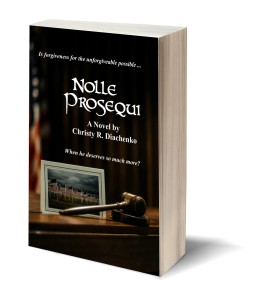
This week, I had a chance to interview Christy Diachenko. Her newest book, Nolle Prosequi, has just been released, and it looks like she’s woven in personal experience, fiction, and faith to create her tale. As I learned in the interview, she hopes to entertain while also helping others through the lessons she’s learned in life.

Tell us about yourself:

13702492_10154462856941004_1706737489_oI am Christy R. Diachenko. I’ve been an avid reader since I learned my ABCs. I’m currently a full-time Administrative Coordinator for the County of Greenville in South Carolina. I have a Bachelor of Science degree in Radio and Television and worked in radio for nearly a decade. Later, I wrote radio advertising copy on a freelance basis for several years. In addition to writing, I’m a voice over artist and have narrated and produced numerous projects, including three published audiobooks. I’m also a fine arts photographer, and I love capturing God’s amazing creation on my memory cards. I love animals and always weave them into my stories – they are a vital part of my life! My first novel, Broken Promise, was published by Dancing With Bear Publishing in 2014.

Tell us about your most recent book.

13699377_10154462855376004_1065029922_oThe title is Nolle Prosequi. No one would ever suspect. Lizzy Godfrey is strong, confident and a survivor—or is she? When she meets handsome, favored politician Tucker Bates, she feels a stirring in her heart she never expected to experience again. But when their possible romance fizzles before it starts, Lizzy tumbles into a world of self-doubt. Then a brutal murder forces her to face feelings she thought were dead and buried. Can Lizzy’s brokenness be turned into something beautiful? Can she continue to forgive? Will she ever truly understand that God values her as a precious daughter?

What is your “day job”?

I’m the manager of the Criminal Records Division of the Clerk of Court’s Office.

Who is your favorite character in your book, and why?

Tucker – because he allows his life to be led by God and did not give up on Lizzy, even when he did not know what the future would hold or if she would ever learn to trust again.

Are any elements of your book autobiographical or inspired by elements of your life?

Yes – too many to list here! Suffice to say, many of Lizzy’s struggles have been my own. It is my hope that Nolle Prosequi, while being an engaging story, will also warn women of the dangers of abusive relationships. I also hope the story will encourage abuse survivors that there really can still be abundant life in Christ, even after enduring the unthinkable.

What’s your favorite scene or location in Nolle Prosequi?

The ski trip on Whitby Mountain. I went on a day ski trip when I was in high school and always thought staying nearby and getting to play in the snow for a week would be so much fun 🙂

What book or author has been most inspirational for you, and why?

Karen Kingsbury. I feel like her characters are real people out there who I just haven’t met yet. They struggle with their faith, their circumstances, and their relationships just like I do. And Karen always points her readers to God.

If you were to be stranded on a desert island, what non-survival item would you bring along that you couldn’t live without?

Perlier Hand Lotion! One of the shea butter varities 🙂

If you’re not already a fan, you can find Christy all over the Internet:

croseenterprises.com

www.facebook.com/CRDfan

https://twitter.com/CDiachenko

https://twitter.com/NolProsNovel


This week, 7-11 gave out a free small Slurpee to all customers. Then, Chick-Fil-A celebrated the next day with “dress like a cow” day. All customers who dressed “cow-like” were given a free entrée.

Without trying to be too political for a Fantastic Friday post, I wanted to celebrate the wonders of capitalism. I know that sometimes our system of “crony capitalism” rubs people the wrong way (as it should, when certain businesses are given favors by corrupt government officials and politicians). But while I was on a road trip the other day, I listened to an NPR story about what’s happening in Venezuela, about how the instability in the country is forcing talented young folks to leave if they are able. Their socialist economy has collapsed, and people cannot secure even basic essentials. In some cases, people are so desperate for food that they wait in line even while witnessing a murder—because they cannot afford to lose their place in line.

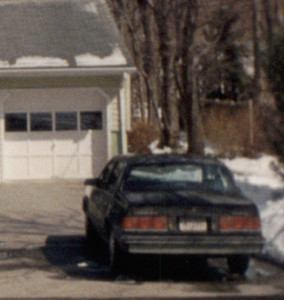
Juxtapose that with two businesses in the course of a week vying for customer business by giving away goods. Here’s a picture of the small 7-11 parking lot, which is never crowded. This time, I had to park in a lot next door because there were no spaces left.

711-license plates blurred

Are all the customers who received a free drink or a free entrée going to return and patronize those businesses? Probably not. But you can bet a good deal of them will (I’ll be one of them, but I love Chick-Fil-A’s lemonade and sweet tea so much that sometimes I dream about them!).

I’m building a gate in my back yard, and it’s amazing that I can go to Home Depot and secure a handful of various-sized screws and bolts (not sure which I’ll actually need) for a relatively inexpensive cost, along with a bag of pea gravel, a square, various sizes of wood, and several other odd but available items. All there for me at a moment’s notice. And on the way home, if I get hot or thirsty, I can stop at any convenience store or drive-thru and purchase a beverage for a dollar or two and a minute of my time.

It strikes me that capitalism—pure, unadulterated, free market capitalism—is the most hopeful type of economy. It puts faith in human beings who want to serve others the best they can and rewards them—monetarily—for doing so.

20160712_180907The employees at Chick-Fil-A were all friendly and seemed happy to be there, enjoying looking at customers’ strange cow costumes. And the customers were all happy, even despite a line that wove to the end of the restaurant. When we saw how long the line was, my family and I could have easily gone down the street to McDonald’s or KFC, but everyone in line was friendly, and the employees succeeded in moving the line along in record speed—even though most of the items being ordered were free. In exchange, customers gladly spent extra money to add items to their free entrees.

I believe it was John Stossel who mentioned on one of his shows that a capitalist economy is the only one where you will have both customer and vendor say “thank you” to each other—because in free market capitalism, it is truly a system that works to the mutual benefit of both parties.

When humans are left alone, they strive to please each other to mutual benefit and mutual pleasure. And that’s something to celebrate.

Subtitled “a novel in words and pictures,” this 530-page book is a fast read.

Spoilers follow.

20160711_112838-1The story follows a fictional boy named Hugo, who happens upon plans for fixing an automaton that was partially destroyed in a museum fire. In doing so, he gets into various troubles and discovers the automaton’s relationship to Georges Melies, a famous early filmmaker.

The book itself “plays” like a movie. It includes full pages of text, partial pages of text, and full pages of illustrations. The illustrations are cinematic, almost like a storyboard, as they follow the characters in wide angle and then “zoom” in to close-ups. The book also has section, which mimic the “acts” in a film, broken, for instance, by an intermission. Some of the pictures are historical, or screen shots from early films.

The novel is appropriate for young readers, but adults will appreciate it as well. Grown-ups familiar with film (especially early film) will appreciate the references. Those unfamiliar with early film will learn something. Fans of steampunk will appreciate the toy shop in the novel, where Hugo helps Melies repair clockwork toys, and engineers will appreciate the references to horology.

I was especially interested in the characters’ abilities to fix automata. The author provides a link, where we can learn more about one of the devices he researched for this novel: http://www.fi.edu/pieces/knox/automaton.

Finally, this book carries with it a sense of magic—the same sense of magic we feel when seeing a film in the theatre. Georges Melies is known for his dream-like imagery in films, and the book captures that sense of dreaminess and magic. It’s an encouragement to young readers to follow their dreams and advice to grown-ups to never give up on theirs. The quality of the hardcover and intricate drawings helps add to the magic. It’s definitely one I’m saving to give to the kiddo when she’s old enough.

Summertime has always been my bliss. As a kid, I counted down the days until I could go barefoot in June. I loved (and still love) when the local ice cream shop opens for the warm months. I love the sounds of crickets and peepers and birds. There’s nothing more magical to me than the point in the evening when stars and fireflies converge so that the horizon no longer exists, and everything is made of stars and possibility.

Two winters ago, I realized what my favorite sound in the world is. I was standing in my yard in the bitter cold, trying to get my dogs to do their business. Not a car was on the road. Not an animal was in the yard, save two miserable dogs who wished they were curled up inside. It was then that I heard it. No plane, no car, no person, no animal. Even the wind had died. For a moment, I checked my phone, wondering if perhaps the apocalypse had slipped in and silently wiped out everyone but me. It was complete silence, and it was dreadful.

I stood and listened to the silence, and the goosebumps on my arm did not come from the cold. There was something disconcerting about that silence. It was the complete absence of life. I realized then, in that unsettling moment, what it is I missed most in the winter.

It’s the sound of wind swooshing through leafy trees. When the winds passes through the lush green leaves of summer, it’s a much different sound than the colored and drying leaves of fall or the crackling branches of winter. The sound is spiderweb-sunsoft and comforting. It’s the sound of life. The sound of possibility. Thinking about how much I missed that sound, there in the bitter stillness of winter-death, I almost cried.

As a kid, I marked the start of summer by waiting for the day when I could go barefoot. Now, each year, I look forward to the day when I recognize the sound of wind passing through mature green leaves. As an added bonus, I love the way the sunlight filters through the leaves, creating dancing patterns on the ground. There are some summer mornings when it’s not too humid yet and not too chilly, mornings when a shorts and tee shirt feel perfect. I captured this picture on just such a morning. A morning when the sunlight was just the right angle, the humidity was perfect to give the dew an almost magical quality. A morning when the sun became a spotlight for one of nature’s masterpieces. It’s moments like that which remind me how great it is—following the observation of Ray Bradbury—to realize you’re alive!

Happy Friday 🙂


My publisher, Barking Rain Press, is running a summer reading special. Now through July 10, you can buy any book for just $1.99, including my young adult novel The Scarred Letter, a reboot of Hawthorne’s original, examining bullying, individuality, and truth in a modern setting. You can find it for Kindle or any other ebook format at the publisher (use code SUMMERDZ)

.

1200x630-ScarredLetter

Welcome to the Spot Writers. This month’s prompt was to look out the window and write about what was out there.

Today’s post comes to us from Cathy MacKenzie. Through her nanoscopic publishing company MacKenzie Publishing (nanoscopic is a thousand times smaller than microscopic, but, hey, everyone knows smaller is better, to steal a phrase from a fellow writer), will be presenting her first anthology, OUT OF THE CAVE, 21 tales for youth 13+, by 21 authors. The book will be available on August 1, 2016, from Amazon, in print and e-book, as well as at other venues.

***

reflection

by Cathy MacKenzie

tap tap tap

face looks back at me

tap tap tap

I turn

tap

she turns

tap

fingers slender

tap tap

fingers stubby

tap tap

face stares

hoary, haggard

face moves

bright, blissful

tap tap

tap tap

she taps

I tap

shadow on the lens

behind the frame

weary and worn

tap tap

you sigh

I sigh

a life done, gone

tap tap tap

***

The Spot Writers—Our Members:

RC Bonitz: www.rcbonitz.com

Val Muller: https://valmuller.com/blog/

Catherine A. MacKenzie: https://writingwicket.wordpress.com/wicker-chitter/

Tom Robson: https://robsonswritings.wordpress.com
 

I20160623_123159-1 received this book for free as part of a Kellogg’s cereal giveaway. There were several books to choose from, but I chose this one because I’d already read works by this author and was interested in how he’d write for a slightly younger readership.

For me, this was a fast summer read, and I found myself wanting to finish. For some middle grade or YA works, I find myself wanting to finish just to say I could. But this book actually had me willingly turning the pages.

The book follows a kid named Jax, who has weird color-changing eyes. He lives in New York City, and as the book opens, people are acting really weird around him. It turns out, he can use those eyes to hypnotize others. He is invited to an institution led by Dr. Mako, who tells Jax he is studying hypnotists. There is one simple rule: don’t use hypnosis for personal gain. Of course, things don’t stay that simple. I won’t spoil more of the plot, but I enjoyed the mix of teenage (or tweenage) drama, politics, foils, deceit, and sleuthing.

I also appreciated how the author included a bit of humor and intrigue by claiming that Jax’s family (and their talent for hypnosis) has been responsible for most historical events, even though they weren’t given credit (implying that hypnotism is responsible for much more than we realize). It broadened the scope of the novel for me, even if fictional.

I also enjoyed the voice. It was accessible, and although a grown-up reading the novel may find it easy to predict what is happening, a middle grade reader is given just the right amount of foreshadowing and clues. Jax is like most archetypal heroes. He is born from the correct bloodline and placed in the right place at the right time. At printing, there was another book in the series, and although I don’t feel compelled to rush out and read it, I would definitely recommend this book (and the series) to my kid when she gets old enough.

Welcome to the Spot Writers. This month’s prompt was to look out the window and write about what was out there. Today’s tale comes to us from Val Muller, author of the horror novel Faulkner’s Apprentice (Kindle edition just $2.99).

Author’s Note: This is a tale I wrote one dark and stormy day. Not too far from my town, a tornado touched down—and this in a part of the country that doesn’t usually see such storms. I was lucky to be on the “outskirts,” but as I sat revising this post, my husband called to let me know he’d be late: a major tree had gone down on the narrow road leading to our house, and he had to drive all the way back into town to pick up a different route home.

Stormsense

By Val Muller


It was a dark and stormy day,

The kind with rainclouds that won’t go away,

When the sky can’t decide when it wants to weep,

So the humidity lingers and inches and creeps

Until the mist reaches critical mass

And the thunder booms and strikes at last.


On such a day, I started to write,

A nearing deadline was my plight.

The corgis trembled there on the floor

And glanced warily at the kitchen door.

They scooted and inched onto my feet

And trembled more as it started to sleet.


The baby, too, could sense something wrong;

She clung and clung to her frazzled mom.

I peeked outside to see what was pounding

On roof and patio—‘twas hail resounding!

I called my spouse, I called my mom

And in my voice was some alarm.

My mom said, “Hail? Inside—go!

You can be safe—sounds like a tornado!”

So to the basement I went with the dogs

And the baby still clinging fast to my arms.


I managed then to bring the laptop

(since it had its battery backup).

I set it up upon a tray

To do some work despite the stormy day.

I started typing my story out

When the dogs jumped after a thunder clout.

Onto the couch they came with me

(Two dogs and a baby—what could the trouble be?)

The three of them sat, vying for attention,

The storm-neutralizing touch of mother’s affection.

The dogs crawled closer on my lap

And baby clung higher on shoulders so that

My arms no longer could reach the keys,

So we listened instead to the blustery breeze.


It stayed quite still, given the stormy conditions,

But my mom was right—I’m glad I listened.

Not far from us a tornado touched down,

Causing a path of destruction along the ground.

But inside my basement lair I was secure

With the storm raging, locked outside of my door.


The dogs still trembled, jumping like fleas

While baby took solace in pounding the keys

And watching the characters jump on the screen.

It was my nightmare; it was her dream.

She managed to choose a particular keystroke

And giggled and cooed like she’d made a joke.

I turned to the screen to see all windows closing,

And I hadn’t saved my story, I thought with foreboding.

And sure enough, Word had shut down.

The baby was smiling, but I wore a frown.

With deadline approaching, it was getting too late.

What in the world, now, could I write?


So after the storm, when the dogs calmed a bit

And the baby had ceased her giggly laptop fit,

And the dogs were cuddled down for a nap,

As was the baby (we’re all thankful for that!),

I powered on the laptop and reopened the screen

And thought of the storm and dark tales like Halloween.

But nothing was more troubling to my writerly mind

Than the horrifying tale one could only find

In a household run by two dogs and a baby

Whose antics make mom laugh but also drive her crazy.

So I penned then a tale of horror and woe,

Of a creative story the world will never know,

For it was deleted by chubby baby fingers,

Though its miasma in my house still sort of lingers.

Instead, I give you this tale of strife

And a tiny little slice of my life.


The Spot Writers—Our Members:

RC Bonitz: rcbonitz.com

Val Muller: https://valmuller.com/blog/

Catherine A. MacKenzie: http://writingwicket.wordpress.com/wicker-chitter/

Tom Robson: https://robsonswritings.wordpress.com/


A month or so back, I was contacted by Emma Powers of Turo, a peer-to-peer car rental company, asking if I would participate in an “auto”biography blog post about a car I own or used to own. Cars definitely seem like family sometimes, so I thought I’d give it a “go” (sorry, pun intended!).

I think most people have a special attachment for their first car. This was the case with my first. It was a silver (okay, it was listed as “gray,” but I insist it was silver!) Toyota Camry sedan. It had been my dad’s car, and he bought it new. It was the “no kids allowed” car, meaning my sister and I spilled all the fruit punch and cereal in my mom’s station wagon instead. Which was perfect for me because when I inherited the sedan, it looked like new (instead of a decade old, as it was).

Without trying to date myself too much, I had this car before the age of cell phones and digital cameras, so I don’t have that many pictures, and the ones I do have are stored in boxes that are—well, who knows where? So for the most part, I’ll have to use words to paint a picture of my car and all it meant to me.

In high school, I had the useless talent of changing from gym clothes to street clothes (and vice versa) quickly and inconspicuously. In the locker room, friends would glance down to tie their shoes, glance

The old clunker my dad used to commute to the train station, which allowed me unfettered access to the Houdinimobile!

The old clunker my dad used to commute to the train station, which allowed me unfettered access to the Houdinimobile!

back up, and startle at the fact that I had changed for gym in a flash. Thus, I earned the nickname “Houdini.” Naturally, my car became known as the “Houdinimobile.” It was a simple car, but I took pride in it. It had everything a high school kid could want: wheels, a steering wheel, and a cassette player. I even decked it out with a device that allowed me to hook up my portable disc player to the tape deck so that I could play CDs in my car (back then, this was BIG!).

I was first given the car when my dad got a “new” (older, clunkier) car to drive to the train station for work. (His business provided it, so there was no complaining to be done). The first amazing thing about having my own car was getting to school on time and not having to reply on a grumpy parent to get me there. By the end of the second week, I had my route so well-timed that I could make it through all the lights without stopping if I left at just the right instant.

But after the thrill of getting to school on time subsided, I realized there were more impressive things to be done with a car. As a high school student, there was nothing more freeing than driving to the beach to feel the breeze on my face, or stopping at the local ice shop and eating while sitting on the car’s trunk, feet resting on the rubbery bumper. (Yes, I remember when bumpers came out that matched the paint of the car—I took special pride in the fact that I still had a black, rubbery bumper). I especially enjoyed having the car after cross country practice. Driving home various members of the team after a grueling run, we would frequently stop at Taco Bell, where (back in the day) we could buy tacos for much less than a dollar, which we would happily scarf down just minutes before returning home for dinner.

In a word, having a car meant freedom.

Perhaps my favorite memory of my car involves the hood. Before I “inherited” the car, my dad had a

The "Starfleet Academy" window sticker may offer a clue about my personality :)

The “Starfleet Academy” window sticker may offer a clue about my personality 🙂

strange accident in it. Some horrible person had decided to throw chunks of concrete off of a highway overpass. One landed on the hood of the car as my dad was driving (thankfully it wasn’t the windshield, and thankfully it didn’t actually cause an accident). But the hood had to be replaced. As luck would have it (where is the sarcasm font?), the window of time in which my dad had the hood replaced was the same window of time during which a defective type of paint was used, and by the time I came to possess the car, the hood was peeling (while the rest of the car looked brand new).

I didn’t want the hood to rust out, so I traveled to various auto shops, purchasing items and soliciting advice about how to go about repairing the hood. I was met with raised eyebrows from the men behind the counter. “You are going to fix your hood?”

And I did. I sanded down the defective paint job using good old-fashioned elbow grease, used putty to fill in the surface until it was smooth, and used auto spray paint to apply a top coat. Of course it didn’t

The alien hanging from the mirror was my good-luck charm; it moved to the car I bought after the Houdinimobile, and it's still there today!

The alien hanging from the mirror was my good-luck charm; it moved to the car I bought after the Houdinimobile, and it’s still there today!

look perfect, but it was much better than the defective peeling paint. After that, my car and I were bonded.

In fact, the car never actually “died,” as I thought it would: I used to swear I would keep it until it could no longer run. But because the car did not have an airbag, I decided to sell it. (Anyone who lives near I-64 in Virginia during the summer time, as I did at the time will understand the desire for airbags!). When I sold it, right before I watched it drive off, I took one last breath of pride as the buyer told me, “I can tell the car had one family as the owner. It looks brand new!” It was a decade and a half old.


A decade and a half. It had served my family well for fifteen years, had given me my first taste of independence and allowed me to demonstrate my first bout of responsibility. Fifteen years. That’s a lot of miles.

And a lot of memories.

Welcome to the Spot Writers. Today’s contribution comes from RC Bonitz, author of DANGEROUS DECISIONS and the recently released ONLY EMMA. The prompt for this month is to write about the first thing you see when looking out your window.

THE TENNIS COURTS

by RC Bonitz

The tennis courts across the street from my home offer an endless stream of stories. Incomplete stories I grant you. I’m only seeing people in a brief interval of their lives, but you’d be amazed at how revealing those hours can be. Today, for example, there’s a pretty young woman playing with a guy I can only assume is her boyfriend. I hope he’s not her husband.

Obnoxious individual he is, yelling at her, hitting hard smashes she can’t handle and swearing when she doesn’t return them. He drives the tennis ball right at her body, too. Is this a friendly tennis match or a war? I’d like to go over there and smack them both upside the head and say “What do you think you’re doing?”

Yes, the woman too. Why does she put up with his obscene behavior? If there is any kind of a relationship between them, this is no way to nurture it.

Maybe I’ll trot over there and do it. They’re too young to waste their lives living this way. I can warn them of the depth of love they’re crushing, of the heartache these moments will develop if they continue to behave this way.

On the other hand, maybe she’s just met the bum and has already decided this is their first and last date. Perhaps they’re just having a lover’s quarrel and are acting it out on the tennis court. It’s none of my business anyway. Would they thank me for my meddling advice? Very likely not.

This is my story, sitting on my front porch and musing about people I don’t know, wondering about their lives. The musing keeps me occupied you see. I can’t get around much anymore.


The Spot Writers- our members

RC Bonitz: rcbonitz.com

Val Muller: https://valmuller.com/blog/

Catherine A. MacKenzie: http://writingwicket.wordpress.com/wicker-chitter/

Tom Robson: https://robsonswritings.wordpress.com/


I’m posting this a bit late, but I hope now to get back to my weekly book review feature on Mondays. Balancing a new baby with my writing, editing, and teaching work was tough. Now that the lil bug is a bit older (and nappier) and summertime has lightened my teaching load, I have more time for reading.

You may recall my Writer Wednesday feature about Jo Marshall. Jo was kind enough to send me the books in her Twig Stories series (if you haven’t checked out that post, please do so: the artwork is beautiful!).

This week, I’m reviewing the first book in the series, Leaf and the Rushing Waters. Here is the blurb from the publisher:

When a melting glacier bursts through an ice dam, the Rushing Waters river is set loose on an old growth forest. The flood surrounds an ancient tree, where impish, stick creatures – the Old Seeder Twigs – are stranded. Their fate is tied to an enormous, sinister beaver named Slapper – the chomper colony leader. A young Twig named Leaf and his fearless friend Rustle fly on a gigantic leaf over dangerous grasslands seeking help from the fearsome Slapper. Unexpectedly, jittery chipmunks and a mysterious Twig stranger join the perilous mission, and offer protection. Still, the journey proves far more treacherous than imagined, and their chance to rescue Leaf’s tree home fades. Time is growing very short. The Old Seeder is drowning. A goliath beaver must build a mighty dam, but will he even try?

Twigs live in a fragile world of old forests and magnificent glaciers threatened by climate change events, yet Twigs stick together to survive.

Royalties are shared with nature conservancy nonprofits that protect wildlife and forests.

Twig stories are illustrated by D.W. Murray, a Disney artist. His credits include Mulan, Tarzan, Lilo & Stitch, Brother Bear, Curious George, and many more. He is a recipient of the New York Society of Illustrators Gallery and the 2004 Gold Aurora Award.

The story follows Leaf and his family, who live in Old Seeder. They are called “Twigs,” and they remind me of little elves or pixies (again: do check out the awesome artwork!). They go through the forest hunting and gathering, and I love the names they have for things: skullfaces for hornets, chippies for chipmunks, etc. In this episode, there is a great flood that threatens the lives of Leaf’s family while Leaf is away.

Cover, front - Rushing WatersTo me, the book had the feel of an epic—like The Hobbit, only focused on the environment instead of fantasy. I appreciated the description of nature. Because the Twigs are so small, they appreciate the magnitude of elements of nature that humans tend to forget. I am one to sit outside in nature for hours, appreciating every nuance, so these details resonated with me. If I had read this as a kid, I would no doubt have gone outside and gotten into all sorts of things, come back to the house covered in mud and leaves and such, and told my mom (as I protested a bath) that I was out pretending to be a Twig all day. I am definitely going to share these books with my little one when she is old enough.

My only wish for the book—and this is because I like dark things—is that I wanted the beaver (an integral part of the story) to appear even more intimidating. Of course, seeing as this book is for kids, that might have been a little overboard 🙂

All in all, I enjoyed this work and look forward to reading the next books in the series.

Oh, and did I mention that you should really check out that artwork!


My publisher, Barking Rain Press, is running a summer reading special. Now through July 10, you can buy any book for just $1.99, including my young adult novel The Scarred Letter, a reboot of Hawthorne’s original, examining bullying, individuality, and truth in a modern setting.

1200x630-ScarredLetter