Val Muller

The Electronic Wordsmith

Welcome to The Spot Writers. May’s prompt is to write a story about a character playing a prank on another. This week’s story comes from Cathy MacKenzie. Watch for Cathy’s upcoming novel WOLVES DON’T KNOCK.

 We also welcome two new members to The Spot Writers: Phil Yeats and Chiara De Giorgi. Check out their websites at the end of this post.

 ***

What is Yellow and Stiff? What Looks Like a Deflated Beach Ball?

by Cathy MacKenzie

My Harry was the funniest person ever. Our friends said I was funny, too, but I could never top his pranks. He had always been the life of every party.

One evening, a mere three weeks before his death of a sudden heart attack, a group of us were at the Admiral Arms. We had ordered drinks and sat around the table, gabbing and waiting for the music to start, when Harry abruptly disappeared upstairs to the washroom.

In the lull between the first song and the second, he announced his presence with a loud guffaw, and sporting his trademark sly grin, descended down the winding staircase. I couldn’t take my eyes off him. I hoped no one else saw what I saw.

He sashayed toward our table, grabbed my arm, and pulled me on the dancefloor. Snuggled against my husband, he led me into the dance steps, twirling me to Eddie Cantor’s “Makin’ Whoopee,” a song from the twenties, when we had married.

I smiled. Even at eight-nine, Harry still had “it.” I still turned him on, and I melted into him.

I basked in the warmth that coursed through my body until he ruined the moment when he ceased dancing, which caused everyone else to stop, as well. The music continued to play as it had during the sinking of the Titanic. How apropos, I thought later.

He broke away from me. With an exaggerated flourish of his arm and an even bigger grin, he reached into his pants.

Voila! He brandished a banana!

I couldn’t help but look at his crotch: deflated like an air-deprived beach ball.

Pfft! Gone!

(My grandfather, Harry T. MacKenzie, always a prankster, actually played this prank on my grandmother, who was just as silly as he was. Unfortunately, he died when I was a year old, but my grandmother loved to tell this story.)

***

The Spot Writers—Our Members:

Val Muller: https://valmuller.com/blog/

Catherine A. MacKenzie: https://writingwicket.wordpress.com/wicker-chitter/

Phil Yeats: https://alankemisterauthor.wordpress.com

Chiara De Giorgi: https://chiaradegiorgi.blogspot.ca/
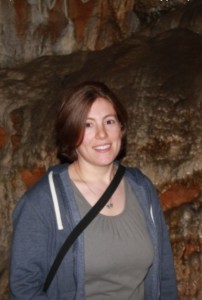


I chose this book as one of my picks for a young adult book club I’m in. The description intrigued me since it’s about a “strong female character” growing up in a time when females were discouraged from being scientists. What also intrigued me was the dark streak inherent in the title: the book centers around the presence of a plant (the lie tree) that grows when fed lies, reminiscent of the biblical tree of knowledge.

I wasn’t sure when I picked it up whether it would be a realistic story or one of magical realism. It turned out to be mostly realistic, with the focus on the way women were treated in Victorian-era British society, during which time only men were expected to indulge in natural science. The novel also examined the balance between science and religion manifesting during that time period. With ideas of evolution casting doubt on religion, people like the protagonist’s father were looking for ways to reconcile the two.

The book started slowly, but the mystery and atmosphere of the island of Vane helped to build the complexity of the plot. Faith, the main character, serves as an appropriate guide for young adult readers to navigate the customs of the time. Even as I read, I was thinking about more complex novels like Tess of the D’Urbervilles and how this book might lend insight into the time period Hardy addresses. Faith’s name is symbolic, as she lives in a time balancing religion and science. The novel includes characters—male scientists—who blatantly measure the skull sizes of women and men as physical evidence that men are smarter (because their brains, and therefore skulls, are larger). This is the mindset Faith is up against when she aspires to become a scientist.

Her brother has been groomed to be a leader in the family since his birth, even though Faith is clearly the able one. But even the young boy is forced into the conformity of the time: he is forced to wear a one-sleeved jacket to discourage his bad habit of being left-handed.

And most of these struggles help to echo the importance of social class. Faith and her family live in a house run by servants, and the class differences are clear. I liked how the book did not hide the resentment the servants had for the families they served. For an American reader living in modern times, I would imagine this type of class distinction would be difficult to imagine, even with today’s talk of disparity between classes.

The plant itself was, for me, the most intriguing part of the novel. I enjoyed the descriptions, though most of the book was told in a straightforward manner. A few passages stood out with vivid imagery.

For readers, the only cautions would be some slight violence, including several accidents that are investigated as suicides; however, none of these are shown in an explicit way. As a female scientist in Victorian times, Faith would appeal to female readers, especially ones aspiring to break into fields traditionally shut to them.

The book moved a bit more slowly than I would have liked, and I wanted a bit more depth and darkness woven into the tree itself, but the book is written so that it could be appropriate for middle school readers, so these elements would probably have pushed it up to a high-school-only level.


Welcome to the Spot Writers. This month’s prompt is to write a story in which one character plays a prank on another. Today’s tale comes to us from Val Muller, author of The Scarred Letter, the young adult reboot of Hawthorne’s masterpiece, and Corgi Capers, the kidlit, canine-packed mystery series.

For this month’s rotation, we’re featuring guest writer Eric Egger, publisher at Freedom Forge Press, who will write this prompt with the added challenge of connecting it to the theme of freedom, as with everything having to do with FFP.

Mrs. Spindle’s Retirement Gift

By Val Muller

Robbie Stewart was the kid she had every year. He came in different names, different bodies, he took different courses. But he was always there. Every iteration was a natural leader or especially talented, or at least had the potential to be, but he always squandered his natural charisma for ill and chaos. Sometimes he riled up the rest of the class. Sometimes he set off another conflicting personality and made a 90-minute class last all afternoon. Sometimes he popped into Ms. Spindle’s head as she tried to fall asleep. Or when she was cooking, one of his irritating antics would replay in her mind, causing her to burn dinner. Sometimes he appeared as a character in a movie or television show, ruining her immersion.

For thirty-seven years she had put up with the Robbie Stewarts of the world. For thirty-seven years she grinned and bore it. She’d always planned on going for just three more. Three short years to round her career to an even forty. Just three more years of Robbie Stewarts. But last month’s faculty meeting had put an end to that. The new initiative, following the latest educational trends, dictated that next year neither she nor any other member of the faculty at Piney Field High School would be allowed to hold students accountable to deadlines. Adhering to deadlines was not part of the academic standards, and it was harmful to student learning.

Theoretically, the Robbie Stewarts of the world could turn in every single assignment from September onward at the end of June. She knew this because Robbie Stewart, sitting in third block study hall, had gotten wind of the new initiative and was questioning her about it.

“So if it was next year, then if I held on to all my assignments and turned them in on June 1, you’d still have to grade them?” he asked, his mouth cracking into a smile. His face was oily with acne, and his teeth needed flossing.

She did not answer, but she suspected her involuntary cringe was all the encouragement he needed.

“And what if every student did the same? You would have to grade every single assignment from every single student on June 1.” He stifled mock concern. “That would take you hours. You’d have no time to yourself. Not on weekends, not on evenings. It would almost mirror the way teachers make students feel. Having assignments intruding into all our waking hours…” He was mumbling now, taking the joke beyond its natural stopping point, making a few other students chuckle. “…would barely even have time to shower, let alone eat.”

Luckily, this particular Robbie Stewart would graduate in a few weeks, but another would replace him, and next year’s R.S. would surely take full advantage of the new late work policy, exposing all the loopholes before the administration team even had a chance to address them.

“It’s not worth it,” her husband agreed over dinner that night. “You put in your time. Not everything has to be neat and even. Thirty-seven is just as good as forty.” Indeed, the difference in pension was a mere seventeen dollars and fifty-three cents a month if she stayed the extra three years.

“I won’t get my forty-year service pin,” she said. “Or my watch.” The district gave a fancy, engraved watch to all teachers who made it to the forty-year mark.

Her husband smiled. “I’ll buy you a watch, Mrs. Spindle. Any color you want. Even gold.”

She thought about Robbie Stewart. This year, he was big on taking pictures of assignments and distributing them to classmates. He didn’t charge for this service; he did it for the fame. She’d caught him in October with a copy of the vocabulary quiz, one he’d gotten from a recycling bin at the end of the previous school year. She’d caught him using his watch to send texts with answers to the fifteen-page history packet right before the due date. She’d tried to turn him in twice, but each time, Robbie Stewart cleared his phone so that when Admin searched it, they found nothing incriminating.

Except Mrs. Spindle’s repressed frown.

Robbie Stewart was on her mind that night as she agreed to the retirement with her husband. After that, her teaching took a noticeable dive. She relied on decades’ worth of material for the final weeks of the year. She took sick days to accommodate several three- and four-day weekends. She allowed students to view more movies in one month than she’d allowed in the last five years. And while they watched, she just stared and stared. The time was growing short. She had only days to make her move.

She had been watching carefully, these new smart devices students had. There were watches and jewelry and little fobs you stuck to your sneaker. They tracked movement, sent alerts and notifications, and even browsed the web.

Robbie Stewart had the most impressive watch of them all. It was a blue one, a unisex band not too thick. It was a serene blue, too, the color she imagined retirement would be. Whenever he got a text, the watch glowed, a pulsing blue light. And she knew he could send texts from it, too, and access the Internet. She wasn’t sure the details of how it worked; she knew only that she desired that watch more than she desired her service pin or the platinum-colored watch the district would have bestowed upon her three years hence. It was a symbol of the menacing power of Robbie Stewart.

She popped in another movie and opened her laptop. Years of creativity, repressed by student apathy and teenage angst, came flooding out. Her years of teaching journalism and research papers mingled together in the cauldron of her brain, coalescing into the perfect concoction. It was fed by the renewed energies allowed by her recent long weekends and lack of lesson planning. It was the inspiration of a career’s worth of self-indulgence, all packed into a single moment.

She experimented with fonts and columns, with stock art and bylines, until it looked the part. She left the class alone to watch the film and trotted to the copier. She photocopied the article once, then photocopied the copy and its copy until it had that worn-out look that made it seem genuine, like something the main office would distribute.

And then she left the bait. When Robbie Stewart’s class came in, she left it tucked between the chair in front of him and his desk. It stuck out just enough to intrigue the lad. Before she started the film, she channeled all her years of teaching Shakespeare. With a performance worthy of an Emmy, she feigned concern.

“Students, I seem to have left an important article somewhere. If you happen to see it, please turn it in to me at once. No need to read it. In fact—” she hesitated and tried to make her face turn red and then pale— “It’s actually a bit controversial. It has nothing to do with you, mind you. Just with some policies going to be implemented next year.”

She stifled a smile as Robbie raised an eyebrow. As soon as her back was turned, she heard him snatch the article. She made a show of searching under several student desks as the movie commenced, not minding the young lad reading quietly at his desk.

As the students shuffled out, Robbie tossed something in the trash, leaving the room especially quietly. She waited until they all left. The room was silent and full of the emptying scent of teenagers. As the air cooled and freshened, she bent down to unroll a wad of paper. There was her article, well read. High school senior expelled as smart watch reveals cheating; college admission rescinded. She smiled again at her use of quotations from the principal of the nearby county who was apparently receiving some kind of award for his groundbreaking sleuthing into student technology. Even the superintendent had been quoted, confirming the district’s ability to search student devices without warning.

She chuckled. If the article were true, Robbie’s watch probably contained enough evidence to get him expelled three times over. Too bad it was just really good fiction.

She wadded up the article to return to the trash when something twinkled in the trash can. There it was, in all its glory: Robbie Stewart’s blue watch. Abandoned for fear of it being a snitch. Her article had been more convincing than she thought.

The watch felt cool around her wrist, but it warmed almost immediately, and she swore she felt youth making its way from her skin into her blood and up her arm. She went to the main office right away to arrange leave for the rest of the year. Who needed to work three more years to make an even forty? She left school smiling, her trophy sparkling serenely around her wrist in the early June sun.

* * *

The Spot Writers is seeking another member. Have what it takes to write one flash fiction piece per month? Want it published on four different blogs? Need other flash pieces for your blog content? It’s a great way to stay motivated to write—and write for an audience. If interested, contact Val for details!

* * *

The Spot Writers—Our Members:

Val Muller: https://valmuller.com/blog/

Catherine A. MacKenzie: https://writingwicket.wordpress.com/wicker-chitter/

Eric Egger: www.freedomforgepress.com/blog (guest this month)

I’ve been guilty lately of neglecting my Fantastic Friday posts. My daughter, now a two-year-old, did not sleep through the night until 15 months old. The lack of sleep forced me to cut back on some of my activities, and for some reason, the Fantastic Friday post was one of the easiest things to let go.

20180414_152213

Which got me thinking: why is it so easy for humans to give up on the positive? Why is it much easier for us to dwell on the negative? It’s the reason I started the Fantastic Friday posts in the first place: positivity can spread, but negativity spreads much more quickly.

Even though I haven’ t been posting regularly on Fridays, I have been clipping articles and stories that I want to post about. One of them is from the December 2016 issue of National Geographic. The  cover story focuses on the healing power of faith, examining several examples: an American man with Parkinson’s disease whose symptoms improved remarkably after he participated in a trial for a new treatment—even though he had been given only the placebo. The Ashaninka people of Peru, who use vapor from boiling herbs in their healing practices and who use ritual songs to promote healing. Burjos in Mexico. Even in clinical settings, things like music in the waiting room and white coats are all referred to as part of the “theatre of healing” and help our bodies manage expectations.

The article provided some explanation for the placebo effect. For one, patients improve even when told they are taking a placebo. The article notes that a supportive relationship—one shown between practitioner and patient even during a placebo trial—is important. Positive attitude accounts for much. When we expect to be healed, our brains seem to work to make our bodies produce elements that heal us. Part of healing is about conditioning: experiments in rats show that it’s possible to train the body to respond to medicine even if a medication hasn’t actually been administered. Further experiments show the impact of social expectations: the more others believe something, the more we do as well.

The article concludes with a look at many of the religious pilgrimages practiced throughout the world and the many cases throughout history of people being healed after journeying to a place of religious significance.

With a second baby on the way, I had to repeat several tests that didn’t work out that well with my daughter. I could literally feel my body tensing up and feeling terrible and sick—even though the day before the test, I’d felt great. The article calls this the “nocebo” effect: the belief that something bad will happen, and the body actually responding to make it so. I passed all my tests just fine and have since re-grasped a positive outlook. But it just goes to show: negativity is so easy to spread and so harmful in many ways.

I’ll be back weekly with my Fantastic Friday posts in an effort to spread positivity: the more people who believe in spreading the positive, the more it will spread. And I hope, once again, to contribute positivity to my little corner of the internet.

Welcome to the Spot Writers. The prompt for this week is based on a Stephen Hawking quote: “The universe does not allow perfection.” Write a story based on that.

This week’s story comes to you from Val Muller, author of the middle-grade mystery series Corgi Capers. Find out more at www.CorgiCapers.com

Heirloom

By Val Muller

They lived like those in Pleasantville or Leave it to Beaver. Or one of those old shows. Not that anyone would know. No one watched television shows anymore, let alone movies. No one had the time or the attention. They were all too perfect to spend so much time sedentary. No narratives longer than the 70-second clips people watched while they waited for their can or train or meal. Their workdays and exercise schedules and social events were all planned to the minute.

Those old programs caused too much thought, and too much thought led to unhappiness, and that was the Unperfect Old Way.

Thomas watched them from the roof, each person an even speck, miniature models in the cityscape below. Each one slim and muscular, the optimal body composition; each one as perfect as the cherry tomatoes he harvested. He opened the crate sent from the grocer. Each tiny bubble in the crate was designated to hold exactly one cherry tomato. Each would be cradled on its way to the grocer. Exactly zero tomatoes would be wasted in transit on the short trip to the city below. The coating on the inside of each bubble meant no early spoilage, either. He placed one tomato into each crate before sealing the crate and sending it down the elevator shaft to the courier waiting below.

Every day, each one of those tiny specks below would be allotted four cherry tomatoes. Or half a banana. Or a quarter of an apple. But Thomas’s concern was only the tomatoes. Thomas couldn’t be sure, since he didn’t leave his rooftop dwelling, but he suspected that the apple and banana and other farmers followed similar processes to create perfect produce.

In the building beneath him, each perfect little speck was allotted 100 square feet of living space and a small bathroom shared by members of the family. In the country, wood harvesters were tasked with building bunk beds and recessable tables that would fit cleanly in the 10×10 space.

When a baby was born, calculations based on life expectancy estimated the exact number of tomatoes that would be required to supplement the human’s nutrition bars These numbers were sent to a screen on Thomas’s rooftop farm, telling him how many tomatoes to harvest on any given day.

Somewhere else, where water was processed, a similar calculation told the engineers just how many gallons of potable water each person would consume each day. Somewhere, tailors received the exact measurements for garments required each week and month and year. Everything was calculated, from the amount of water required to cleanse a newborn to the amount of heat required to turn a person into their final puff of ashes.

It was perfection.

Politicians were required now only to reinforce rules already established. Computers kept birth rates, consumption, jobs all in balance. There was nothing to improve upon anymore. The world was in a state of balance.

The sun was sinking now beneath the tall skyscrapers, and Thomas pushed the button which would cover the plants from the elements of the high elevation that might harm the plants at night. Already, the gossamer film was absorbing radiant energy, converting it to a diffuse light that allowed the tomatoes to grow, even at night. In this lighted greenhouse, the fruit matured nearly twice as fast.

The light on Thomas’s elevator blinked, indicating a delivery making its way from the street below. Sunset. Perfect timing. Thomas smiled and hurried to his corner garden. He chose the largest two tomatoes, two huge ones larger than his fists. Both were roundish but not spherical, with several bulbous excrescences. Their weights were incredible; each seemed to hold twice its volume in water and nutrients.

Thomas brought one to his nose, and instantly the sharp, earthy smell transported him to his grandmother’s garden in the days before The Perfection. He wrapped the tomato in a slice of paper announcing water regulations for the agriculturalists and pulled the opaque black curtain down over the corner garden. Maybe it was just an old-fashioned belief, but Thomas swore that the heirloom tomatoes grew best when they got to rest at night. Same as people.

The elevator had finally reached the rooftop, and Thomas opened the door. The pungent odor of a whole fish hit him as he unwrapped the offering. “Thanks, Bill,” he said. He placed the wrapped tomato on the platform, closed the door, and sent the elevator down to his old friend, who was now just a speck on the sidewalk below.

He started right away, scaling the fish and filleting it. The waste he would grind and use to fertilize the heirloom garden.

The city planners allowed no extra energy source to cook food; the nutrition bars allocated to Thomas and everyone were edible right out of the package, as were the produce supplements he was allowed. They had calculated everything, from lighting needs to water heating needs, most powered by solar energy and man-powered gyms in the building below.

But the city planners and the computers that calculated things had let something slip. The impossibly high elevator required to transport people to their skyscraper dwellings produced an abundance of heat, and this had nowhere to go except to be vented through a shaft to the rooftop garden, where it helped establish a greenhouse under the night’s gossamer film.

Anyone but an expert gardener would require the heat source to produce the required quantity of tomatoes. Anyone else’s crops would suffer if the heat source was used to power the small oven that provided Thomas with cakes and fish and poached eggs and all sorts of contrabands, courtesy of his artisan connections across the city. He’d even rigged the heat source to power a small television screen and DVD player so he could watch movies and relive the time before The Perfection, like the dinner dates of old.

He plucked a handful of herbs from behind his blackout curtain. Freshly-picked was always the best. He wrapped the herbs around the fish and placed it in the oven. The aroma was apparent almost immediately, though there was no way the people in the building below could ever smell it. Thomas placed the other heirloom tomato on a plate and sliced it, salting it lightly just the way his grandmother used to do. Each slice was asymmetrical, imperfect, and delicious. It would pair well with the fish.

Perfectly, in fact.

The Spot Writers—Our Members:

Val Muller: https://valmuller.com/blog/

Catherine A. MacKenzie: https://writingwicket.wordpress.com/wicker-chitter/

Millicent Hughes: https://www.danburyonfire.com/


I chose this novel as part of my young adult book club, during which we evaluate books for possible use in the classroom. It’s a national book award winner and about an underrepresented group, Native Americans.

Taking place in the late 1980s, the book details the brutal rape and attempted murder of the main character’s mother. Joe, only thirteen, is forced to watch as his family life suffers as a result of the crime. Because of the complicated laws in existence, the crime cannot be persecuted or punished because of its location—the distinction of being on federal versus state versus reservation land.

I did enjoy the elements of Native American life—both glimpses into modern reservation life as well as glimpses into the older way of life, such as dreams and mentions of spirits called wiindigoos. It’s also important to consider how the tangled web of laws can harm those least able to fight for their rights.

The book felt long to me, thought, and took a while to read. I attribute most of this to the fact that the author did not use quotation marks for her dialogue. In fact, if I did not have to finish this book for my book club, I would not have. I do understand that some authors are choosing not to use quotations marks for dialogue for various stylistic reasons, but to me, it is a disrespect of the reader’s time. I am a fast reader, but the lack of quotes slowed me down significantly.

As all the other members of my reading group noted, the ending was a bit of a disappointment. I was expecting something much more significant or insightful, something helping to bring all the threads together, even if in an unsettled way. When I turned the page after the last chapter, I was shocked to find there was no more. It felt unfinished and abrupt. I’m not sure if the author did this intentionally. Joe does give us glimpses into his future throughout the novel, but I was thinking we would get a bit more of a glimpse into that by the end.

I won’t reveal more because if the plot is spoiled, I’m not sure how much the novel really has going for it.

In terms of appropriateness for a classroom, I would suggest using passages to study style and voice. There is underage drinking, sex, and drug use as well as violence up to and including murder.

Welcome to The Spot Writers. March’s prompt: How (or why) a young person decides what career (or path) to follow.

This week’s story comes from Cathy MacKenzie. Cathy’s one-woman publishing company, MacKenzie Publishing, has published two anthologies: OUT OF THE CAVE (milder stories for 13+) and TWO EYES OPEN, two collections of short stories by authors around the world, to read during the day…or at night, as long as two eyes are open. Not “horrific horror”…more like intrigue, mystery, thriller. Simply good reads.

***

The Vampire by Cathy MacKenzie

Nancy jumped. What was that?

The book she’d been reading, A Nightmare of Vampires, lay beside her. Had she fallen asleep? “Darn, now I’ve lost my place,” she mumbled.

She tiptoed to her bedroom door. Carefully she opened it and peeked into the hall.

Dark. Quiet. No—what was that?

A shadow. At the end of the hall.

Was that Nathan, her seventeen-year-old brother?

Once Nancy’s eyes grew accustomed to the dark, the shadow morphed into a vampire—a real life vampire. A female vampire! Heading to Nathan’s room!

She wanted to keep watching, but she was a fearful. Vampires were bad creatures. They sucked the blood out of you and where would you be then? But that’s why she wanted to be a vampire. She wanted control: control of her destiny, control of others.

She liked the look of blood, the thick red, coppery scent. She’d tasted blood previously, when she cut herself, sometimes on purpose, so she could lick her skin until she had lapped up all the red. The taste wasn’t bad, actually, but not as sweet as she had expected. She worried—if her dream to be a vampire came true—whether she’d be able to stomach strange blood. That was perverse and unnatural, wasn’t it?

But it would be fun to haunt the night, to soar through the sky—vampires did fly, didn’t they? She considered herself a people person, at least that’s what her teacher had recently said. At the time, Nancy thought “people person” was a label for yapping fools who didn’t shut up, but she later learned the connotation was desirable. People were supposed to be sociable, talkative, and interested in others. Nancy was all of those: all the requisites for a female vampire.

She hesitated. She’d love to confront the vampire in the hall and converse with it, but she snuck back to her bed.

Katherine Krimmins was an excellent writer, and Nancy immersed herself in the story again, picturing herself as Vanessa the Vampire. She was aware most vampires were male, but this was the twenty-first century. Couldn’t she be whatever she wanted?

The next morning, she met her grandmother, who was visiting for a couple of weeks, on the stairs, and told her that she wanted to be a vampire when she grew up.

Granny’s eyes grew wide. “What! A vampire? How do you know what a vampire is?”

“I know what they are. I’ve seen them.”

“You’ve seen vampires?”

“Well…just one. Last night.”

“Oh, you must have had a bad dream. A nightmare.”

“No, Granny, I saw one for sure.”

“Where?”

“It was going into Nathan’s room.” She pointed behind her. “I saw it.”

“Oh, Nancy, you silly girl.”

“No, Granny, I saw it.”

“It’s not nice to tell fibs.”

Nancy pouted. “I’m not. And that’s what I want to be when I grow up.”

Her grandmother hugged her. “Oh, sweetie, if you want to be a vampire, you can be a vampire. You can be anything you set your mind to, but you’re only twelve, so I’m sure you’ll change your mind dozens of times before then.”

Nancy relaxed. Even if her grandmother didn’t believe her tale, she had, at least, agreed she could be a vampire. Her mother, though, would have a different opinion.

“Let’s go eat breakfast,” Granny said.

They entered the kitchen. Her mother, busy at the counter, greeted them. Nathan appeared seconds later.

Nancy couldn’t help but notice his flipped-up collar. “Nathan, your collar is skewered.”

His face flushed. Up to no good, she thought.

He glared at her. “Shut up, Nancy.”

Their mother wagged her wet fingers. “Kids, behave.”

When Nathan sat at the table, his collar flipped down.

Nancy gasped and whispered to her grandmother. “Granny, see? Vampires do exist. They suck the blood outta you, just like one did to Nathan last night.”

“Sweetie, what are you talking about?” Granny asked.

She motioned toward Nathan. “Look at Nathan’s neck. See the red blotch? That’s dried blood. That’s where the vampire got him. Sometimes they don’t kill you, you know. It all depends how sharp their teeth are.” Nancy figured she’d be a good vampire. Suck up enough blood to satisfy her urge but not enough to kill.

Nathan, his face even redder, yanked up his collar. “What you guys looking at?”

Their mother growled again. “Kids, hush. Sit down, Nancy and Granny. I have eggs and bacon.”

Nancy ignored her mother and whispered to her grandmother again. “See, I told you I saw a vampire.”

Granny leaned in to her. “I believe you, sweetie. I saw the red mark. But let’s keep that our secret.” Her eyes glistened.

Was she crying?  She looked sad.

“You missing Grampie?” Nancy asked.

“I am, sweetie.”

“Sorry, Granny.”

“Life goes on. Companionship is a good thing. I think being a vampire would be a good occupation when you grow up,” she said.

***

The Spot Writers—Our Members:

Val Muller: https://valmuller.com/blog/

Catherine A. MacKenzie: https://writingwicket.wordpress.com/wicker-chitter/

Millicent Hughes: https://www.danburyonfire.com/

Welcome to the Spot Writers. This month’s prompt is to write about why or how a young person decides what career or path to follow. Today’s tale comes to us from Val Muller, author of the poignant coming of age tale The Girl Who Flew Away.

Transcendental Beauty

By Val Muller

“An egg candler? You mean, as in candles?”

I nodded and smiled, but Mom’s brow was doing that thing again, that squinty thing it does when she’s mad.

“An egg what, now?” Dad asked. He peered over the folded edge of his newspaper. “A handler, like as in, a packer? You want to work at a factory, son?”

I shook my head. How could I make them understand? “Not a handler. A candler. Remember that old cartoon we watched at Uncle Mike’s house? The one where the farmer holds up all the eggs to a candle until he finds the egg that has the chick in it?”

My mom’s brow was now a map of the Grand Canyon.

I swallowed a lump in my throat. “Well, that’s what I want to do.”

Dad’s newspaper fell to the table. “So you want to spend your life holding up eggs to candles? Am I hearing this right? You’re taking five AP classes so you can hold an egg to the candle?”

The air grew dense.

“Are you taking drugs?” Mom asked.

“No!” I felt my face flush. “It’s just—” I tried to picture the German classroom, to picture the beauty of it in a way that my parents would understand. The way Frau made everything soft and welcoming. Even the German language sounded like soft poetry the way she spoke it. “For Easter, Frau Beckham let us make eggs.”

“Make eggs?” Mom asked.

“Who the hell is Frau Beckham?” Dad asked.

“His German teacher,” Mom said. She lowered her voice. “I think he has a crush on her.”

The blush rose to my ears.

“Aren’t you supposed to be learning German in that class?” Dad asked. “Is it a cooking class? Home Ec is for girls.”

“We’re learning German,” I insisted. “She was giving us the directions in German.”

“The directions?” Dad asked. “On how to be an egg candler?”

“No, the egg candler wasn’t Frau’s idea. She had us decorate Easter eggs. We blew the yolks out and then decorated the eggs. Now they’re hanging on a tree on her desk. Mine is the one right in front.” I swallowed a smile. “It’s pink with a purple heart in the center.”

“You blew the yolks out? In the classroom? On desks where kids sit?” Mom asked. “She could give someone salmonella that way.”

“You just make a little hole on each side,” I explained. And then you break the yolk and then blow it all out into a bowl. If we were in Germany, we would have used the eggs in the bowl to cook something.”

“Good thing you were in a public school classroom, then,” Mom said. “That all seems rather unsanitary.”

“She had the desks all covered. She brought these little table clothes, and she set them each with lots of napkins and even some chocolate eggs. And her dress matched, too. All very spring-like.”

Dad rolled his eyes and picked up his paper again. “Looks like our son has spring fever for this Frau.”

“Maybe I should call the school,” Mom said, her voice so much less dismissive than Dad’s. “This all seems rather unhealthy. And an egg candler…” She scrolled through her phone screen. “The median salary is laughable, James. This is not the job for a son of ours. Not one who is bound for college.” She put her phone down and squinted at me. “I think I will call the school about this Frau, planting ideas in your head of making you a bum.”

“Yeah, son. A factory job is no place for you.”

“Mom, an egg candler is not a bum.” I turned to Dad. “And you don’t know what my place is, anyway. Besides, it wasn’t Frau who got me thinking about that kind of a job.”

My parents looked at me, my dad’s eyes glaring over the paper.

“In English class, we’re discussing Existentialism. The idea is that nothing really has meaning until we impose it. So this whole idea that we have to go to college…”

“James!” Mom scolded.

“…and work fifty weeks a year just to spend tons of money on a two-week vacation…”

“You’re on thin ice, boy,” Dad said over the paper.

“…and work to exhaustion at college just to find a competitive career that will make us sleepless at night and stressed during the day…”

My parents exchanged glances. I, in the middle of them, felt their impact as if I were caught in a firing squad. But I couldn’t stop myself.

“So instead of sitting behind a desk all day, or stressing about clients, or worrying about competition, why not find something amazing, like the simple beauty of an egg? Why not look inside the beauty of nature every day? It’s very Transcendental, actually. Emerson and Thoreau would—”

But that was it. Their looks had killed me. I swallowed hard, like swallowing over an egg stuck in my throat, before getting up to do the dishes. I had to hurry: I had lots of work to do for my five AP classes if I had any hope of getting into a good college.”


The Spot Writers—Our Members:

Val Muller: https://valmuller.com/blog/

Catherine A. MacKenzie: https://writingwicket.wordpress.com/wicker-chitter/

Millicent Hughes: https://www.danburyonfire.com/


Welcome to the Spot Writers. The prompt for this week is to use these five words in a story or poem: riot, tear, leaf, bread, nurse.

Clark’s Memorial

By Millicent Hughes

Real nice to see you this morning, sir. Haven’t seen you since … well, you know…. My own boy, Clarkie, Clark Hamilton … fallen like a leaf from a tree. Well, our boy, our Danbury boy, ain’t that right, sir?

Yes, the pain of his death has worn off a bit, thanks for asking. The official notice was just a deadly shock. But since I got that letter from Richmond, the real letter, from that officer, I truly do feel better.

A thinkin’ person wants an explanation, you know. Just some answer as to how a little wound ends up to kill a man when doctors do battlefield amputations and the men live. ‘Course, I s’pose all the docs nurse them officers like they was Queen Victoria, don’t you think?

Died real noble in battle, you say? That idea might satisfy some, but it didn’t satisfy me!  I wanted the real truth and nothin’ but the truth. I knew my boy was not a victim of another young man, a boy with a gun just like his’n.  I wasn’t turnin’ a blind eye with some twisted idea of ‘glory in the grave.’

What say? Oh, what you heard is true, all right. Clarkie was wounded at Cedar Creek there in Virginia. but it ain’t where he died nor what he died of. Not by a long shot. I had the report he was taken to Richmond, so he must have come off pretty good to survive the battle and go on the cars to that prison.

No, that ain’t a tear! Why you think that, hey? No, sirree, bob!

Say, rather than tell you about it, I’ll let you read that letter for yourself. I carry it in my billfold. Nice enough that that officer cared to send it, let alone tell his mother and me the actual fact of the matter. Here, did you want to see it?

No, don’t refuse like that, sir. It ain’t real personal, like you say. I want to publish this letter to the world. That’s why I carry it ever’wheres. I want to show people that ain’t a drop of humanity in them Confederationist devils. Why the decent population down south don’t riot agin ‘em, I don’t know.

And one man dared to tell me the truth. He wrote me this letter, sir, namin’ it plain. My son, Clark Hamilton, met with murder, murder by starvation. Starvation by the fools in them Confederate states.

No, that officer din’t have nothin’ to do with our boys, just happened to be there is all.

I’m sorry you ain’t got the courage to read it. I’ll just put it back in my moneyfold for anyone who’s interested.  P’rfaps next time you’ll see fittin’ to take a look.

Nice seein’ you again, sir.

The Spot Writers—Our Members:

Val Muller: https://valmuller.com/blog/

Catherine A. MacKenzie: https://writingwicket.wordpress.com/wicker-chitter/

Millicent Hughes: https://www.danburyonfire.com/