Val Muller

The Electronic Wordsmith

Last year, I read an article in National Geographic magazine about Emily Briere, an aerospace engineering student who started a student-run project to send a small time capsule to Mars. Her goal in orchestrating the project is for future generations of humans who live on Mars to see what we are like here on Earth, today. (You can learn about the project at http://www.timecapsuletomars.com/)

In many ways, this reminds me of the Svalbard Global Seed Vault, a vault located close to the North Pole, the purpose of which is to store seeds to ensure a diversity of species in case of a human or natural disaster. (Learn more at https://www.croptrust.org/our-work/svalbard-global-seed-vault. ) When I first saw a picture of the vault’s magnificent entrance, I felt waves of emotion.

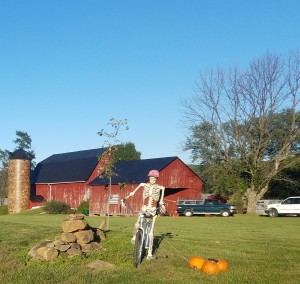
IMG_9524In both these instances, I see the same hope that we have when planting a tree: in many cases, when we plant a tree, we know we won’t be living in that area—or living at all—once the tree reaches its full height. But we plant the tree anyway, hoping to improve that particular yard, lot, property, or planet, knowing deep down that there will be others there to enjoy it.

When the news often likes to show all that is negative about our world and our politics, it’s easy to forget that most of what individuals do is done with great optimism. The reason we save money or make home improvements or plant a garden or a tree or a flowerbed is because we have hope for the future. Emily Briere is working on her time capsule because she has hope and faith that one day, humankind will arrive on Mars. The seed vault is more of an insurance policy, but it works with hope as its underlying driver: even if there is a natural or human-made disaster, it presumes that there will be humans left to rebuild the planet the way it needs to be, with plenty of plant diversity.

When life gets me down, I try to think about the reasons I don’t eat an entire pizza at once or spend all my money or fail to water my plants. It’s not habit or routine or fear: it’s a driving sense of hope that the actions I’m taking now will have positive repercussions in the future.

This month’s theme is “monster,” to be interpreted in any way. This week’s story comes to us from Val Muller, YA author of The Scarred Letter and The Girl Who Flew Away, both discounted to $2.99 for the rest of the month.

Monster by Val Muller

The end of the fiscal year coincided with the chill in the air, even in the streets of Washington. It was almost like the decaying leaves piling in the country out west sent their ghostly miasma in with the commuters. That chill, that scent of decay spoke of the thinning line between living and dead, that boundary that would continue to thin as department stores threw up Jack-o-Lantern decorations and trees threw off the last of their leaves.

Something about that thinning line sent a chill into Daniella’s spine, and it froze and hardened a piece of her soul. On September 1, she’d been all smiles when Timothy asked to telework because his daughter had a sudden case of strep. On September 2, she let Marie go an hour early to check on a sick puppy. That Friday, the one before Labor Day, she told everyone to go home an hour early.

“Happy Labor Day,” coworkers chanted as they hurried down the hallway toward weekend plans.

“Happy closeout month,” she responded, her fingers tapping behind her back. “The fun begins Tuesday.”

At barbeques that weekend, employees joked with family and friends about Daniella’s demands for year-end closeout.

“At our staff meetings, she said we may have to work twelve-hour days.”

“She’s threatening to make us come in on Saturdays.”

“And Sundays.”

It was met with laughter, then forgotten as fathers played catch with sons and mothers went with daughters for a last dip in the pool.

But in a lone apartment, not a mile from the office, sat a husbandless, childless soul. Her fingers folded in a tent in front of her as she thought about the month ahead. Everyone would be working late. In her mind, there were already parades of memos, lists of funding documents, and hourly meetings. They would all have to check in with her before they left, and only at quitting time would she tell them that they had to work late.

They’d have to arrange last-minute babysitters. They’d have to miss soccer games and youth football. Mommies would have to explain to children that there were just some things more important than storytime with daddy. And daddies would have to explain to neglected children why mommy wouldn’t be there for birthday parties.

In the corner of Daniella’s darkened apartment, a blue screen glowed. It was still open from the atrocity she saw this morning on Facebook.

Jerry.

They’d had a brief fling in college, but he left her to seek “more fun, less serious.” Somehow, she always thought he’d be back. How could he choose some floozy over her rigidly-straight GPA, her list of extracurriculars, her reputation as drill sergeant of the women’s cross country team? He had made a terrible mistake. In every country music song—like the one playing on repeat from the computer, the one preventing the screen from dimming—she heard the hope and sorrow of their relationship. She knew he’d be back for her one day. His breakup had been a mistake he’d yet to realize. His marriage was something he’d been coerced into. It had always been only a matter of time. She’d waited years already and was prepared to wait more.

But now, this.

Jerry was a father.

His baby’s newborn eyes plastered all over her Facebook feed. The infant’s smile was a punch in the gut. Why, he hadn’t even posted that his wife had been pregnant! So smug, keeping that their private little secret like they were in some kind of exclusive club. And there went that. With an infant’s smile, there went her excuse, her reason to ignore the dating scene. There went her nightly fantasies, her frequent hopes that his status would turn to “single” and she’d be welcomed back into his life.

Gone.

The cold front seeped into her soul. She thought of the office, of Brittany’s baby shower and Harold’s office bachelor party. They were smug too, weren’t they? Making their plans. Having their weddings. Prioritizing their families. Not even thinking of the office, were they? Of the cold, beautiful symmetry of it all. The same 72 degrees all year. The same lighting. The same sterility. She’d bet none of them were even giving the office a second thought.

Let them all enjoy their weekend.

On Tuesday she would have them.

That Saturday she tried three new hairstyles. She went jogging and shot disgusted looks at the family of five taking up the entire sidewalk with training wheels and strollers. On Sunday she went to the salon for an impromptu haircut, but a wailing toddler and his obnoxious brother ruined the mood, and she went home with her outdated coif. On Monday she tried a new makeup regime and went shopping, but a gaggle of mothers was standing near the clearance rack, comparing toddler bedtime routines and little league scores.

With each foiled attempt, the monster grew in her soul. Her heart hardened and chilled, and she couldn’t wait for the memos that would come. She couldn’t wait to tell them about their mandatory one-hour lunches. That way, they’d be able to stay for the daily 5:00 meeting and still have half an hour to spend at her command. She’d string them along like fish, luring them with the hope of an on-time departure from the office. And she’d come in for the kill. She’d already planned the dates they’d stay late: she’d know, from the very second they set foot in the office. She couldn’t wait to walk through the cubicles, her monster feeding the anticipation that would be nearly tangible in the air. They would have no idea until her evening meeting, no idea whether they’d be dining with their families or eating out of the vending machine again. Their suffering fed her monster.

The monster’s claws emerged that week, and each memory of Jerry grew into a hardened bone, a serrated tooth, a beastly horn. During the third week, John shuffled into her office, a folded note in his hand. It was a letter from his wife, one he promised her he’d deliver. It stank of desperation, and she chewed her smile as John watched her read the list of complaints. He was like a sheepish child delivering a note to a teacher. What, did his wife own him? It was written in bubbly handwriting: Couldn’t John please come home on time? The children missed him and she was losing her mind, living like a single mother of three. Couldn’t Daniella see her way to letting him telework, from home, after the kids were in bed?

“We’re all in this together,” she said to John, her lips pouting for him. “And I’m afraid tonight is going to be a late one.”

* * *

The second Saturday in October, Daniella walked to the base of the Washington Monument. Fiscal close-out was done, and with all the free time afforded by the on-time departures from the office, she had joined an online dating service. Jerry would have to be replaced. And she had so much to offer. If only she were given the chance, she could run a household with the iron fist with which she ruled her office.

The man waiting there looked every bit as good as he did in his picture. He smiled at her, but when she smiled back something faded on his face. She knew in an instant he wouldn’t contact her for a second date.

What was it that chilled him to the prospect of a life with Daniella? Perhaps he feared her ramrod-straight work ethic, or her love of her job. Perhaps her role as Boss intimidated him. As she walked home alone and scowled at two kids screaming in a pile of leaves at the edge of a park, the chill of autumn bit under her jacket, and she shuddered. She couldn’t help but wonder if maybe he feared the monster, the one that had taken residence in her soul.

* * *

The Spot Writers—Our Members:

Val Muller: https://valmuller.com/blog/

Catherine A. MacKenzie: https://writingwicket.wordpress.com/wicker-chitter/

Dorothy Colinco: www.dorothycolinco.com

CaraMarie Christy: https://calamariwriting.wordpress.com/

Hearing about the terrific destruction of the recent hurricanes has made me think more carefully about my house. What I took for granted only a few weeks ago now seems palatial. I recently read a post by Nick Maley, the talent behind the “That Yoda Guy” exhibit in St. Maarten. In the brief post—there is no electricity to charge devices there—he wrote about the extensive destruction of the hurricane and about the grocery stores now essentially under martial law to prevent looting. It made me really appreciate the safety of my own home and the resources of my pantry.

In fact, as a result, I’ve been having dreams about my house and simply appreciating how safe and comforting it is. In one dream, we somehow decided to sell the house, and I was running around looking at all I would miss. I think all the news about the hurricane has made me consider what it would be like to lose my home. I woke up with a new appreciation of my space. That made me think about a room I’ve been imagining for a while now.

In my current reality, my toddler has made my ideal reading space the bathroom floor as I monitor her during bathtime (I have to limit myself to books that can be read while keeping half an eye on her at all times). However, I often fantasize about when she gets a little older and allows me more time to read. I wonder about the furniture we might buy once she is finished coloring on everything.

I have often fantasized about having a “Halloween room.” Halloween has always been my favorite holiday, and while I don’t imagine the room being completely black and orange, I want it to have that Gothic, Halloween feel to it. Something about autumn and a bit of creepiness puts me in the mood to read and write.

I’d want the lighting to be low, so I’d choose a decorative wall sconce like this:

Since I’m a writer, my ideal space would have a writing desk. Something not too big or distracting, but something with a little umph. And of course, keeping with the Halloween theme of my ideal nook:

While I’m a big fan of sectionals, I would prefer an individual chair of some sort, something to tell other family members that reading/writing time is not to be interrupted. I’m thinking something like, only in black (and the dog in the picture would be replaced by my corgis):

But I would put it in a corner, and I would enclose it in a gossamer curtain of fairy lighting. Something like this:

Speaking of mirrors, I think I’d add one. Mirrors are always a little creepy, and a Gothic frame would help give my reading room the creepy edge that helps spark my creativity. Maybe something like:

Not too big, of course. Just something to put in the corner to catch the twinkling fairy lights and add a bit of adrenaline-inspired creativity.

And perhaps out of practicality, I might have to build a custom shelf myself, but I would love if the entire back of the room were filled with shelves because I literally never have enough space for my books: they end up double- and triple-stacked. But a girl can dream of being able to afford something like this:

I do think my Halloween nook will one day come to fruition, but that day is measured in decades, not hours. For now, I enjoy the soft plushness of a Peppa Pig towel and the ambient background noise of toddler, ducks, and boats splashing in the tub while the occasional splash of water dots the pages of my book, and pages turn against the gleeful giggles of a child.


Barking Rain Press is featuring all books and ebooks at a 50% discount for the rest of the month. The sale The Girl Who Flew Away covereven extends to Overdrive, the system that allows schools and libraries to purchase ebooks for patrons. If you haven’t already checked out The Scarred Letter or The Girl Who Flew Awaynow is the chance to do so for the price of a pumpkin spice coffee 🙂

As the end of summer draws near, I wanted to share one of my favorite news stories from the season.

It seems that hatred is so contagious, and the media seems to ignite the worst feelings we have. For several days this summer, I avoided social media: after the violence in Virginia in August, it seemed even friends were attacking each other online, saying things that shocked me and things they would likely not say in person. It’s one of the reasons I post this Fantastic Friday feature. Kindness is contagious, too—it’s just not as virulent as its opposite. My hope is that by sharing positive stories and observations, I can do my small part to make this world just a bit better.

So it brings happiness to me when I read a story like this one. In Minnesota, a 94-year old man named Keith Davison recently lost his wife of 66 years. After suffering the terrible loneliness that followed, he decided to reach out to others. He built an expansive in-ground pool and allows the neighborhood kids to swim in it all summer long (under their parents’ supervision, of course). Though he doesn’t have grandchildren of his own, the kids of the neighborhood have become like family.

While we’re not all lucky enough to have a neighbor who can build us a pool for the summer, the spirit of what he did is one I like to keep in the back of my mind. Mr. Davison solved a personal problem by reaching out to do something for others. Whether it’s holding the door for someone, letting someone merge into the lane without aggression, “paying it forward” at a drive-thru, or leaving a kindness rock for a complete stranger to find, small acts of kindness can be the thing that makes someone’s day, the thing they think about with a smile before falling asleep.


One of my favorite things about autumn is the “back to school” feel. Something about cooler temperatures, sweatshirts, blankets, and warm beverages makes me think of cuddling up and reading.

In fact, one of my friends recently posted on Facebook, asking for recommendation for good books. I was heartened by the number of responses. It’s heartening to hear people so passionate about books they enjoyed.

I am finishing two book club reads this month and a few books of my own choosing–September seems to be the month to load your ebook, with many publishers having sales on ebooks. I recently purchased Starting Over by Sheri S. Levy and The Spirit Tree by Kathryn M. Hearst, both discounted. I look forward to reading them.

(One of my publishers, Barking Rain Press, is featuring all books and ebooks at a 50% discount. The sale The Girl Who Flew Away covereven extends to Overdrive, the system that allows schools and libraries to purchase ebooks for patrons).

I’m excited for a local festival: the Eat Local, Read Local festival and book sale. I’ll be there reading excerpts from Corgi Capers, and of course I’ll have all my young adult favorites for sale, too: The Scarred Letter, The Man with the Crystal Ankh, and The Girl Who Flew Away.  

Hopefully, everyone is staying safe from fires, floods, and wind. Please feel free to share in the comments: regardless of genre, what is a good book you would recommend to a friend?

This post comes when some parents will be glad that school is back in session–and teachers will remember just how hard their jobs are.

Earlier this year, I attended a writing workshop, and we were asked to respond to several prompts in a compressed amount of time—around five minutes.

One of the prompts was a picture, featuring a toddler freaked out by a bird sitting on her head:

http://twentytwowords.com/toddler-freaked-out-by-a-bird-on-her-head/

Photo from: http://twentytwowords.com/toddler-freaked-out-by-a-bird-on-her-head/

http://twentytwowords.com/toddler-freaked-out-by-a-bird-on-her-head/. We had five minutes to write.

Naturally, my mind turned to my own toddler. In trying to describe what it’s like to watch a toddler all day, I often compare it to watching a drunk person: They are often entertaining. Indeed, I find myself laughing out loud at her sometimes. They make bad decisions and don’t think through consequences. They leave a lot of messes, including losing control of bodily functions. After a while, they get annoying and need a bit of a sleep.

I’ve read many articles insisting that none of the toddler behavior is intentional—that toddler brains are simply still developing, and what we see as belligerence is just their way of interacting with the world and learning/understanding rules and boundaries. But when my toddler holds a shovelful of sand up to her mouth and looks me in the eye—and then shoves it in her mouth when I say “no”—I can’t help but think there’s at least a bit of intentionality about it.

To entertain myself, I often think about the voice that would emerge if toddlers were articulate. Sort of like Stewie Griffin (but less evil). So here, as part of that entertainment, is the voice that emerged from the picture.

It was bad enough when Mommy took away the cheese grater I snatched from the dishwasher. So shiny and textured. Why would she put it in there if she didn’t want me to have it?

Why would she have anything that she didn’t want me to have?

Then came lunch. Baked beans. Baked beans? What was she thinking? Three boxes of fruit punch Go-Gurt, and she tries to give me baked beans! You know those were headed straight for the floor. She might have saved time by flinging them there herself.

I won’t even get into the indignities of naptime that followed. What does she think, she runs this place? And this phrase “You need sleep, I need a break,” what is that?

Meh, naptime just gives me time to plot.

I’d seen the birdie for a while now. It kept coming to the back door and pecking at the piece of doggie food I stuck in the doggie door. Mommy said not to touch it, that it had to stay lockie-locked. And that birdies are dirty and dangerous.

Well, I’ll show her. The lockie-lock is easy to unhook. Even a baby could do it.

Mommy, mommy, look at my new friend!

Welcome to The Spot Writers. September’s prompt:  Write about a character whose one ability is to amplify the best traits in others. Who would they hang around? Who would they choose to avoid?

Suffice

by Dorothy Colinco

It’s hard to love someone who’s self-sufficient. Among the traits that you should avoid when seeking a potential life partner, self-sufficient seems pretty far down the list, far below convicted felon, substance abuser, Pirates fan, vegan, or lactose-intolerant. An inability to consume ice cream without later having to desecrate a powder room seems more offensive than the ability to exist without depending on another person for validation and security. And yet.

Ironically, her self-sufficiency is one of things I found most attractive about her. Here was a woman who told me about her flat tire AFTER she had changed it herself. Who saw Les Miserables alone rather than drag me to a musical. I hate musicals, but I loved her. I would’ve gone. When she had a bad day at work or a fight with her mom, she didn’t ask me to bring her wine and ice cream (yes, she could of course consume dairy) and lend her my shoulder to cry on. She just took a weekend for herself and called me three days later, refreshed and happy and content. I was ready and willing to do all those things. I’ve done worse for women I’ve cared less about. But she never asked that of me, asked anything of me, and for a while this hardly seemed something to complain about.

We were our best selves when we were together. She was warm and funny. She told jokes that were unexpectedly irreverent but never downright bawdy. She was so good at describing movies and books and albums. I always said she should be a pop culture writer, and one day she submitted an essay to this magazine and they published it. The first thing she ever sent out! She was kind. So kind, my goodness. Like that one time an autistic kid in the subway screamed at her for touching his shoulder when she said ‘excuse me,’ and the kid’s mom was mortified and apologetic but also very used to this kind of thing, and instead of backing away with a freaked look on her face, she chatted with the mom. not about the kid’s autism and ‘what’s it like to be a mom of a kid on the spectrum?’ No, she just chatted about stuff. I don’t even remember. And the mom was so grateful, you could tell.

We were our best selves together. But. I felt like I wasn’t giving enough of myself. She never asked me to sacrifice anything for her. And after all, isn’t that what makes up a good portion of a relationship? Resenting someone for all you’ve had to sacrifice for them, and then loving them anyway? I thought maybe as we fell deeper for each other that she would start to need me. To view me as essential to her existence. But instead, it seemed like our love had fastened her self-sufficiency to her core even more tightly. It made her more sure than ever of her adequacy as a distinct entity in this vast emptiness that is our existence.

It’s hard to love someone who’s self-sufficient.


The Spot Writers—Our Members:

Val Muller: https://valmuller.com/blog/

Catherine A. MacKenzie: https://writingwicket.wordpress.com/wicker-chitter/

Dorothy Colinco: www.dorothycolinco.com

CaraMarie Christy: https://calamariwriting.wordpress.com/
Since I teach Shakespeare as part of the AP Literature curriculum, I’ve read several plays multiple times, and often lines pop into my head at relevant—or irreverent—times.

Recently, Shakespeare and Toddler has been merging in my brain, so I thought I’d share some of the more entertaining bits.

Take the scene (I, v) from Hamlet in which the ghost of Hamlet’s murdered father reveals the cause of his untimely end. It’s a scene that’s supposed to cause rage and disgust in Hamlet, prompting him to action:

GHOST: Revenge his foul and most unnatural murder.

HAMLET: Murder?

GHOST: Murder most foul, as in the best it is.

But this most foul, strange and unnatural.

It doesn’t take much of a stretch to replace “murder” with “diaper” and assign the parts to two sleep-deprived parents rather than a Danish king and his heir. And the scene still works—how timeless indeed are Shakespeare’s plays!

Mom: Revenge this foul and most unnatural diaper.

Dad: Diaper?

Mom: Diaper most foul, as in the best it is.

But this most foul, strange and unnatural.

Then there’s Macbeth and the famous scene (V,i) in which Lady Macbeth can’t seem to get the sight of blood off her hands—literally and metaphorically. In this scene, she’s guilt-ridden about a murder that she essentially orchestrated and carried out for her hesitant husband. From this point until her death, she cannot seem to stop sensing the blood she’s seen spilled.

LADY MACBETH:

Out, damned spot! out, I say!–One: two: why,
then, ’tis time to do’t.–Hell is murky!–Fie, my
lord, fie! a soldier, and afeard? What need we
fear who knows it, when none can call our power to
account?–Yet who would have thought the old man
to have had so much blood in him.

Once again, for any parent who has ever had a kid puke on them or near them or in the crevices of a car seat buckle (all those crevices!), it isn’t too far of a stretch to imagine it’s the scent of toddler puke–that curdled-milk-sour-bitter scent–that won’t go away:

Frazzled Mom:

Out, damned smell! out, I say!–One: two: why,
then, ‘twas time to puke it.—This car seat is murky!–Fie, my
nose, fie! a mother, and disgusted? What need we
fear who smells it, when none can call our cleaning power to
account?–Yet who would have thought the kid
to have had so much milk in her?

And finally, not to get too involved. But once in a while, all parents see that stubborn little glimmer in their children’s eyes and wonder if they are actually secretly plotting. All parents have been there: the child is content coloring/watching TV/playing with blocks until the parent sits down and tries to do something that requires five minutes of focus, like send an email or go to the bathroom or chop up something for dinner. And then the kid strikes. Throws a tantrum, starts eating a crayon, starts messing with the volume controls or throwing blocks at the dog… Is this a cute little child or a secret sinister villain?

I am reminded of Richard’s monologue in Richard III from the very start of the play:

RICHARD: Now is the winter of our discontent
Made glorious summer by this son of York;
And all the clouds that lowered upon our house
In the deep bosom of the ocean buried.
Now are our brows bound with victorious wreaths,
Our bruisèd arms hung up for monuments,
Our stern alarums changed to merry meetings,
Our dreadful marches to delightful measures.
Grim-visaged war hath smoothed his wrinkled front,
And now, instead of mounting barbèd steeds
To fright the souls of fearful adversaries,
He capers nimbly in a lady’s chamber
To the lascivious pleasing of a lute.
But I, that am not shaped for sportive tricks
Nor made to court an amorous looking-glass;
I, that am rudely stamped, and want love’s majesty
To strut before a wanton ambling nymph;
I, that am curtailed of this fair proportion,
Cheated of feature by dissembling Nature,
Deformed, unfinished, sent before my time
Into this breathing world, scarce half made up,
And that so lamely and unfashionable
That dogs bark at me as I halt by them–
Why I, in this weak piping time of peace,
Have no delight to pass away the time,
Unless to see my shadow in the sun
And descant on mine own deformity.
And therefore, since I cannot prove a lover
To entertain these fair well-spoken days,
I am determinèd to prove a villain
And hate the idle pleasures of these days.
Plots have I laid, inductions dangerous,
By drunk prophecies, libels, and dreams,
To set my brother Clarence and the king
In deadly hate the one against the other;
And if King Edward be as true and just
As I am subtle, false, and treacherous,
This day should Clarence closely be mewed up
About a prophecy which says that “G”
Of Edward’s heirs the murderer shall be.
Dive, thoughts, down to my soul — here Clarence comes!

In the play, Richard is jealous of other members of his family/the court because he has been born deformed and cannot enjoy life and the company of women and others in the same way they can. So, to make himself feel better, he decides (essentially) to become a super villain. In a sleep-deprived mind wanting just a few minutes of solitude and concentration, a toddler can easily start to look like a master villain, at least for a few minutes:

Toddler: Now is the winter of my discontent
Made glorious summer by this show of Peppa;
And all the clouds that lowered upon our house
In the deep bosom of cereal puffs buried.
Now are my brows bound with victorious dress-up clothes,
My sticky toys strewn about like treasures,
Mom’s stern alarums changed to merry singing,
Her dreadful instructions to delightful silence…
Grim-visaged playtime hath smoothed the wrinkled front,
And now, instead of commanding clean-up duty
To kill the soul of toddler play,
Mom capers nimbly at her laptop, typing
To the pleasant sounds of grown-up music.
But I, that am not shaped for laptop use
Nor made to appreciate beautiful grown-up songs;
I, that can rudely stamp, and want nimble fingers
To type upon a laptop’s gentle keys,
I, that am curtailed of this tall proportion,
Cheated of height by dissembling Nature,
Toddling, unskilled, desiring before my time
To play with knives, stovetops, make up
And all so lamely kept beyond my bounds
That parents bark at me as I attempt them–
Why I, in this weak piping moment of peace,
Have no delight to pass away the time,
Unless to see Mom clean up my mess
And circumvent my own limitations.
And therefore, since I cannot prove a grown-up
To entertain these fair silent moments,
I am determinèd to prove a villain
And hate the idle pleasures of these seconds.
Plots have I laid, inductions dangerous,
By milk-drunk tantrums, actions, and thoughts,
To set my Mother and her spouse
In deadly fear that I might destroy something of the other
And if Mom’s time at her computer be as true and just
As I am wild, sugar-filled, and treacherous,
This day should Mom closely be mewed up
About a premonition which says that “I”
Of her free time the murderer shall be.
Dive, thoughts, down to my soul — here Mommy comes!

Well, maybe it’s not quite that deep in the mind of a toddler. Maybe laptop keys simply make a cool clicky sound. Maybe electric outlets and sharp knives and hot stovetops look like smiley faces and sparkling glitter and glowing lights.

Or maybe that toddler does have super villain tendencies.

In any case, it’s entertaining to imagine. And sometimes, while cleaning up spilled cereal or poured-out milk or an open Go-Gurt that got thrown at the dog, it makes the time pass more quickly. As Shakespeare observes in Macbeth, “Come what come may, Time and the hour runs through the roughest day.”

But it runs much faster if you can laugh about it.


Scarred Leter FinalIf you like villains, check out The Scarred Letter. In the novel, a reboot Hawthorne’s The Scarlet Letter, R. Burton Childress takes on the persona of Hawthorne’s Roger Chillingworth as he plots against the protagonists and all that is good in the world.

You can even read the first few chapters for free and receive a coupon for 35% off at Barking Rain Press.

Welcome to The Spot Writers. September’s prompt, a hard one: Write about a character whose one ability is to amplify the best traits in others. Who would they hang around? Who would they choose to avoid?

This week’s post is from Cathy MacKenzie. She found it such a difficult prompt that she was forced to dig into her stash of poems (always a poem for every season!) for something suitable. This one, she says, was written many years ago—no, it doesn’t exactly follow the prompt, and it’s a simple, amateurish poem, but maybe it’ll resonate with someone.

Cathy’s one-woman publishing company, MacKenzie Publishing, has published its second anthology, TWO EYES OPEN, a collection of sixteen stories by sixteen authors, to read during the day . . . or at night, as long as two eyes are open. Note: Not “horrific horror” . . . more like intrigue, mystery, thriller. Simply a “good read.”

 ***

Across the Fence

From her kitchen window,

she views the Porsche

and two other vehicles—

one a fancy four-wheel drive—

and a house twice the size of hers

with granite countertops

and modern appliances

and big screen TVs.


She knows of the neighbours’ vacations—

their twice-yearly cruises—

having seen photos they shared

and bragged about.


Oh, what money can buy!


She thinks of the husband away—

weeks at a time—

the shouting and slamming doors

when he’s home,

and, not by choice, a childless household.


She examines her side of the fence—

grass needing to be greener,

an empty driveway,

cracked and dulled countertops,

out-dated but still-working appliances,

shabby furniture—

all needing an overhaul.


How has she come to be

in this neighbourhood?


She caresses her baby boy

content in her arms,

pictures her daughter at school

and her husband soon home from work.


Her life may not be perfect,

but it’s full of love and joy

and complete—

the four of them

in their wondrous world

with things money can’t buy,

while living across the fence.


***


The Spot Writers—Our Members:

Val Muller: https://valmuller.com/blog/

Catherine A. MacKenzie: https://writingwicket.wordpress.com/wicker-chitter/

Dorothy Colinco: www.dorothycolinco.com

CaraMarie Christy: https://calamariwriting.wordpress.com/

 

This week, I was honored to have one of my poems, “Mother and Toddler on Ice Cream Night,” featured in the Purcellville Gazette.

20170826_154241It’s a poem I wrote for one of my writing groups in answer to a prompt: write something having to do with ice cream. As several people have told me in response to the poem and to my stories of toddlerhood, having a toddler at home is such a special time. Although it’s stressful and messy (I like to think of everything as cereal-encrusted), it’s also full of joy and laughter. I wrote this poem in two voices–mother and toddler–that coincide to capture the way the special interactions create memories.

I’m happy to share the poem with you today.

Mother, Toddler, Ice Cream Night

By Val Muller


Conditions must be right

For an ice cream night.

The television plays its song

Will it entertain her for very long?

A commercial’s on; she looks away

And runs straight over, ready to play.


Mom seems too content

Above her bowl, bent.

Her skin, it looks too clean;

Her face looks too serene

I stick a spoonful in my mouth,

Enjoy the chocolate while she starts to pout.

She wants what she sees in my dish.

I see in her eyes, it’s her deepest wish.

But what is that she eats?

It looks like it’s a treat—

Fluffy white, sticky brown,

Rainbows sparkle all around!


Mountains of fluffy cream;

Clouds descended from a dream.

Chocolate dark as midnight bliss

Covered in sugar sprinkle’s kiss.


The chocolate’s sweet ephemeral bliss…

Gone as she sticks her fingers in the midst.

The sticky film clings to her skin

And every surface, even her grin.


So in my fingers go!

Mommy’s voice fills up with woe.

Finger painting with whipped cream:

This little toddler’s dream!

The rainbow sprinkles everywhere:

On the rug, dog’s fur, her hair,

Turning my once pristine room

Into Toddler’s rainbow apocalypse of doom.

I paint the doggies, too,

With sprinkles green and blue.

While mom gets paper towels,

I lick her spoon and smile.


Nothing makes a night complete

Like spending time with a little Sweet.