Val Muller

The Electronic Wordsmith

Illustrated by David Wardle, this collection of fifteen fairy tales puts a “Doctor Who” twist on traditional fairy tales. As a fan of the show Doctor Who, I enjoyed the twist. The fifteen tales are divided over 261 pages, which include illustrations and an illustrated title page for each tale. As you can imagine, each tale is not very long, making it perfect to read in installments—such as when chasing a toddler around the house all day.

My absolute favorite tale was the first one, “The Garden of Statues,” which plays on the Doctor Who antagonists of the weeping angels, stone angel statues that exist in a quantum reality, so when no one is looking at them, they strike. When they are being watched, they remain stone.

I like fairy tales because they play on archetypes. In fact, I referenced this book in a class I recently taught on archetypes in literature. What I liked about this collection’s particular twist is how it replaced some of the weird, “magical” elements of fairy tales that tend not to make much sense with elements from the Doctor Who universe. (As Arthur Clarke pointed out, magic might just be technology we don’t understand).

In this collection, Jack and the Beanstalk became “Jak and the Wormhole.” Snow White had to content with seven keys that could cause the apocalypse. And any fan of Doctor Who would recognize the twist in “Little Rose Riding Hood.”

My only complaint about the book is also what makes it what it is. It’s a book of fairy tales, which forces it to rely on stereotypical plots, and even with Whovian twists, the tales still feel generic—but this is simply by nature. It’s also what makes the tales easy to read in little chunks, one at a time. I wouldn’t recommend the tales to someone new to Doctor Who because some of the references are subtle, and background information (thankfully) isn’t explained. But if you’ve seen even one season of the show, you will likely appreciate the references and the twists they play on tales you’re already familiar with.


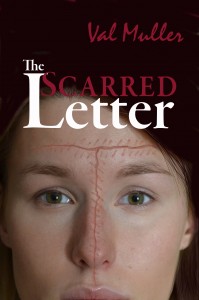
summerdazemullerDon’t miss the last day of Barking Rain Press’s Summer Daze sale. You can read The Scarred Letter and The Girl Who Flew Away for just $1.99 each. Prices are good anywhere ebooks are sold. But hurry–the sale ends on July 4th!

Be sure to check out the free preview of each novel: The Scarred Letter here and The Girl Who Flew Away here.

In 9th grade, I had an Earth Science teacher who told us that “books change lives,” and although I believed him, I didn’t understand what he meant until I was older.

Without my realizing it, books have been changing my life since I started reading. Reading Gary Paulsen as a kid helped instill my resourceful spirit, making me question whether I could survive in a crisis. Reading The Hobbit several, several times helped me look for adventure—or at least push my boundaries—even if I’d rather be a comfortable stay-at-home hobbit.

Since then, I’ve gained perspective and consider things like an author’s purpose and background, characters’ assumptions, and the like. All in all, each book I read helps me broaden and deepen my perspective in life. I believe that because of books, I am a happier person. There is so much I have to compare my life to now, and even though I have not experienced some of the tragedies that happen in books, I have read enough of them to know when I am lucky—and I am very lucky in life.

The inspiration behind this post came to me from a bit of spring—rather, summer—cleaning. I had a matted picture that I’d been meaning to frame for a while. It was a gift from a student I’d taught several years back. The picture shows a man and a woman stooped in a romantic kiss, and the bottom of the picture reads “Tess of the D’Urbervilles, Thomas Hardy.” The background of the picture is made of very tiny letters, making up the first several chapters of the novel.

The student who gave me the picture was one I’d had several years earlier. We had read Tess as part of our AP Literature curriculum. On the back of the picture, she’d left a sticky note that says, “I will never look at strawberries the same.”

She’s referring to our discussion of Chapter Five, in which Tess confronts her antagonist, Alec. He offers her a strawberry, and in its own Victorian way, it’s quite a scandalous scene. (In fact, I blogged about it here in 2012, and since then, the blog post has received visitors daily—my most popular post to date!)

20170624_194239-1While I’m not happy that I have scarred this student’s thoughts about strawberries, I am glad that I impacted her enough that she remembers the novel even years later. My goal in teaching literature is always to encourage students to look at things in different ways and delve deeper into an understanding of meaning.

To me, that’s the magic of books. Like any work of art, the written word forces a writer to focus on certain details and present situations in certain lights. If I asked a roomful of students to write about the first day of school, I’d get a roomful of perspectives. Some would mirror my own experiences, some would differ only slightly, but others would be so removed from my own thoughts that they would force me to reconsider my assumptions.

It seems in today’s world there’s so much misunderstanding, especially when one group seems to be pitted against the next. Might I humbly suggest that books could be the catalyst to open our minds to different ways of thinking and realize the world is not as black and white as we may believe.


More good news about summer reading!

No good deed goes unpunished when freshman Steffie Brenner offers to give her awkward new neighbor a ride home after her first day at school. When her older sister Ali stops at a local park to apply for a job, Steffie and Madison slip out of the car to explore the park—and Madison vanishes. Already in trouble for a speeding ticket, Ali insists that Steffie say nothing about Madison’s disappearance. Even when Madison’s mother comes looking for her. Even when the police question them. Some secrets are hard to hide, though—especially with Madison’s life on the line. As she struggles between coming clean or going along with her manipulative sister’s plan, Steffie begins to question if she or anyone else is really who she thought they were. After all, the Steffie she used to know would never lie about being the last person to see Madison alive—nor would she abandon a friend in the woods: alone, cold, injured, or even worse. But when Steffie learns an even deeper secret about her own past, a missing person seems like the least of her worries…

No good deed goes unpunished when freshman Steffie Brenner offers to give her awkward new neighbor a ride home after her first day at school. When her older sister Ali stops at a local park to apply for a job, Steffie and Madison slip out of the car to explore the park—and Madison vanishes.
Already in trouble for a speeding ticket, Ali insists that Steffie say nothing about Madison’s disappearance. Even when Madison’s mother comes looking for her. Even when the police question them.
Some secrets are hard to hide, though—especially with Madison’s life on the line. As she struggles between coming clean or going along with her manipulative sister’s plan, Steffie begins to question if she or anyone else is really who she thought they were. After all, the Steffie she used to know would never lie about being the last person to see Madison alive—nor would she abandon a friend in the woods: alone, cold, injured, or even worse.
But when Steffie learns an even deeper secret about her own past, a missing person seems like the least of her worries…

One of my publishers, Barking Rain Press, is having an ebook sale to celebrate summer reading.

My titles through BRP are only $1.99 through July 4. (This includes The Scarred Letter and The Girl Who Flew Away.)

You can also find the discount at Amazon (Amazon—Scarred; Amazon—Girl) or anywhere ebooks are sold… but only through the 4th.

To check out BRP’s catalog of excellent books, see http://barkingrainpress.org/, and use code SUMMERDZ.

Can you spot the leafy seadragon? Photo taken during my trip to Ripley's Aquarium in South Carolina.

Can you spot the leafy seadragon? Photo taken during my trip to Ripley’s Aquarium in South Carolina.

The first time I saw a leafy seadragon, I was fascinated. It’s a fish in the same family as a seahorse, and it’s covered in leaf-like growths that help camouflage it in the waters near Australia, where it lives. For me, the leafy seadragon held the same fascination that captivates the protagonist in The Life of Pi. That there could be a creature so magnificent that it’s made to look like something else—well, what a powerful world we inhabit! Each time I visit a zoo, my appreciation for the amazing animals of this earth increases with age. Even for a fiction writer, there is nothing more inspiring for the imagination than reality.

I borrowed the leafy seadragon as a metaphor in my YA novel The Girl Who Flew Away. In it, the main character Steffie doesn’t want to stand out. She spends much of her life flying under the radar, but that means she’s bound not to be herself.

But it turns out she’s more like a leafy seadragon—blending into a forest with all the other vegetation when in fact she is something far more spectacular once her true identity is known.  

No good deed goes unpunished when freshman Steffie Brenner offers to give her awkward new neighbor a ride home after her first day at school. When her older sister Ali stops at a local park to apply for a job, Steffie and Madison slip out of the car to explore the park—and Madison vanishes. Already in trouble for a speeding ticket, Ali insists that Steffie say nothing about Madison’s disappearance. Even when Madison’s mother comes looking for her. Even when the police question them. Some secrets are hard to hide, though—especially with Madison’s life on the line. As she struggles between coming clean or going along with her manipulative sister’s plan, Steffie begins to question if she or anyone else is really who she thought they were. After all, the Steffie she used to know would never lie about being the last person to see Madison alive—nor would she abandon a friend in the woods: alone, cold, injured, or even worse. But when Steffie learns an even deeper secret about her own past, a missing person seems like the least of her worries…

No good deed goes unpunished when freshman Steffie Brenner offers to give her awkward new neighbor a ride home after her first day at school. When her older sister Ali stops at a local park to apply for a job, Steffie and Madison slip out of the car to explore the park—and Madison vanishes.
Already in trouble for a speeding ticket, Ali insists that Steffie say nothing about Madison’s disappearance. Even when Madison’s mother comes looking for her. Even when the police question them.
Some secrets are hard to hide, though—especially with Madison’s life on the line. As she struggles between coming clean or going along with her manipulative sister’s plan, Steffie begins to question if she or anyone else is really who she thought they were. After all, the Steffie she used to know would never lie about being the last person to see Madison alive—nor would she abandon a friend in the woods: alone, cold, injured, or even worse.
But when Steffie learns an even deeper secret about her own past, a missing person seems like the least of her worries…

I think in many ways we’re all struggling to find the balance between blending in and standing out. I remember one of the most terrifying discussions I had as a kid. Some of the kids at school were asking who “still plays with toys.” I remember staying quiet during the conversation and then going home and feeling remotely guilty that I still took so much joy in abandoning my “grown up” persona of the schoolyard and enjoying some quality time with my toys.

My dresser became a perilous mountain that my little rubber and plastic figures would scale. The area under my bed became a dreary cave where all my more sinister toys lurked. On the desk chair, several characters had set up various shops, offering a market for the other toys to find their groceries. I rehearsed the archetypal journey as characters left home, scaled the mountain, defeated the lurkers under the bed, and stopped at the market on the way home, victorious.

And then I had to go to school the next day and pretend I was too good for toys.

Now, I dorkily embrace my true nature. My house is still filled with toys and trinkets: Jack Skellington, models of the TARDIS and Doc Brown’s DeLorean (in all three of its iterations, including a Lego version). In fact, it’s not always easy for someone to tell which toys are “mine” and which are my daughter’s.

As a reader, I find so much hope and comfort in reading of the trials and triumphs of other characters. Each character’s experiences are like a life I get to live without actually spending mine. And then, when I encounter my own problems, I draw on the wisdom of a thousand characters to help guide me.

As a writer, I try to offer hope to others. Many of my characters struggle between being themselves and allowing their “inner awesome” to emerge, and following the standards that everyone else seems to obey—even when those standards are detrimental. Perhaps one day, a reader will be confronted with a life challenge and instead of flying under the radar, they will allow their inner seadragon to emerge.


Now through July 4, The Girl Who Flew Away is only $1.99 everywhere books are sold, including Amazon.com and Barking Rain Press.

As the film The Dark Crystal was formative in my childhood—I watched the film several dozen times per summer as a kid—I was excited to see that someone had written a sequel about it. I’m not an expert in the “lore” of The Dark Crystal’s fan fiction, as I just learned of its existence. I am excited to learn that Netflix is planning a series based on the film. Brian Froud will help with the Netflix series, titled Age of Resistance (more about the Netflix series here), and his name is also listed in the novel Shadows of the Dark Crystal.

I am not sure if the Netflix series, which also takes place as a prequel, is related at all to this novel. In the novel, a Gelfling named Naia is called to defend her twin brother, who has disappeared and been labeled a traitor by the Skeksis.

Wait. Gelfling? Skeksis? If you haven’t seen the film, the world of Thra is a fantasy one, originally built with the imagination of Jim Henson’s puppeteering. Gelflings are similar to elves or sprites: they are petite but not tiny, and good hearted. Females have wings (as a child, I would daily check the mirror to see if I had sprouted my wings yet) that they can use for gliding. There are other creatures, too: Mystics (they look kind of like a combination of dogs, turtles, and giraffes and follow peaceful ways of nature), Skeksis (large, scary creatures that look like birds with some bug-like features and are in charge of the once-pure crystal at the Crystal Castle), Podlings (little human-like creatures that simply like to live in peace).

In this novel, we learn that there are different “tribes” of Gelfling akin to different ethnicities, which helps explain how in the film the Skeksis are able to kill off almost all of the Gelfling. In the novel, its’ shown that the Gelfling seem to be distrustful of other tribes and do not communicate as fully as they should. Naia travels toward the Crystal Castle, picking up clues about what has been happening to Thra: it seems that the crystal, which helps to unify the planet, has already turned dark, and its dark veins are already spreading throughout the land, influencing plants and animals to be cruel and violent. And it’s no surprise that the Skeksis are to blame.

I really wanted to love the book, but it read to me as very superficial. I enjoyed the illustrations, and I almost wished it were a graphic novel: several of the passages were filled with not-very-eloquent descriptions of the world that were then captured in the illustrations anyway. The writing at times was clunky and at other times read more of a summary than anything else. With just two chapters to go, I didn’t have that drive I normally do to finish the book, and it felt more like a chore.

What I wished for was more insight into the world of Thra. I wanted to see Skeksis that maybe weren’t as corrupt as they were in the original film—so that I could see how their actions caused the crystal to turn dark. I wanted to see more about the Gelfling and how a group of beings purported to be so wise and practiced in the ways of harmony with the planet could digress to allow the Skeksis to take over. I also wanted to see more about the Mystics and why they allowed the Skeksis to do their thing as well, since it seems they (as the “good” side of the Mystic/Skeksis balance) had the power to keep their rival in check.

The first few chapters were slow, and then I developed hope for the book, but by the time I got to the ending, I felt like I was reading a watered-down version of the original film—the plot was so similar. Like the new Star Wars films, I felt that the success of the book and the enjoyment fans would derive comes from a sense of nostalgia. Familiar elements brought childhood memories flooding back, but the pictures in my mind came thanks to Jim Henson, and not to J.M. Lee.

Books, Books, Books!

I blogged earlier this month about summer reading. It’s always been a favorite activity for me since I can remember.

Today, my county library was having a huge book sale set up in one of the middle schools. The sale spanned the cafeteria, two gyms, and several other rooms—and it was packed! While I, normally an introvert, detest crowds, I was excited to see it so crowded. In fact, by the time I arrived (not even 2 hours after the sale opened), parking was available only in the overflow lot at the neighboring elementary school.

20170623_122633-1

The only reason the pile is so small is Toddler was in “meltdown mode,” so I had to hurry!

This is heartening because of how important reading is: it’s the foundation of independent thought and the ability to communicate asynchronously. (I always think of author Ray Bradbury, who once met a man who told him he’d live forever: through his words, Bradbury has!) While it’s true that today so many people prefer television and film (and video games) as their modes of entertainment, it’s also true that someone has to make that entertainment. Books help us expand our horizons and way of thinking, and those who can write well will be able to produce excellent works both on the page and on the moving screen.

I’m currently reading (among other things) Invitation to a Beheading by Nabakov. His prose, in places, is stunning and poetic. Some of it reads like a film, the way he imagines images and thoughts blending together. Every now and again, I fear that our culture will lose the ability to think this way, to use the medium of the written word to express complex and intangible thoughts that delve beyond the literal. But then I see the packed book sale—with people of all demographics perusing tables for books—and I regain my faith in the power of the written word and our interest in it.

Despite her earlier skepticism, the toddler enjoyed looking for ducks and dogs (her favorite animals) in "If You Were a Homonym or a Homophone" after a brief nap.

Despite her earlier skepticism, the toddler enjoyed looking for ducks and dogs (her favorite animals) in “If You Were a Homonym or a Homophone” after a brief nap.

My toddler was in “near-meltdown” mode due to an ear infection, so the books I scored ended up being mostly classics I’d never gotten around to reading. I let the toddler choose several, although the dorky English/Etymology teacher in me couldn’t help buying her a picture book called If You Were a Homonym or a Homophone by Nancy Loewen (illustrated by Sara Gray). With meltdown mode impending, I did not have a chance to preview most of the books, but I opened to a random page featuring a bird on a skateboard holding a roll with the words “you could ROLL with your ROLL.” It was plenty dorky. I nodded and handed it to the toddler to put into our basket. (“No,” she said obstinately, but it went in anyway). (When I got home, I read the whole book and saw an entire spread dedicated to explaining contractions and apostrophes with several examples of you’re/your. The English teacher in me is secretly thrilled, especially as the next page proclaims “THEY’RE riding THEIR bikes over THERE.”)

And now my summer reading pile is a lot longer, and my horizons are exponentially expanded—and when the ear infection is done, so will be the toddler’s.

More good news about summer reading!

No good deed goes unpunished when freshman Steffie Brenner offers to give her awkward new neighbor a ride home after her first day at school. When her older sister Ali stops at a local park to apply for a job, Steffie and Madison slip out of the car to explore the park—and Madison vanishes. Already in trouble for a speeding ticket, Ali insists that Steffie say nothing about Madison’s disappearance. Even when Madison’s mother comes looking for her. Even when the police question them. Some secrets are hard to hide, though—especially with Madison’s life on the line. As she struggles between coming clean or going along with her manipulative sister’s plan, Steffie begins to question if she or anyone else is really who she thought they were. After all, the Steffie she used to know would never lie about being the last person to see Madison alive—nor would she abandon a friend in the woods: alone, cold, injured, or even worse. But when Steffie learns an even deeper secret about her own past, a missing person seems like the least of her worries…

No good deed goes unpunished when freshman Steffie Brenner offers to give her awkward new neighbor a ride home after her first day at school. When her older sister Ali stops at a local park to apply for a job, Steffie and Madison slip out of the car to explore the park—and Madison vanishes.
Already in trouble for a speeding ticket, Ali insists that Steffie say nothing about Madison’s disappearance. Even when Madison’s mother comes looking for her. Even when the police question them.
Some secrets are hard to hide, though—especially with Madison’s life on the line. As she struggles between coming clean or going along with her manipulative sister’s plan, Steffie begins to question if she or anyone else is really who she thought they were. After all, the Steffie she used to know would never lie about being the last person to see Madison alive—nor would she abandon a friend in the woods: alone, cold, injured, or even worse.
But when Steffie learns an even deeper secret about her own past, a missing person seems like the least of her worries…

One of my publishers, Barking Rain Press, is having an ebook sale to celebrate summer reading.

My titles through BRP are only $1.99 through July 4. (This includes The Scarred Letter and The Girl Who Flew Away.)

You can also find the discount at Amazon (Amazon—Scarred; Amazon—Girl) or anywhere ebooks are sold… but only through the 4th.

To check out BRP’s catalog of excellent books, see http://barkingrainpress.org/, and use code SUMMERDZ.

I’d meant to read this book for a while now. After enjoying Clan of the Cavebear, I found it while researching similar stories.

The story follows thirteen-year-old Julie, aka Miyax, as she escapes the arranged marriage of her Eskimo village. Hoping to board a ship for San Francisco, she finds herself lost in the wilderness with a wolf pack as her only hope for survival. She has to observe the wolves to learn their language and become accepted by them.

From what I’d heard about the novel, I thought it was all about survival, sort of like Gary Paulsen. But there was more to it than that. Part 1 is all about Julie becoming acclimated to life with the wolves. Part 2 flashes back to her life prior to running away—to the problems with the boy she was forced to marry as well as the family situation leading to the marriage. Part 3 merges the two: so close to “escaping” to the United States, Julie witnesses air hunters gun down one of the members of her wolf tribe, leaving her to question whether she really wants to join “civilization” after all.

This was a fast read. At 200 short pages, I read it in just two days. I will admit, I was hoping for more focus on survival, the way Paulsen novels do, but I did enjoy the balance of internal conflict with the external journey. As a dog lover, the friendliness of the pack renewed my love for my own “pack” of corgis, and it’s a story I will share with my daughter once she is old enough.


CORGICAPERS1_VMULLER_FINAL

Don’t forget to enter my giveaway: To celebrate summer reading, I’m running a giveaway. The winner will receive the used copy of Pirates Past Noon, an autographed copy of Corgi Capers: Deceit on Dorset Drive, and a code for a free download of The Scarred Letter. You can enter using the rafflecopter link here.

In the meantime, good luck, happy summer, and happy reading!

This week marked my kid’s last day in the “bees” room at pre-school and a very long two-day week wrapping up the school year (the shortest weeks are always the ones that seem the longest).

As I struggled through early-morning (and very hot) graduation and stressful end-of-year deadlines, including packing up classrooms for summer construction, I watched several of my friends on Facebook engage in clever “pun-wars.”

Started by my dear husband’s sharing of a visual pun, such as a Van Gogh Lego man, several of my friends would engage in verbal chicanery to out-pun one another. (My terrible contribution to the Van Gogh discussion was something like, “your propensity for puns is ear-ie.” Ear-ie. Get it? Ugh, sorry.)

Anyway, as the week dragged on, I thought about how tiring it is being a teacher, and although teaching teenagers is its own set of challenge, I’m sure teaching preschoolers is in some ways much worse. And somehow through the struggles of the week, my friends and their constant puns stayed in my mind, making me smile at random moments of the day. Puns were on the brain when I came up with this terribly pun-ny cake for my kid’s teachers:

20170614_181443-1

At work, several cakes honored retiring staff members and the staff of the school paper. At a going-away party for a close colleague this weekend, someone brought a surprise cake, personalized to commemorate her journey from here to her new home. As tearful as her moving is for her, the personalized gesture showed her that she matters and will be missed. Each cake elicited surprise and thanks on the part of the recipient(s).

When it comes down to it, I think that’s what we all want: to know that we matter in one way or another, and that we are leaving a mark that will linger long after we have moved away or moved on.

I had a teacher in high school who kept trying to get us to do random acts of kindness. In one instance, we had to go around to different stores and say hi to ten people and record the results. About half of the people we said hi to shied away, thinking we (sinister teenagers!) were up to no good.

I’ve posted before about how it seems so much easier to spread hate and negativity than positivity and love. Maybe it’s just in humanity’s nature that negativity is more contagious than its opposite.

But that just means we have to work a little harder. Say thank-you a few extra times. Overlook flaws now and again—after all, everyone is struggling against one battle or another. And it’s too easy for us to take each other and our contributions for granted.

So this week, I enjoyed several going-away cakes, commissioned the pun-ny cookie cake, and am working on a Father’s Day masterpiece. Because nothing spreads kindness quite like frosting.

Welcome to the Spot Writers, bringing you your weekly dose of flash fiction. The prompt for this month: Check out these 10 fancy nature words. Choose one of the words, and make it either the title or theme of your post, and build your story around that.

This week’s story comes to us from Dorothy Colinco. She chose the word ombrophobous, meaning rain-shunning. Dorothy likes to say she has self-diagnosed Seasonal Affective Disorder, which probably influenced this writing. A lot.

Ombrophobous


The rain brings with it

thunder that begins in the sky and resounds in one’s soul,

unkind clouds that jealously block the sun’s bright reach,

an apathetic hue of gray not seen elsewhere,

a stirred cocktail of pollen, which forces its way into lungs

and makes eyes weep without feeling or reason,

burning chemicals,

evidence of humanity’s callousness and cruelty.


The rain takes away

the graceful spine of the delicate foxglove,

forcing it into a painful arch,

denouncing its beauty and form,

the brightly-colored chalk ground into the rough sidewalk

declaring a child’s name,

their early attempts to announce their identity

and presence in the world,

the laughter shared on a baseball diamond,

the sound of a leather connecting with wood and metal.


It is no wonder, then, that I do not stand in awe with my face towards the heavens with the cursed drops fall.

And those who welcome rain do so only to hide their tears,

now indistinguishable from precipitation,

though both are born of sorrow.


The Spot Writers—Our Members:

Val Muller: https://valmuller.com/blog/

Catherine A. MacKenzie: https://writingwicket.wordpress.com/wicker-chitter/

Dorothy Colinco. http://www.dorothycolinco.com

CaraMarie Christy: https://calamariwriting.wordpress.com/


Have you entered my SUMMER READING giveaway yet? Time is running out to win 3 books! Enter here.


Today I’m pleased to share three trailers for a forthcoming novel I had the honor of editing.

blytheBlythe by John E. Kramer is “Dark, beautiful and profound, with a wicked twist.

Blythe takes her stand in a world of physical and spiritual torment, while Aaron confronts the village leaders including his own father to find and free his love after an act of betrayal. The darkness consuming Blythe does not limit itself to her prison. Through trickery, traps, and seduction, the evil that claimed her dupes a growing cross-section of the village until only Aaron seems to have the strength to fight back.

In a work of poetic prose in a timeless setting, this cross-genre work of literary fiction plummets us into the darkest recesses of our world and lifts us to examine the most sublime potentials of our spirits.”

It’s an allegory about faith and freedom, and it has moments of brilliant prose and of amazing insight woven throughout a compelling story that builds to the finish. It’s available for pre-order now, and it’ll go live on June 20.

As with all the books I work on for Freedom Forge Press, I am most excited about the novel’s insights about freedom. This novel examines the libertarian perspective of individual rights and responsibilities inherent in the concept of freedom. Freedom is not anarchy: it is the greatest test of our humanity in that it forces us to examine our beliefs and allows us to find the best of who we are.

This was a novel that lingered with me even after I finished reading. The first time I read it, I liked how it kept me questioning my assumptions and learning about myself as the characters developed. If you’re interested in freedom and the role of individual faith, I hope you have a chance to check out this amazing novel!

A friend loaned me this book—it looks like an ex-library book that she purchased at a sale. I’ll be honest. I started it when I was on maternity leave. I couldn’t get into it. I thought maybe I was too tired, so I read several other books and came back to it. It still didn’t quite hold my interest.  

Still, I like the time period—the 1880s and the balance of freedom seekers and government, of lawlessness and social customs—so I forced myself to plod through it. I have read several books in the meantime. I’ll get to why I don’t think it resonated with me in just a bit.  

Deep Creek is a mystery that takes place around the Idaho Territory in 1887. Thirty Chinese gold miners are found murdered, and it’s up to a small group to investigate their deaths: Joe, a lawman; Lee Loi, a company investigator; and Grace Sundown, a mountain guide of Native American and French descent. It’s inspired by the massacre of Chinese miners in Hells Canyon in the same year.  

Reading the novel, my favorite character was Grace Sundown because she was so mysterious. She arrives in place of her husband, and insists on being the party’s guide, despite some initial misgivings about having a female guide as they travel the Pacific Northwest to track the killers. But my curiosity about her background had its limits. We don’t find out about her actual past until much later—part 3. By that time, I had sort of stopped caring. I wanted to know more about her earlier on. Once I found about her past, Joe became my favorite character because of how he relates to her past and how his past plays into it all.  

My problem with the story was in the telling. The novel is written by historians, and I felt like they probably had a strong grasp on the historical time period, but the writing did not allow sufficient details to come through. With the exception of a few small details, I felt like this could have taken place at any time. I craved more imagery and details that would help me imagine the time period. I had to rely on stereotypes and prior knowledge, which is always dangerous.  

The story could have benefitted from a strong point of view. It switched among the main characters, but I never felt allowed to get too deep into any one perspective. This kept me distanced from the story. I have worked with historical writers before, and I understand there is a hesitancy to put too much of a perspective on a work, even when it’s historical fiction, because there are no journals or details in existence to justify such a deep perspective. But for me, that is why I pick up fiction: to see what one person imagines might be going through another person’s head.  

I wanted to care more about Grace’s fight for women’s equality and equality for more immigrants, as both of these are important issues for me. But because of the shallow perspective through which the story was told, I was never able to feel the true frustration of it all.  

I did appreciate the trial at the end, and the ending: I wished for more of the literary feel that came in the last chapter to be interspersed throughout the whole novel.  


CORGICAPERS1_VMULLER_FINALDon’t forget to enter my giveaway: To celebrate summer reading, I’m running a giveaway. The winner will receive the used copy of Pirates Past Noon, an autographed copy of Corgi Capers: Deceit on Dorset Drive, and a code for a free download of The Scarred Letter. You can enter using the rafflecopter link here.

In the meantime, good luck, happy summer, and happy reading!