Val Muller

The Electronic Wordsmith

How do I review what could possibly be my favorite book? This review will be a long one, and it will contain spoilers.

Orwell wrote 1984 in 1948 after experiencing the horrors of World War II, revolutions, and colonialism. Primarily, the book serves as a warning, showing the worst extension of the evils of man. The book takes place in Air Strip One, a territory of Oceana (which includes the US and the UK, among other places). Air Strip One used to be England, and the novel takes place in what is now London. Winston Smith, the protagonist, is discontent with his life to say the least. He lives in a society with heavily-regulated class systems: the Inner Party (about two percent of the population) follows the will of “Big Brother,” the leader of Oceana; the Outer Party (nearly fifteen percent of the population) follows the will of the Inner Party; and the Proles (at least eighty percent of the population) live their lives in a highly-manipulated world, but they are too focused on bread and circuses to care. Winston works in the Outer Party. His job is to change bits of news from the past to reconcile the Party’s constantly-changing history. The terrifying phrase that the Party clings to is, “who controls the past controls the future, who controls the present controls the past.”

In this world, enemies of the Party are vaporized, meaning they are abducted, their identities washed away. Even family and friends cannot talk about the vaporized, as it would lead them to become vaporized as well. Winston’s job involves removing references to these “unpersons” from past news articles and changing Big Brother’s past predictions so that they align with actual events as they unfolded.

Integral to the Party’s nefarious workings is their control of language. The Party is working to limit the English language through a dialect known as Newspeak. The goal of this dialect is to remove the connotations from language with the theory that if people do not have words to express ideas, eventually they will simply stop having those ideas. For example, the word “freedom” in new speak would only refer to freedom from a cold, for example. The idea of “freedom” as we know it in a political sense would simply not exist. “Bad” has become obsolete, as words are now simply coined as opposites. “Good” exists as a word in Newspeak, so if something is to be described as “bad,” it would simply be called “ungood.” (Thus, a vaporized person is referred to as an “unperson.”)

So why do people like Winston continue to manipulate past history at their jobs? They are encouraged through a concept called “doublethink.” This is the mind’s way of tricking itself: they obviously know they are changing the past, but they are convincing themselves that Big Brother is actually right, and there are mistakes in history that need to be reconciled. Doublethink is both believing and not believing simultaneously, and ignoring facts when they are inconvenient to present purposes. In this world, there really aren’t any formal rules, but everyone knows that if they cross the Party, they will be vaporized. If the idea seems far-fetched, remember the Holocaust of World War II. Men were convinced to send fellow man to gas chambers, or watch them starve to death. Individuals abandoned their moral compasses to follow a terrible dictator. Something like doublethink had to have been at work there.

There’s more.

The government is terrifying. The Ministry of Love (“Miniluv” in Newspeak) is a building used for torture. Any enemy of the Party is taken there, tortured, and re-educated before being released back into the population, broken and likely marked to be shot at some unknown future date. Every Party member has at least one telescreen in his house. These are wall-sized screens that project propaganda 24/7. Outer Party members can never turn off these screens. Life in the Party requires participation in the Two Minutes Hate. During this time, Party members are shown propaganda, most of it about a man named Goldstein, who is the enemy of the Party. He’s been at large for years, supposedly, and he’s got a Brotherhood of rebels whose job it is to take down the Party and Big Brother. Those in control of the Party use the Two Minutes Hate to control the Inner and Outer Party members.

The Party has all but outlawed sex. It is allowed only for the purpose of procreating, but Party members are being brainwashed to believe it is dirty and disgusting. The point of this is to break all human bonds. Coming home to a loving spouse would be detrimental to the Party. Even children (“spies”) are trained to spy on their parents for any “unorthodox” thoughts against the Party. The Two Minutes Hate allows the Party to direct the pent-up rage and sexual frustrations of the Party members in a way that keeps anger alive.

There’s even more.

There are three global superpowers in this world, and they are always at war. The point of the war is to use up all excess material goods to keep the citizens always just fed, but always needing or wanting more. They’ve become used to the perpetual sacrifices of war and are willing to let the government do terrible things because of the gravity of war and the need for the common good. The Two Minutes Hate helps to justify the sacrifices people make. Still, Winston recalls that he was always almost starving as a boy.

In the novel, Winston decides to rebel against the Party in a small way—by keeping a journal. In it, he writes his thoughts against the Party. My favorite of Winston’s observations is that true freedom is the freedom to say that two and two add up to four. If a Party member is given the right to say that, all other rights necessarily follow. This comes into play later in the novel.

Winston is captured after writing in his journal and having an affair with another Outer Party member named Julia. They are both taken to the Ministry of Love to be tortured. Before their capture, which they both knew was inevitable, they agreed that they could “win” this if only they remain loyal to each other in their minds. They had both heard of the torture that takes place in the Ministry of Love, and they knew they would be forced (through pain) to say anything the torturer wanted them to, but they agreed they would never betray each other in their hearts and minds.

In the Ministry of Truth, Winston learns that a man he thought was a member of the Brotherhood, O’Brien, was actually an Inner Party member who had been “messing” with Winston for seven years. Winston had dreams about O’Brien and almost became obsessed with the intellect he saw on O’Brien’s face. It’s implied that the dreams were probably the result of the telescreens, which are actually two-way communicators. Not only do they display propaganda, but they can be used to spy on Party members and even speak directly to them. Winston is slowly tortured and made to heal again (numerous times). He tells the Party whatever they want to know, and O’Brien is generous in giving Winston information about the Party and their methods. Winston realizes that he understood the “how” of the Party. He just could never comprehend the “why.” Why would a government go to so much trouble just to control fellow man? O’Brien’s answer is, essentially, simply because it can. The Inner Party members don’t desire riches in excess, only power over others. Their goal has never been to better mankind. O’Brien even suggests that the quality of life might be lowered to the point that 30 years old is senility: that wouldn’t matter. What matters is that the Party has power over the people.

Once this is revealed to Winston, the reader realizes that the Party isn’t done with Winston yet. Even though the man has been nearly starved to death, his teeth all falling out, his body emaciated, they are not finished. They want one final act of submission. Winston has been “recovering” from torture in the Ministry of Love, and he tells himself that he will still be able to keep that which makes him human: right before he is shot (because inevitably, all people released from the Ministry will be shot in the back at some unknown date in the future while they are simply going about their business), Winston will be able to hear the click of the trigger, and he will use his last thoughts to think about how much he hates Big Brother. This last act of rebellion will mean that, in his mind, he died a free man. This is his final act of hope, something he can control in a world controlled by a dictator.

But O’Brien knows this. He tells Winston of prisoners of the past. After being tortured and “recovered” in the Miniluv, they begged for a quick death so that they might die while their thoughts were still pure—in other words, while they still loved Big Brother, and before they had a chance to think terrible thoughts against him. This suggests that to be released from Miniluv, one must give total control of one’s mind to the Party.

They finally take Winston to Room 101, in which prisoners must confront their deepest fears. Winston’s is rats. A cage is affixed to his face with two hungry rats inside ready to gouge out his eyes and eat his face. In a moment of panic, Winston calls out that the Party should torture Julia instead of him. It is his final act of betrayal because in his mind, he honestly believes it. He is so afraid of the rats that he betrays the one person he loves. At this point, he is broken. He’s released into the world, given a sinecure, and kept always drunk. The final scene is the most dismal I have ever read. Winston is watching the telescreen while drinking horribly oily Victory Gin. He’s heard that the war might be lost, and he’s watching the news eagerly (never mind the fact that at one time Winston knew the war was all but a farce and used to control the population). In the end, the news from the warfront is good, and Winston cries tears of joy because he realizes that he loves Big Brother with all of his being.

The book is an obvious hyperbole, but some of the connections to modern society are frightening. “Newspeak” is surprisingly similar to the language of text messages or Twitter, in which we are forced to distill language to its most basic. Politicians engage in a form of doublethink all the time, lying to constituents and denying the truth in an effort to increase power. Like the Party in Orwell’s world, our modern politicians seem less interested in actually helping mankind and more interested in doing thing that will afford them more power (i.e., buying votes). Even today’s citizens seem divided along “party” lines. Not that we have a Two Minutes Hate, but anyone who was on Facebook during the last presidential election can see that rather than engaging in intelligent discussions about politics, citizens were more prone to engage in hateful rhetoric aimed at inflaming hatred against those with opposing beliefs (Big Brother vs. Goldstein—neither of whom existed, in all likelihood).

The book never ceases to amaze me, despite the fact that I read it almost every year. I am in awe of Orwell’s ability to see the worst in mankind, and to make predictions about things that are starting to come to pass. I hope that this book will always be simply a warning, and that humanity will always reclaim that which makes it human against a system of government that always seems to be fighting to augments its own power, rather than to make life better for all it should be serving.

Tell us about yourself:  I am a fiction author from North Alabama.  I am married and have two children.  I love writing young adult books and children stories.

my boyfriend2 (197x300) (2)Tell us about your book: My Boyfriend the Squire is a young adult fiction fantasy book with some romance.  It is about a girl who travels back in time to the Middle Ages to  rescue a princess. There she meets a squire who helps her in her quest.  After freeing a magical spell that was cast upon Countess Hildegarde, Lucinda is able to go back to the present day where she meets her brother’s friend who looks like the squire.

Did you always know you wanted to be a writer? From an early age, I loved writing stories.  I published my first poem when I was a teenager.  I won editor of the school newspaper when I was in second grade for a paper I wrote.

My photoWho is your favorite character in your book, and why? Lucinda is the main character and she is my favorite.  I can picture myself as her searching for love and enjoying the adventures of the story.  Who wouldn’t want to go back in time and become royalty?

Are any elements of your book autobiographical or inspired by elements of your life? No my other book: Southern Adventures is about me.  This one was written because I love to read stories about the middle ages, kings, knights and castles.

What’s your favorite scene or location from My Boyfriend the Squire, and why? The castle Lyonesse is my favorite scene. Who wouldn’t want to fall asleep and end up in a beautiful castle built for royalty.

Where to Find Tracy:

Twitter handle: @Kauffmantracy

Blog

Website

Amazon page


It’s Just Lola is the story of Lola, the author’s grandmother, as told to Lola’s daughter, and then from Lola’s daughter to the author. As the author attests, the story is based on truth, but any holes in the plot were filled with fiction. Even more intriguing is the fact that both lolaLola and her daughter told the tale to their next of kin only when they felt the hand of death compelling them to share their tale.

Born in the late 1800s to a wealthy Peruvian landowner, Lola has a rocky life. She’s seduced and pregnant at age 14, widowed at 15, and the challenges don’t stop there. She’s got a manipulative step-mother, a prideful father, and men in her life with their own strong wills. But Lola prevails, using her skill to sew dresses and uniforms to make money, her arithmetic skills to become a clerk, her business acumen to help her father with his plantation, and her intellect to learn medicine through books. Through each challenge, Lola’s positive attitude prevails, and she uses her intellect and abilities to make the best of each situation, providing the best for herself and her growing family. I enjoyed how Lola was a strong woman in an era when many women relied on men. I won’t give away too many of the plot twists, but you’ll get to experience different cultures (from Peru to America, and even a South-American distrust of Britain—and Lola’s British husband—during the war), the effects of industrialization and life in the cities, and the effects of World War I. Lola’s strength, starting from such a young age, makes her a sympathetic and likeable protagonist and will make you want to keep reading to see how her life turns out.

I enjoyed the author’s writing style. It was easily accessible, adding just the right amount of details to make each episode relevant. As I read, I felt like I was getting to know Lola as a real person, which is a real testament to the author’s writing (as well as her grandmother’s strong personality). While reading the book, I was dealing with plumbing problems in my home, which I felt (at the time) were the end of the world, but reading Lola’s story made me realize that life can throw much more difficult challenges at us, and she inspired me to stay strong–that this, too, shall pass.

Though I think this book would appeal more to women than men, it would also appeal to anyone with a love of experiencing history as a narrative—experiencing the challenges of a different era through the eyes of a likable protagonist. I’m not a fan of non-fiction because I rarely feel I can relate to the characters, but this book was completely different: I  recommend this book with enthusiasm.

This is a middle-grade quick read about a girl named Storee who dreams of being an author. The names are allegorical: the protagonist Storee Wryter, her cat Critique, and even her new dog Addie (who has been “added” to the family). Storee keeps writing ideas in a file in her room and is always thinking about what to write for her next big story. At the beginning of the book, her friend Kyria comes over and asks Storee to adopt a dog.

The book stresses responsibility and service in adopting and training a dog, and part of the discussion Storee has with her parents is whether they can train Storee to become a therapy or service dog. Without going over-the-top with details, the book models ways of properly training a dog as well as traits a dog must possess to be certified as a therapy dog. In the end, Storee’s parents agree to the dog, and story works hard (even Critique helps her out) to train Addie to the point where she can visit a class of struggling readers eager to read to the dog as part of a program.

While reading, I did wish the book was longer. The writing is great, and there were some opportunities for expanding some of the scenes, or perhaps showing us some of what Storee was writing, or showing us more of Storee’s challenges in training her dog.

I enjoyed the positive message of the book, encouraging young writers to keep up with their ideas. The book even ends with prompts and space to write down ideas. It’s clear the author cares about helping young writers. The book also teaches the proper training techniques for dogs and teaches students just how much responsibility is involved in responsibly training one. My own corgis could learn a lot from Addie, as they sometimes tag-team against me to subvert my training efforts!

All in all, it’s a great read for young readers, writers, and animal lovers looking to make something of themselves in the world.

This week’s post comes to us from RC Bonitz, author of A Little Bit of Blackmail, and its sequel, A Little Bit of Baby. Look for them at Amazon, B&N, Silver Publishing, or Goodreads.

Today we bring you the last chapter of Remy’s story. The Spot Writers intend to choose a tale to follow it, so we thought we’d run a contest. If you have plot ideas or themes you’d like to offer, please contact one of us through our blogs listed below. If we choose your idea you’ll get your choice of one of our books free.

Enjoy.

Chapter 33

“Oh,” Remy murmured. It was the strangest thing- his “idea” was no surprise, given the expression on his face and her present homeless dilemma, but now that he’d effectively asked her to move in her stomach churned with uncertainty and nerves. How could she move in with a guy she barely knew? Her mother would be horrified.

“What’s wrong?” he asked.

“You want me to live with you?”

“That’s my thought.” He grinned. “I’ll need a nursemaid for a while with this leg.”

Remy frowned. “You want a nurse?” Bummer, what a letdown that was.  But, her stomach eased and she could breathe again. Funny, that. The last two days, while he’d been in the hospital, she couldn’t stay away from him. She’d visited when she could, and worried about his recovery, and acted like a schoolgirl when he teased her. He’d been so brave, so sweet and charming. And here she was, afraid to live with him. Was she commitment phobic or just a coward?

He stood up straight and grimaced as pain apparently pierced his leg. “I need to get used to this crutch.” She reached out to steady him and he seized her hand, his eyes dead serious. “I was kidding about the nurse bit. It’s you I want, Remy.”

She sighed. This was not the way she’d pictured marriage proposals being offered to her. Not that he was proposing. Or was he? “You’re as bad as Jeremy! We hardly know each other and you want me to move in with you?”

He looked shocked. And hurt. “We’ve worked side by side for months. I see you every day.”

“That’s not like loving someone. You’re my boss,” she exclaimed. Her stomach seized up in one giant knot. He wanted a commitment from her. Could she love him the way he cared for her? He was adorable, but oh my gosh.

He groaned. “I love you Remy. I thought we had something going here.”

He’d said the magic word. Others had before him, but only when they tried to seduce her. Was he doing that? No, he meant it, she was sure. “Sam, that’s wonderful, I thank you, but we’ve only had the one date. I can’t become your live in mistress based on that.” Oh, darn, she was making such a mess of this.

He smiled, but his eyes were serious. “Okay, here you go. You like me, I can tell. Sometimes when we’re working, I catch you smiling at me when you think I’m not looking.” He put up a hand to cut her off. “Don’t deny it, I know what I saw. One thing I’ve learned about you- you can be rock stubborn sometimes. Like now. Okay, you win. Forget the whole idea. Find a new apartment for yourself.”

Remy’s insides turned to mush. He was backing away? That wasn’t what she wanted. “I just meant—”

“Never mind. You’ve made yourself perfectly clear.”

“I have not!” she cried. “I simply meant I need more time. We should date a little bit. Get to know each other better. Things like—”

He grinned like a schoolboy. “Tonight?”

“What?” she said breathlessly.

“How about a date?”

She nodded. A date would be good. He was laughing? What was he up to?

“I know where there’s an apartment available. It has two bedrooms and a den that’s never used. The rent is cheap and you’ll have complete privacy. You’ll have a roommate, but he’ll leave you alone. If you want him to.”

He was so obvious. But so cute. So darn sweet too. “I don’t believe that.”

“What?”

“The leave me alone part.”

He chuckled. “Well, you’ll have to date him more than once a week. Until you get used to having him around.”

“Then what?”

“Maybe you’ll say yes when he asks you to marry him.”

Remy’s heart soared. If she ever hoped to take the leap, he was the one. She leaned in and gave him a long, lingering kiss. “He seems very persuasive. Maybe I will say yes. How much is the rent on this place?”

* * *

The Spot Writers- our members:

 RC Bonitz
http://www.rcbonitz.com

Val Muller
https://valmuller.com/blog

Catherine A. MacKenzie
http://writingwicket.wordpress.com/wicker-chitter/

Deborah Dera
http://www.deborahdera.com

Jessica Degarmo
http://www.jessicadegarmo.com/


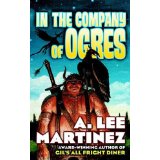
I read this book at the recommendation of my sister, who has read every one of Martinez’s books. The novel follows the tribulations of “Never Dead Ned,” a man who begins the novel as an average guy with a desk job who is called upon to lead Ogre Company. This is a rag-tag company of ogres, goblins, seers, sirens, and all types of fantastical creatures. Their commanders have a talent for dying quickly. Luckily, Never Dead Ned can’t stay dead for long. Each time he dies (which he does frequently), a woman appears to revive him.

company of ogres a lee martinezI can’t give away too much of the plot. Throughout most of it, Ned is trying to figure out what exactly is going on: Why has he been put in charge of Ogre Company? Why does a woman in red keep appearing to revive him every time he dies? Why can’t he just stay dead? Why does he feel lost? He finds his answer; you’ll just have to read the book to find out what it is!

My favorite element of the novel was its humor. I love how everything—even what seems to be simple jokes or pointless banter among the characters—ties together at the end.  Sometimes the jokes are subtle; other times, they are obvious, but they’re always funny. I found myself having to explain to people in the room just why I was laughing out loud while reading a book. I enjoyed how Martinez took the typical fantasy stereotypes (which I don’t particularly enjoy) and played off of the clichés to create humor. For instance, a siren and an Amazon at one point are vying for the attention of Ned, who is so oblivious that he can’t tell they’re fighting over him. At another time, Ned removes all blunt and sharp objects from his office and hides, hoping to prevent himself from dying for the umpteenth time. Possibly my favorite instance of humor is when the budget of Ogre Company, which Ned has been tasked with balancing, is literally personified as an undulating monster he must subdue.

If you enjoy humor and fiction, you’ll enjoy this book. I look forward to reading more of Martinez’s work.

corgi-versary


Zephfinal

On January 26, 2011, I was stuck in a snowstorm for 12 hours–alone in my car.

On January 26, 2012, the first book in the Corgi Capers series was published. 

Now, on January 26, 2013, I’m celebrating the anniversary of the book’s launch with a month of sapphiefinalgiveaway. Head over to www.CorgiCapers.com to check out all the freebies, features, and contests.

In the meantime, you can enter to win a copy of one of my Corgi Capers books, or even a t-shirt, here:
a Rafflecopter giveaway


This week’s post comes to us from Val Muller, author of the Corgi Capers mystery series (for young detectives) and the sci-fi romance For Whom My Heart Beats Eternal. Check out www.corgicapers.com for an upcoming anniversary celebration!

Next week’s post comes to us from RC Bonitz this week- a little out of order due to various personal commitments.  RC’s latest book in A Little Bit of Baby which is available on a special offer from Silver Publishing.

* * *

Sam stood up from the wheelchair, using Remy’s arm for support. He rose to his feet, his arm around Remy’s shoulder to take the weight off his thigh. As the doctors warned him, the bullet wound would ache for months. But Remy’s body was warm against his, making him forget his pain. Sam smiled back graciously at the nurse who had wheeled him to the curb, hoping the gesture would dismiss her. He didn’t like being pampered even though he knew it was hospital policy. Remy handed him the crutch, and he stuck it under his arm and looked to Remy’s car, just a few steps away. He turned back, but the nurse was still standing there, smiling. He wanted her to leave. He wanted to be alone with Remy.

“Here you go,” Remy said, putting an arm around Sam’s waist to guide him toward the passenger seat.

Her touch felt warm, and he smiled automatically, instantly forgetting about the nurse. Remy had been visiting him every day at the hospital, spending all the time she was allowed. With Sam’s injury, the office had closed for the week, anyway. Irene referred the more urgent appointments to one of Sam’s colleagues. The others had been rescheduled, and Sam shuddered to think how busy he would be playing catch-up. He would have to hire additional help.

Sam stood near the passenger door and gazed into Remy’s eyes. She looked exhausted—but beautiful.

“How’s the packing?” he asked.

“Almost done,” she said.

“And the security deposit?”

“The landlord said that due to—circumstances—she was letting me out of the lease with no penalties. I get everything back.”

“Good,” Sam said.

“I just can’t wait to be out of that place. So many memories. More like nightmares. I can’t believe that night I almost fell for Jeremy. What was I thinking? And Barbara… I don’t think I’ll ever get the sound of that gunshot out of my head. I know she’s going to be locked up for a while, but that apartment just has too many ghosts haunting me.”

Sam frowned, his leg wincing as he remembered the incident that caused his injury. “Have you given any thought to where you’ll move?”

Remy shrugged. “Everything’s almost all packed. I’ll move most of it into storage until I figure out something more permanent. Irene said I could crash on her couch for a little while. With all the catching up at the office, I can’t imagine any of us will be getting much sleep in the next few weeks.”

“And after that?” Sam asked.

“ I—” Her face flushed.

Sam’s lips curled into a smile, and he leaned back against the car door so that he faced her completely.  “I’ve got an idea,” he said.

“What idea is that?” Remy asked, flirting and feigning naiveté to hide her embarrassment.

“I always thought my place was too big for just a bachelor.”

The Spot Writers- our members:

 RC Bonitz
http://www.rcbonitz.com

Val Muller
https://valmuller.com/blog

Catherine A. MacKenzie
http://writingwicket.wordpress.com/wicker-chitter/

Deborah Dera
http://www.deborahdera.com

Jessica Degarmo
http://www.jessicadegarmo.com/


Back to the Future is my absolute favorite movie. In high school, I had a shrine in my room dedicated to anything BTTF I could find. A great inspiration for me as an author was the character of George McFly, an aspiring sci-fi writer/nerd who always shied away from confrontation and adversity until his son traveled back in time and helped him overcome that. Possibly my favorite scene in the novel is when George McFly (the George of 1985 after being visited by his son) receives a box of books–his first novel. As he hands a copy to his son, he reminds us all that “you put your mind to it, you can accomplish anything.” I’ve wanted to be an author since I can remember, and I’ve been watching Back to the Future since I can remember. That quote and scene has always stuck with me, and when I received my first box of novels last year, I felt like George myself.


In this time-travel novella incorporating sweet romance and science fiction, Anna, a young graduate student, has found her intellectual soul mate. She and Dr. Thomas Wellesley, forty years her senior, have been working on sensitive research involving time travel. She respects the man: he is married to his work and just as passionate about science as she is. He is her favorite part of the day and she'll stop at nothing to help their research.  When a rival professor threatens their research and their safety, Dr. Wellesley does everything in his power to protect Anna from harm. But in his effort to protect her, he inadvertently sends her back in time. Forty years back in time, to be exact—to a time when a young student named Tommy Wellesley is just embarking on his first degree in physics. And it’ll be up to young Tommy to see Anna safely back to her own time. If he can bear to lose her.   This edition also includes two short time travel stories. “Suicide Watch” explores the more dangerous ramifications of time travel. After an unfortunate fight with the love of his life, Matthew Mitchell discovers a time machine. Tempted to win back his girlfriend, Matt takes the machine for a spin, only to find out that time travel is much more complicated than he expected, and the results are catastrophic. “Toward Every Future’s Past” is flavored with sci-fi and fantasy and examines the cyclical nature of time and man’s difficulty in comprehending it.

In this time-travel novella incorporating sweet romance and science fiction, Anna, a young graduate student, has found her intellectual soul mate. She and Dr. Thomas Wellesley, forty years her senior, have been working on sensitive research involving time travel. She respects the man: he is married to his work and just as passionate about science as she is. He is her favorite part of the day and she’ll stop at nothing to help their research. When a rival professor threatens their research and their safety, Dr. Wellesley does everything in his power to protect Anna from harm. But in his effort to protect her, he inadvertently sends her back in time. Forty years back in time, to be exact—to a time when a young student named Tommy Wellesley is just embarking on his first degree in physics. And it’ll be up to young Tommy to see Anna safely back to her own time. If he can bear to lose her. This edition also includes two short time travel stories. “Suicide Watch” explores the more dangerous ramifications of time travel. After an unfortunate fight with the love of his life, Matthew Mitchell discovers a time machine. Tempted to win back his girlfriend, Matt takes the machine for a spin, only to find out that time travel is much more complicated than he expected, and the results are catastrophic. “Toward Every Future’s Past” is flavored with sci-fi and fantasy and examines the cyclical nature of time and man’s difficulty in comprehending it.

For this blog hop, I’m giving away a copy of my novella For Whom My Heart Beats Eternal. It’s the story of a college student who travels back in time to the 1970s and falls in love with her professor, someone who in her own time is close to retirement. When she returns, she finds the world is futuristic compared to what she remembers… and that isn’t the only thing that’s changed… The novella includes two other time travel shorts, one about a man’s personal struggle with a time machine and his own stubborn will, and the other about a group of people tasked–for the umpteenth time–with saving humanity.

To enter, use the RaffleCopter link below. Then, check out the other blogs on this hop (see the links at the bottom of this page). And remember, in the words of Doc Brown, “your future hasn’t been written yet… so make it a good one!”
a Rafflecopter giveawayCheck out the rest of the hop at the bottom of this page!

I received a review copy of this book in exchange for my honest opinion. The opinions expressed in this review are entirely my own.

The Crystal Scepter is based on the myth of Perseus and the Gorgon with many other details added. The book follows Pythius, the king of Paladya, who seeks immortal or lengthened life via a fabled crystal scepter found in Elysiel. To accomplish his goal, he marries Calli (a young woman from Elysiel). When she becomes pregnant and too sick to travel to Elysiel with him, he goes himself, meeting a gorgon in disguise and obtaining the crystal scepter. But his plan does not run smoothly. The scepter scars his hand, making it stiff and burning, and he can’t figure out how to wield it. To make matters worse, a prophesy has declared that his own son will kill him, just as he killed his father. Hearing the prophesy, he decides to kill his newborn son. Calli, learning of his plan just in time, sends the infant across the ocean in a trunk. The boy is found by a fisherman, who decides to raise the child as Perthin. It’s up to Perthin to discover his true identity and fulfill the destiny foretold by the seer.

The best part of this book is the plot: it’s engaging and inherently interesting. Pythius’s evil motives will keep you turning the page to see what happens next, and Calli’s situation is sympathetic enough that readers will care what happens to her. The actual telling of the story was a bit weaker than the plot, however. The first quarter of the book, I felt, contained a bit too much “telling” and background information about Calli’s homeland and the history of some of the people and places. This could just be a personal preference, though, as I tend to lose patience while reading fantasy books with too much back-story. About a quarter of the way in, I found the plot had picked up enough that I was turning pages without realizing it.

Because of the complex plot, the book switches from one character to the next. We follow Pythius as he travels to Elysiel to usurp the scepter. Then we shift to Calli as she dotes on her new-born babe. I did feel, however, that I wanted to stick with one character for a bit longer. As soon as I started to settle in to one character’s story, the perspective would switch. Again, this is a personal preference (I haven’t even attempted to read Game of Thrones yet for just this reason!). The first 140 pages comprise Part One, telling the tale of Perthin’s parents. Part Two picks up with Perth at age 15 (and noticeably smaller than the other boys) but with a heart many times as big. I enjoyed Part Two much more than the first part. I found myself turning the pages quickly and burning through the story into Part Three. The ending, which I will not give away here, was enjoyable as well.

Overall, an interesting mix of mythology, religion, and fiction.