Val Muller

The Electronic Wordsmith

Welcome to the Spot Writers. This month’s prompt is to use these five words in a story/poem – esophagus, carrot, pigeon, lily, moustache.

This week’s story comes from Chiara De Giorgi. Chiara dreams, reads, edits texts, translates, and occasionally writes in two languages. She also has a lot of fun.

 Mrs Florence and Mr Becco

by Chiara De Giorgi

“Mom! It’s Lily’s turn!”

“Julie, please. Lily’s had a rough day. You can very well go see to Mrs Florence’s windowsill today.”

Lily crossed her arms and stomped her feet. She hated that task.


They had found Mr Becco, injured and almost dead, lying on their balcony just a couple of weeks earlier. Something was stuck inside his esophagus, and he had fallen from the rooftop. They had massaged his throat and managed to save his life, but one of his legs was slightly crooked and he could not fly.  They had decided to keep him and take care of him until he recovered enough to take to the sky again.

She had been enthusiastic at first: she had planned on writing a blog, called “The girl and the pigeon”; she had imagined herself becoming an Instagram star with the account: “A pigeon’s life”. She would travel the world, with Mr Becco perched on her shoulder, and magazines would pay for her trips and accommodations in exchange for articles and pictures of Mr Becco visiting every corner of the world. None of which had happened, yet, but one thing had filled their days: Mr Becco’s poop.

The bird had elected a particular spot where he’d set about doing his business, the product of which inevitably soiled their downstairs neighbour’s windowsill. She and Lily took turns to go to Mrs Florence’s every time Mr Becco pooped, so they could wash it up.


“Come on, Julie”, said Mom again. “When you have a hard time, Lily always cares for you. Won’t you do the same for her?”

“It’s different”, grumbled the little girl, “Lily’s my big sister, she’s supposed to care for me.”

“Julie, can you just stop for a moment and listen to yourself?”

Mom was becoming impatient. Julie sighed, almost ready to drop it, but not just yet.

“I don’t like going downstairs”, she whined. “It’s not Mr Becco’s droppings, I don’t mind cleaning up. It’s Mrs Florence’s house. It’s… creepy.”

Mom frowned.

“What do you mean, it’s creepy?”

“Well, you know. It always smells like boiled carrots. And Mrs Florence herself, well.”

“Well, what? Julie, Mrs Florence is a sweet old lady, a bit lonely and very deaf. You know I will be an old lady one day, right? And who’s going to take care for me and boil me carrots?”

Mom was smiling and tickling her. Julie tried to resist, but she burst out laughing.

“You won’t have a moustache, tough. No you won’t!”

“Won’t I? Won’t I?”

Mom put two strands of her hair under her nose, to pretend having a moustache, and Julie started laughing so hard, she had to hold her belly.

“Mrs Florence has a moustache, and smells like a carrot!” she cried, collapsing on the floor.

“And luckily she’s quite deaf”, considered Mom, sitting next to the little girl. “Will you go there in your sister’s stead?”

Julie sighed, then nodded.

“Of course. Mom? When do you think Mr Becco will be able to fly again?”

“Oh, I don’t know. Maybe he doesn’t want to. Maybe he likes it here. Maybe he likes Mrs Florence’s windowsill”, she concluded, winking.

A few years ago, this was a “1book1community” pick. I had picked up a copy but forgot about it until recently. By the time I picked it up again, I forgot the premise and didn’t bother to read the description. So at first, I thought it was about a boy who was on a ship run by who I assumed to be his father, a stringent captain.

But early on in the novel, clues let me know that was not quite it. Early on in the novel, it becomes clear that the protagonist, Caden, is struggling with mental illness. The chapters fluctuate between reality and the constructs of his mind, largely represented by a voyage aboard a ship headed for the Marianas Trench, the lowest point on Earth.

Each element of the increasingly-bizarre voyage coincides with something from Caden’s life. For a spoiler-less example, at one point Caden notes that crewmen sometimes jump from the height of the ship’s lounge, located in the crow’s nest. This is revealed later to come from an experience Caden had with his family in Vegas: his family decided to go bungee jumping, and Caden was forced to go along. There are many other examples of his real life bleeding into his imagined one.

The premise is that mental illness is a long and disturbing journey, as tough for loved ones as it is for the person suffering. No two cases of mental illness are alike, and getting the right balance of medication and therapy is an art rather than a science.

I enjoyed Caden’s intelligent and honest voice. What was more difficult to see but important to think about is that Caden provided us, the reader, with a look at the depths of his mind. But when confronted by friends, therapists, and even family, he is frustratingly quiet about what he is thinking. And possibly, rightly so. After all, how could he begin to explain that he’s on a voyage led by an insane captain sailing to the Marianas Trench in a sailing ship made of metal?

It’s an important read to give perspective on mental illness. At the end, an afterward by the author reveals that the drawings in the novel came from his own son, as did the inspiration behind Caden’s experiences. Caden’s voice shows that mental illness is not about intellect. It is about chemical balances in the brain and the way they interact with the individual.

It seems not too long ago I wrote of the death of my uncle. Today, I learned of another death. Bob Bonitz, who wrote under the pen name R. C. Bonitz, was a founding member of The Spot Writers, a writing group I belong to. The four of us take turns writing flash fiction to post weekly on our blogs.

Young lonely woman on bench in park

A while back, The Spot Writers decided to write a serialized novella, which we ended up collectively publishing. Though I never met Bob face-to-face, I feel like I know a lot about him through his writing. Believe me, it’s difficult to write a story with three other people, especially if personalities are different. If you’ve read the serialized blog posts, or the ebook or paperback, you might feel as if you know Bob’s personality, too. When I read his book A Blanket for Her Heart, I got an overwhelming sense of kindness and good intent, and that’s something difficult to fabricate.

Though Bob quit The Spot Writers a year or so ago, I and another original member, Cathy MacKenzie, still remember him fondly. We often exchanged writing advice and shared many of the same publishers. And the group he conceived has stayed strong—even if it sometimes takes convincing for us to keep our ever-changing fourth member! The four of us would never be together—the stories we post each week would never have been written—if it weren’t for Bob.

The Spot Writers was founded in May 2012. That means in the time since its inception, roughly 320 short stories have been written. All because of Bob.

And that got me thinking.

The father of a good friend of mine had a recent health scare. He’s not out of the woods yet, but it was looking bad for a while. So death has been on my mind. In fact, I came across an article recently about near-death experiences: the thesis was that death itself isn’t so bad—many of the writers of the article, who had technically died on operating tables and in similar circumstances, compared it to a very peaceful sleep, a restful absence of worry.

So what, exactly, is the worst thing that can happen when we die?

For me, it’s not leaving behind anything. Whether it’s children, or a novel, or memories that others take with them, the act of leaving something behind shows that we were here, that we existed. I wrote of this when remembering my uncle—how the turnout at his viewing, and the box of dog biscuits we found at his house, which he kept for the dogs of neighbors and friends, showed just how connected he was.

Being on maternity leave, I’ve been spending a lot of time in the house lately, and I’ve also pondered what makes a house a home. And really, it’s the same thing. It’s leaving a piece of us in that space. It’s caulking around a window to keep out a draft. It’s painting a room to align with your personality. It’s planting flowers in a garden that bloom even after we’re gone. It’s building a clubhouse for my daughter, or instilling in her what is important in life. It’s watching her teach to her brother a song I taught her, and using one of my calming techniques to calm him.

It’s how, in the words of Ray Bradbury, we can live forever.

I send my condolences to Bob’s family, but I hope they can take comfort in the impact Bob has had in just this small facet of his writing life, in conceiving a writing group that has been thriving for six years now.

To my friend Bob—thanks, and Godspeed.

Welcome to The Spot Writers. The September prompt is to use these five words in a writing: carrot, lily, moustache, esophagus, pigeon.

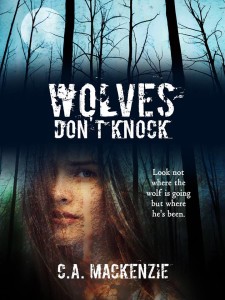
This week’s story comes from Cathy MacKenzie. Cathy’s novel, WOLVES DON’T KNOCK, is available from her locally or on Amazon, to great reviews.

***

Pigeon Phobia by Cathy MacKenzie

The final time I visited Granny in her fourth-floor condo, I was ten. I didn’t know exactly how old she was then, but the brown spots on her hands, her stooped shoulders, and her grey, frizzy hair showed her years. For as long as I could remember, she sported a bit of a moustache, and the stubby hairs rubbed against my face whenever she kissed me.

She used to stand by the sliding door that opened onto the balcony and talk to Stella. “I see you, Stell,” and “What are you doing, Stell?” were her usual questions. No one answered, of course.

I had never seen Stella standing on Granny’s balcony, never even met her as I far as I knew, nor did I know why Granny talked to this mysterious, invisible woman several times a day.

The pigeons were in full force, though, swooping down to the balcony. They pooped on the wicker furniture, on the side tables, and on the railing. I swear those beady eyes looked right into the living room. I eyed their scruffy feathers and scrawny beaks. So close, I could touch them.

One day, Granny stomped from the living room and into the kitchen, yanked open the fridge, and pulled out a bag of carrots. I sensed what was coming and moved out of her way.

Yep, she hurled those carrots, one by one, with strength a frail, elderly woman didn’t normally possess. “Get away, you dratted creatures,” she shrieked.

As hard as she threw, though, she didn’t hit any.

She gasped after yelling at the birds and covered her mouth. “Stell, I’m so sorry if I disturbed you. Go back to sleep.”

She turned from the door, and a sad face overtook her surprise at seeing me. “Sorry, Carmen. It’s those damned pigeons. How I hate them.”

“Can we go out to sit, Granny?”

“No, we cannot. Not with those dratted pigeons ruining everything. Tomorrow, though. Tomorrow we’ll go out.”

I was at Granny’s condo for six days that last time, but “tomorrow” never came. The pigeons continued their tirade, almost taunting her. She wouldn’t go outside with them perching on the railing as if they owned her balcony. “I dare you,” they seemed to say. “I dare you.”

I would have yelled “double dare” back, but that would have given the pigeons the attention they craved, and Granny wouldn’t have liked that.

Visits with Granny are as fresh in my mind as if they happened yesterday, but many years have passed. The pigeons aren’t as bad as they once were. Maybe they were never that bad. When one lights on the balcony, I shoo it away.

I hate the sunlight as much as Granny hated the pigeons. The afternoon glare hits the sliding door most days and highlights my age spots, similar to those that lined Granny’s hands and arms.

I have no grandchildren. No husband. No siblings.

But I have my memories.

I cough, remembering how Granny wheezed and hacked every few minutes. I had always thought her coughing a nervous habit, but she suffered bouts of heartburn and inflammation of the esophagus, so perhaps not.

I peer down from the fourth floor balcony. I can just barely see Granny’s headstone. “Hush now, Granny, the pigeons won’t hurt you anymore.” I cover my mouth and giggle. “Oh, Stell, I hope I didn’t wake you.”

If I lean over far enough, I can see Stella’s headstone.

Yesterday I visited Granny and left an orange lily, her favourite flower. I stopped by to visit Stell, too.

Strands of shoulder-length grey hair whip across my face. The wind whispers. Or is it Granny?

“Hush, Granny. Sleep tight.”

***

 The Spot Writers—Our Members:

Val Muller: https://valmuller.com/blog/

Catherine A. MacKenzie: https://writingwicket.wordpress.com/wicker-chitter/

Phil Yeats: https://alankemisterauthor.wordpress.com

Chiara De Giorgi: https://chiaradegiorgi.blogspot.ca/

Welcome to The Spot Writers. The September prompt is to use these five words in a writing: carrot, lily, moustache, esophagus, pigeon.

This week’s story comes from Phil Yeats. Phil (using his Alan Kemister pen name) recently published his first novel. A Body in the Sacristy, the first in the Barrettsport Mysteries series of soft-boiled police detective stories set in an imaginary Nova Scotia coastal community is available on Amazon.

***

The Unpopular Prompt

by Phil Yeats

After their monthly writing group meeting, two women stopped on the library steps.

“What’s up with Colonel Mustard?” Susan asked.

Beth laughed. “Is that what you’re calling Maurice Moutarde? And I presume your question refers to his angelic smile when Claire announced this month’s prompt.”

“Yeah, really. Have you ever seen him smile?”

“Not part of his persona. And everyone knows he hates prompts based on five disconnected words.”

Susan shook her head. “We’ll find out what he’s up to next month.”


One month later, the dozen writing group members reassembled in the library’s meeting room.

“Time to start,” Claire announced before everyone had taken their seats. “No newcomers, so we should commence our readings. Who wants to start? And remember, no more than five hundred words.”

Susan rolled her eyes. Everyone knew the five hundred word maximum. She snapped to attention when Maurice cleared his throat.

He stood, theatrically displaying an opened three-by-eleven-inch Power Corporation envelope before spreading it face down on the table. Maurice paused, staring at Claire. When she looked up from her agenda, he began reading.

“A pigeon with moustache-like marking above its beak scarfed a carrot-coloured encrustation from the pavement, staggered to Claire’s prized lily and dislodged the disgusting mess from its esophagus.”

Beth whispered to Susan. “Would you conclude he hasn’t changed his opinion of those prompts?”

“Or abandoned his ongoing feud with Claire over the preferred direction for our group,” Susan added.

Their mirthful eyes and suppressed chuckles contrasted with the evil eye Claire cast toward Maurice. He ignored her malevolent glare as he bowed to his audience before sitting. Mark one up for Maurice in their little battle to become top dog in an insignificant writing group.


***


The Spot Writers—Our Members:


Val Muller: https://valmuller.com/blog/

Catherine A. MacKenzie: https://writingwicket.wordpress.com/wicker-chitter/

Phil Yeats: https://alankemisterauthor.wordpress.com

Chiara De Giorgi: https://chiaradegiorgi.blogspot.com/



A former student of mine left me this book at winter break a year or two ago. Its absurdist nature is reminiscent of The Stranger and Rosencrantz and Guildenstern Are Dead, two works we read the previous year in our literature class.

In the novel, a man named Cincinnatus is condemned to death for a crime that is never explained and which he does not understand. The jailers who confine him are absurd: one, the executioner, pretends to be a prisoner, for instance. His visitors bring their own furniture into his jail cell, and the prison employees admonish him for ridiculous things like his lack of manners and his reactions to the events (i.e., his imprisonment and death). His mother and attorney are absurdly worthless during their visits, and his wife is ridiculously unfaithful. During his ordeal, he is given no information about his execution. Like Meursault in The Stranger, he frantically awaits the time each day when his execution would occur and finds uncomfortable relief that he has at least another 24 hours to live.

A series of unreasonable events occurs, some involving visitors like his wife (who is blatantly unfaithful during her visits to the prison and seems to be already planning for a second husband) and the daughter of a prison employee (who is only 12 and precocious, reminding me of Lolita), who is kind but ultimately worthless in helping him escape. Nothing makes sense, including an escape tunnel someone is digging within the prison. In the end, he finds himself irrationally terrified of death and angry at his response to his own death. Finally, he wills away the confines of his imprisonment, realizing everything around him is fake, and walks toward voices he hears, knowing there are others like him who are presumably awoken from the absurd world they inhabit.

This is Nabokov, so there are passages of the story, regardless of how absurd it is, that are beautiful simply for the sake of reading beautiful prose. Aside from the beauty of the language itself, the story raises important comparisons to novels like The Stranger (the back cover compares it to Kafka’s The Castle). For me, I enjoyed the look at the way people regard impending death. Meursault in The Stranger and Cincinnatus in Invitation to a Beheading are both given the blessing/curse of knowing that their death is coming. Most of us are too busy living life to fully contemplate this idea. Meursault realizes that everyone is condemned like he is—just not necessarily in such an obvious way. Both characters are “awoken” by their knowledge of death and react in ways overly emotional for their personalities, and in the end they both seem to have epiphanies: the execution itself is less important than each character’s realization.

Although I’ve read that Nabokov does not prefer being compared to Orwell, I could not help but see connections to some of the more personal conflicts Winston goes through in 1984. Like Cincinnatus, Winston is writing to an unknown audience. Given the situation, it is doubtful that anyone will read the journal written by either character (except, of course, for us, the readers of the novels). For both characters, there is a compulsion to disclose the truth—an awareness of existence beyond what most people can or are willing to acknowledge. Cincinnatus expresses his discontent with his life, both his personal circumstances and the authoritarian world he inhabits, though saying the novel is a metaphor for authoritarian oppression is an oversimplification and leaves out the personal nature of Cincinnatus’s reflection. Winston, in 1984, mentions that he might be writing for people of the past or future, but that it is irrelevant. Either his potential readers are already condemned, like him, and cannot read nor benefit from his journal, or they are living in a world in which his struggles are irrelevant, so they would not care. Same goes for Cincinnatus. His wife is unwilling to read the deep thoughts he put in a letter to her, and no one in prison seems to care what he writes–especially since they are the ones doing the condemning, not the other way around.

But Invitation to a Beheading seems much less political than 1984. The crime that causes the execution, defined as “gnostical turpitude,” perhaps suggests religion. Is it a nod to Gnosticism? In the end, at the execution, Cincinnatus seems to shed the physical world, simply walking away from it toward voices of others who seem to have become enlightened. He seems to realize that the physical world is just a front. Does he walk away literally? Or is it more figurative, a nod to our spiritual selves being apart from our physical ones?

In a more individual sense, the novel seems to be about alienation, about what happens when someone refuses to or cannot conform. Society, in the form of those who visit and judge Cincinnatus, seems to be playing a game, conspiring to bring down those who refuse to play, the same way Meursault in The Stranger is persecuted more for his outlook than his actual crime. In both cases, society hates or fears or acknowledges the need to “get rid of” those who think differently. Society seems to have accepted a subconscious set of rules, and only the outliers are ignorant about them.

I enjoyed the novel, though like many dystopian works, it doesn’t read the way a traditional “plot-driven” novel does. I briefly lost the novel, and when I picked it back up, I had to skim again to see what was happening, since the events Cincinnatus encounters don’t make sense in the traditional way.

I would recommend the work for anyone who wants a reason to contemplate or for those who enjoy dystopian or metaphorical works. It’s a challenging work not so much in its language but in its implications, yet it’s one that will stay with me.

Welcome to the Spot Writers. This month’s prompt is to use these five words in a story/poem – esophagus, carrot, pigeon, lily, moustache. Today’s story comes to us from Val Muller, author of the Corgi Capers mystery series (among other works). You can find out more at www.CorgiCapers.com.

Follower

By Val Muller

Author’s note: I read recently that the YMCA I frequented as a kid was purchased to become an extension of the nearby hospital (the hospital where I happened to be born, in fact), but that the building stands abandoned years later. The news story mentioned that a group of youths was recently caught trespassing there after dark with a camera, prompting my imagination.

Lily swallowed over the boulder lodged in her esophagus. The evening sounds—chirping crickets, distant train whistle, slowing whir of traffic—provided none of their usual comforts. Instead of settling in for one of her last few cozy evenings at home, she stood out here in the parking lot like a criminal. The chill of the Connecticut August made her shiver with its hint of Halloween. Even so, the camera and tripod felt clammy in her hand as she waited for Harold to get the lighting right.

“Ready?” she asked, her voice barely above a whisper.

“It’s hard to test the lighting when we have to keep it dark until go time,” he said.

A siren blared in the distance, and Lily froze, as did the others, trying to determine whether it was headed toward them. The sound faded, then disappeared altogether.

“We’ll have to enter from here,” Harold said, briefly illuminating the bright lamp. It was blinding—a genuine lamp from the state university film department—on loan to sneaky Harold for the evening.

The light shocked everyone, and a flutter from a window of the abandoned building made him snap it off. The blinding light was replaced by his phone’s built-in flashlight, revealing the intruder to be only a pigeon startled from its perch.

“Get a grip,” Lily told herself. Then, she raised her voice. “I hope you appreciate this, Margie. We’re all going to have criminal records by the time we’re done.”

Margie peeked from behind her phone, permanently set to “selfie” mode to serve as a mirror. “We won’t have criminal records,” she said. “No one cares about an abandoned YMCA. And I do mean no one.” She flashed a smile and raised an eyebrow. If she were a male, she would have stroked her moustache contemplatively. Everything about her was calculated, from the inflection of each word to the choice of sentences and facial expressions. Calculated the way soap operas are calculated.

Which was exactly the point.

Margie had orchestrated the whole thing to serve as her audition video for a prestigious and competitive film program in New York City. The video they were filming was designed to be one of those hunting-for-ghosts shows, and Margie was the host. The abandoned building, she argued, showed her resourcefulness, while the premise allowed her full range of emotions to be put on display.

And here Lily was, as usual, being dragged along just because Margie was cooler than she was. She longed for college—a mere nine days away. It would be a fresh start, a chance for Lily to be Lily, not just Margie’s friend.

Harold’s expertise, and his use of state university film equipment, further allowed Margie to remind everyone that not only did Margie have a boyfriend, but she had a college boyfriend at that. She was eons cooler than Lily would ever be.

The door to the building opened, and a frazzled Emily poked her head out.

“The props are ready,” she said. Then she looked around at the shadows surrounding them. “I heard sirens.”

Margie shot her a look.

“I know, I know,” Emily said. “But my prints are all over the place now. What if they, you know, revoke my scholarship? Or deny my admission?”

Harold laughed. “It’s not like they have everyone’s fingerprints on file. And besides, that whole ‘colleges will revoke your scholarship or admission’ is more like an old wives’ tale. It’s something teachers use to scare seniors into behaving during the last months of high school.”

Lily sighed. “But we’re not in high school anymore. This is the real world. We’re trespassing. Technically, a college could—”

“Technically, you all need to man up,” Margie said, pausing dramatically. She smiled. “Besides, in exchange for helping me, I’m giving you all a nice chunk when I make my first million.” She paused, dangling the imaginary money in front of them like a carrot. “Except you, Harold. We’ll be married by then, so we’ll have to work it all out in the pre-nup.”

In the darkening evening, the look on Harold’s face glowed. The look on his face said there were so many things he wanted to say, but his twisted lips said he was going to keep quiet. As if controlling him, Margie put her hands on her hips and threw out her chest, accentuating all her curves.

Yes, in her imagined glamour of living the Hollywood life, she had Harold captivated. The same way she had captivated Lily and Emily into jeopardizing their records to give her dream of acting in the big-leagues a shot in the dark.

Speaking of dark, red and blue lights lit up the distance, overpowering the streetlights as they approached. Their sirens remained silent, but their destination was more than clear. Two sets of police cars sped toward the abandoned building.

Emily ran off first, disappearing into shadows. Harold was next, leaving only enough time to secure the expensive equipment he’d borrowed. Lily was frozen to the spot, staring at Margie. If Margie was going to stay and confront the cops, so was Lily, the same way Lily always followed the ringleader. She had flashes of following Margie through terrifying dodge ball games in elementary school, to play auditions in middle school, to awkward dances and boring football games, to nothing Lily had ever wanted to do.

Margie turned dramatically, the colored lighting illuminating her face. “Oh well,” she sighed, pausing to let her eyebrows shift into resignation. “You win some, you lose some.” Lily could just picture the scene fading out on that resigned brow—until Margie took off in an unscripted run, Lily trailing at her heels.

***

The Spot Writers:

Val Muller: https://valmuller.com/blog/

Catherine A. MacKenzie: https://writingwicket.wordpress.com/wicker-chitter/

Phil Yeats: https://alankemisterauthor.wordpress.com

Chiara De Giorgi: https://chiaradegiorgi.blogspot.com/

 

The day I moved into my house, I was driving with my corgis in my packed car in the first of a dozen trips to the new place. The road, a minor highway, settled from a crowded interchange near my old home to more of an abandoned, rural highway (when it wasn’t rush hour).

As I drove that first car-load to my new home, moving the corgis forever away from the crowded townhome to their palace of greenspace, a man and his son were driving just in front of me. No one else was around, and I gave him plenty of space. I’m not sure if he was distracted by a phone, or a conversation with his son, or perhaps he dozed off. But in front of me, his car violently veered toward the right shoulder. Then, he overcompensated for the move, pulling hard to the left.

By this time, I saw what was happening and slowed way down, preparing to ease into the grassy median if need be.

The world moved in slow motion as his car spun, first lifting onto two tires, then settling on all fours to do a 180, then a full 360.

He came to a stop just as I passed by at a crawl. I glanced over to see him checking on his son. He seemed okay, and in the rearview mirror I saw the person far behind us pull over to help. With two dogs and a day of moving ahead of me—and noticeably shaken—I kept moving.

But as I unpacked my car for that first load, the first of many, I took stock of the situation. When I awoke that morning, the excitement of moving into a new home was tempered with the mental complaining of the day ahead: it was a day of hard labor. It was June and humid, and the plethora of boxes were all heavy, not to mention that many were still waiting on the third floor of the townhome.

The incident with the car startled me into a renewed outlook. Instead of complaining about having to lug boxes thirty miles all day, up and down flights of stairs, I became grateful that I was alive to do so. It wouldn’t have taken many changes in that morning’s events for me to have ended up in a completely different place. Injured, maimed, dead… I guess maybe I needed a reminder to be grateful instead of a reason to complain.

Strangely enough, just this week, almost the same thing happened. It was on the same stretch of highway and around the same time of morning. I was returning from an errand, and a car in front of me—about the same distance as the last time, with no one else in our immediate area, made a similar move.

Without warning, the car in front of me veered onto the shoulder. At first I thought the driver was distracted by a phone and surely would pull back onto the road. But instead, the car kept its highway speed as it ran off into the shoulder—a grassy embankment running down into a natural gutter until it climbed back up a steep hill. Once again the world slowed for me as I watched.

The car moved as if in a movie, accelerating along the embankment. Surely, I thought, it would flip. Instead of slowing, the car kept its speed. It seemed to take forever for the driver to realize she was off the road—I assume she had fallen asleep. When she did, she overcompensated, and at full speed she pulled the wheel hard, spinning in an immediate 360. The front tires hit pavement, but the back stayed on the grass, creating a strange spinning pattern as she circled twice.

I had slowed by this point, and once again moved to the left lane, wondering how far onto the median I could go without risking getting stuck or crossing into oncoming traffic. The spinning car seemed to teeter forever, and I calculated where it might strike my car, and at what speed, wondering if the baby car seat would be safe or whether it would be better for me to brake hard and do something drastic.

Surprisingly, the woman, after doing another 180 and turning her car around, accelerated immediately to highway speed and continued down the road. I was quite shaken myself, and I couldn’t imagine how or why she would continue driving—maybe fear of a watching police officer?

In any case, the whole way home I had a different perspective on life. Whereas I had been bemoaning my lack of sleep with a new baby at home, I now thanked the Powers That Be that I had a healthy baby to return home with, one that could thankfully keep me up the following night.

I am reminded of my students, who always wonder why “bad stuff” always happens in literature. They wonder why we can’t read a book in which there is nothing but “pleasant, happy stuff.” I tell them what I told myself after these two near-accidents.

When things are going well in our lives, we seldom reflect. We accept, enjoy, and move on. It’s the bad times in our lives that make us appreciate what we have—what could so easily be lost. It’s not an easy skill to develop, being appreciative of what we have without the threat of it being taken away. It seemst o be part of human nature, the need to reflect on the negative in order to appreciate the positive. Is that why we still read Oedipus Rex and why Shakespearean tragedy is still performed to this day?

Sometimes “bad stuff” is what’s needed to make us realize what we actually have in life.

Sometimes we are lucky enough to avoid car accidents and calls to the insurance company and visits to the hospital, yet lucky enough to have the opportunity to be thankful for our lives just the same.

Welcome to The Spot Writers. The August prompt is based on a photo taken at a local zoo. There was a fence leading to a “no admittance” area, but about 12 inches at the bottom had been bent upward, allowing admission of… people? animals? And where does it lead? The Spot Writers’ task: Write a story involving a fence that has been snuck through—as a major or minor plot point.

This week’s story comes from Chiara De Giorgi. Chiara dreams, reads, edits texts, translates, and occasionally writes in two languages. She also has a lot of fun.

***

My life beyond the hills

by Chiara De Giorgi

“If you want to know what my life will be like, you have to follow me.”

“Where?”

“There.”

The girl pointed to the top of the hill.

By then, I was pretty sure I was dreaming. Where and how had I fallen asleep, though?


My friends had wanted to go paddling on the lake, but I had felt such an urge to go explore the woods behind the B&B, that I had quickly packed a waterproof jacket and a bottle of sunscreen  – you never know what the weather’s going to be like in Scotland, after all! – and had started hiking up the hill.

Fluffy, white clouds were scattered across the sky, and a soft, warm wind was blowing, leaves rustling under its fingertips. The air smelled sweet, birds were singing, flowers were blooming all around, and my heart was about to burst with joy. This place was so beautiful, and somehow familiar. Where had I smelled that sweetness before? When had I seen such colorful meadows?

My hike abruptly came to an end when I reached a fence. I glanced right and left and saw no one, but I’d never climb over it: I was too well behaved for that. I squinted in the sunlight, trying to locate the end of the fence: maybe I could just go round it, and find the path again on the other side. I saw nothing promising, though: the fence just climbed all the way up the hill and disappeared beyond the top.

“I can show you a way through.”

Her voice startled me. Where had she come from? She looked about my age, small leaves and grass blades were entangled in her hair, that was long and dark and matted. Her sparkling green eyes made her dirty face look pretty, and she watched me with wariness and amusement.

I didn’t know what to say, I just opened my mouth and asked: “How?”

“Come with me, quick!”

She picked up her long, ragged skirts and started running up the hill, along the fence.

“What? Wait!”

I started after her before I even had the time to think. Who was this girl? Where had she come from? Why was she so shabby? Where was she leading me, and why?

“Okay, stop. Stop!”  I cried.

“What’s wrong?” she asked. “We can’t stop now. They’ll catch us! Come on, run, we’re almost there.”

She started up the hill again, and I couldn’t help but follow. I stopped again when she did. I thought I’d be out of breath, but I was not: that’s when I realized this must be a dream.

“Now what?”

“Look”, she said, pointing to the ground. The fence had been wrecked.

“We’re too big, we’ll hurt ourselves. Besides, what’s the point? Why not simply climb, if we have to get to the other side?”

She grinned.

“Let’s do that!”

With one leap she was beyond the fence and had started running again.

“Wait, stop!”

She kept running, so I climbed the fence, much less nimbly than her, I admit, and ran after her.

She finally stopped and crouched behind a big, thorny bush. Sweat was leaving white streaks on her dirty brow and cheeks, her breath was heavy. She looked at me, terror in her eyes.

“What? What is it?” I asked, grabbing her hand.

“Shut up, don’t talk! They might hear us. Oh God, will they catch us? Where are they? Can you see them?”

“Who are you talking about? There’s no one here, it’s just the two of us.” Dream or not, I was starting to feel uncomfortable. “Now calm down and tell me: who are you? What or who are you running from?”

She looked at me with sad eyes.

“Don’t you remember?” she asked.

I gasped. One moment I was myself, the next I was the girl in front of me. Chased by men who wanted to burn me as a witch. By men who had burned down my village, killing or capturing all my friends and family. I was left alone in a dangerous world. Running for my life, but where?

My head was spinning.

“What…”

“Now you remember,” she muttered. “We fled,” she added, nodding to herself, her eyes lost in the distance.

“Did… Did they catch us?”

She shook her head.

“They did not. We ran for days, climbing hill after hill after hill. We were all alone. We shed tears for all the people we had lost. For all the beauty of this place, wasted on evil people. For all the magic that was lost.”

I didn’t dare break the silence that followed, so I stayed still, crouched next to her, waiting for her to speak again. At last, she glanced at me and smiled.

“It wasn’t lost, not all of it, at least. The magic, I mean. Otherwise, you wouldn’t be here.”

“I don’t understand.”

“I am you, you are me. That much you know, right?”

I nodded quickly, before my mind had time to process the thought and convince me it was nonsense.

“I am here right now, but you are not. Not really, at least. You are my future. I needed a scrap of hope, and I called out to you. Now I know it’ll be worth it.”

I slowly stood and lifted my eyes to the top of the hill. She did the same.

“If you want to know what my life will be like, you have to follow me.”

“Where?”

“There.”

One heartbeat. Two, three. I shook my head.

“Go on and live your life,” I said then. “I’ll go on and live mine. Come see me some other time, if you wish. Let me know how you’re doing.”

She sighed, but kept on smiling.

“I will. Take care, and be wise.”

She turned and started running again. I stood there, watching her becoming smaller and smaller until she disappeared beyond the top of the hill.

I rubbed my eyes, trying to wake up, but realized I was already awake.

The sun was about to set and I must run if I wanted to be back at the B&B before dark.

***

The Spot Writers:

Val Muller: https://valmuller.com/blog/

Catherine A. MacKenzie: https://writingwicket.wordpress.com/wicker-chitter/

Phil Yeats: https://alankemisterauthor.wordpress.com

Chiara De Giorgi: https://chiaradegiorgi.blogspot.com/

Welcome to The Spot Writers. The August prompt is based on a photo taken at a local zoo. There was a fence leading to a “no admittance” area, but about 12 inches at the bottom had been bent upward, allowing admission of… people? animals? And where does it lead? The Spot Writers’ task: Write a story involving a fence that has been snuck through—as a major or minor plot point.

This week’s story comes from Phil Yeats. Phil (using his Alan Kemister pen name) recently published his first novel. A Body in the Sacristy, the first in the Barrettsport Mysteries series of soft-boiled police detective stories set in an imaginary Nova Scotia coastal community is available on Amazon.

***

Coming of Age

by Phil Yeats

The school bus dropped them off on Friday afternoon after their third week in grade ten at their new high school. They lived in two isolated houses on the far side of a large industrial estate, the last two kids off the bus before the driver turned back to town. Everyone in school thought they were going steady because they spent their free time together, but it wasn’t so. They knew no one at school and had been friends forever, so they hung together. But they weren’t romantically involved, at least not then.

Mitch dropped his school bag at his place and continued to Jen’s where Mortimer eagerly waited for his afternoon romp. She threw her bag on the porch and chased after her mutt. Mitch followed more slowly knowing they’d make so much noise he’d have no trouble finding them. And anyway, Jen needed a run as much as her dog did. She was the high-strung adventuresome one, always getting them into scrapes.

When Mitch tracked them down, he saw Mortimer running along the chain-link fence that bounded unused forested land behind the industrial estate. The dog vanished through a gap in the fence. Jen yelled “Morty, come back here!”, then squeezed through the gap and promptly disappeared.

Mitch rushed up to the fence and stared into the forest. With no undergrowth or large trees to hide behind, he should have spotted them. Where were they? And why couldn’t he hear them?

After pulling at the fencing to widen the hole, he squeezed through, tumbling and banging his head on fine white sand. Mitch gazed at palm trees swaying in a warm breeze and listened to waves breaking on a beach. He stumbled past girls in bikinis and surfer dudes in their baggy shorts wondering how the Nova Scotia forest had transformed into a tropical beach.

When he found Jen and Mortimer, they were back in the Nova Scotia forest. She rested in a hollow in the long grass while Morty bounded around like the crazed rabbit in Monty Python’s Holy Grail. No more tropical beach, just a meadow in the forest, a place where they’d often stopped.

Mitch flopped down beside her, and she reached over and pulled him close, kissing his lips. Had she also been assaulted by the strange tropical beach images? Were they omens, images destined to lead them forward from children to adults? Had they suddenly joined the high school culture where everyone was more interested in relationships than the physical world around them?

Weird and wild, but hey, Mitch could handle it.

***

The Spot Writers—Our Members:


Val Muller: https://valmuller.com/blog/

Catherine A. MacKenzie: https://writingwicket.wordpress.com/wicker-chitter/

Phil Yeats: https://alankemisterauthor.wordpress.com

Chiara De Giorgi: https://chiaradegiorgi.blogspot.com/