Val Muller

The Electronic Wordsmith

A few years ago, I went on a trip to Sedona, Arizona. We went for the hiking, but the location attracts many people in search of spiritual guidance and is a beacon of “New Age” trends. As a result, we encountered many brochures about spiritual journeys. One of those was a promise to help one find one’s spirit animal.

268454_2096708051670_345359_n

A view of Sedona, Arizona.

I didn’t take advantage of the offer, but I wondered: what is my spirit animal? Everything I’d read (assuming we have a spirit animal, of course) suggested that this was something we would “just know.” When we encountered it, we would know it. I ruminated, and I concluded that my spirit animal must be a dragonfly. After all, I constantly wear a dragonfly necklace—or at least I did until my baby broke it—and my husband and I have a cool story about a blue dragonfly that anchors our relationship.

But I didn’t feel an epiphany about it. I shrugged off the matter and forgot about it in the grand scheme of life.

Until a dream a couple of weeks back.

In my dream, I was in the house I grew up in as a child, though I remained the full-grown adult that I am now. I looked out the window to see that it was snowing. “Just as I feared,” I muttered.

(Anyone who knows me or knows the story of my daughter’s blizzard arrival knows just how passionately I dislike snow.)

For some reason, I went outside in the snow. I wasn’t dressed for it, and even as I was walking outside I feared I would be cold, especially when I touched the snow with my hands, as I knew I would. I walked to a tree—one of my favorite trees from childhood, one I used to climb and examine for caterpillars and the like. Under the tree was a snow drift, and I bent down to put my hand in it.

It was then that I saw—it wasn’t snow at all, but flower petals, the kind that fall in the cherry blossom festival. But these were snow-white in color, like pear tree flowers. I assumed they were falling from the trees, but like so many of my dreams, I was not allowed to see the whole portion of the landscape. In so many dreams I have, most of the scene is hidden from me like a darkened studio, and the things I’m “supposed” to see are highlighted almost by spotlight. So the sky and the tops of the trees were dark. I could see only the snow—rather, flower petals—and the tree trunks.

My joy at the discovery of anti-snow was stifled by the fact that it wasn’t actually a snow drift I was putting my hand into. It was a snow leopard hiding underneath the flower petals. In my dream, I pulled my hand back.

A voice—or several, the same voices that always talk to me in dreams—told me to keep petting the leopard.

Illustration courtesy of Shelly (https://www.sketchport.com/drawing/4940029541482496/snow-leopard) via Creative Commons license.

Illustration courtesy of Shelly (https://www.sketchport.com/drawing/4940029541482496/snow-leopard) via Creative Commons license.

“It’s going to kill me,” I said.

The voices responded. “It won’t. It’s your spirit animal.”

I took their word as truth and reached closer to the leopard, stroking its muzzle. It was comforted by my touch, and I kept at it. Then I looked down and saw that my footprints had ruined the soft blanket of petals on the ground. The leopard told me—not in words, but just through its glance—that I was to cover it back up in petals because it was hiding for now. I did so, and I replaced the petals so that it looked pristine, once again like freshly-fallen snow. I carefully backed my way through the yard, covering my tracks until I reached the porch to my family’s old house.

It was then that I giggled. I realized that I was hiding a secret—that the world would wake up and think that snow had fallen, but really, it was petals. Instead of the cold of winter, they would experience the warmth of spring.

I don’t know how the leopard figures in, or why it was hiding. But the feeling was comforting nonetheless.

A quick search on the Internet revealed several sites that claim the snow leopard as a spirit animal is a symbol of silence and intuition. This is interesting to me because I embrace both. I’ve always been silent, preferring to watch and observe, making calculated actions only after considering possibilities. But at the same time, I’ve relied on intuition in addition to that calculation to lead my decisions. “Gut feelings” for me have always been right. In fact, the research reminded me of the life-changing dream I had in which I was told (by those same voices in the dream) that I should trust my intuition to do my job and continue my career as a writer.

I’m not sure how to interpret the message of the threat of snow turning out to be a beautiful blessing of spring. “The Internets” tell me that in the spirit of a snow leopard, I should trust in what cannot be seen and have confidence that silence and patience will eventually reveal the eternal truth. In the dream, that truth was positive, if elusive, and I look forward to discovering what it is.


Welcome to the Spot Writers. This month’s prompt is to use the following five words in a writing: marble, TV, evil, butcher, couch. This week’s post comes from CaraMarie Christy, the young-un of Spot Writers. Visit her blog on Word Press at Calamariwriting and check out her book from when she was twelve, Fairies Fly. CaraMarie is also hoping to share a new marketing project coming up with Kindle Worlds! *Knock on wood!*

A Terrifying Television

By CaraMarie Christy

It was the clearest thing in the world, in the mind of two-year-old Colleen Cuellar, that the TV was a horrendous, deadly trap worse than any timeout imaginable. People walked in and out of the box, summoned by a black wand that was often lost in the cushions of the Cuellar’s red couch, and then disappeared into nothing whenever the wand demanded. If she stood too close to the TV, Colleen was sure she would be sucked in, and never let back out. It had happened to Elmo. One day she had been playing with her red friend and the next he was inside the box, singing a song about “Elmo’s World”, and she could not find him anywhere, despite knowing she had left him next to the coffee table the day before.

That was what the TV was then. A monster, that could butcher people and then leave no trace of them behind. Their bodies were shrunk down for this reason, until they were almost smaller than Colleen. People were not supposed to be her size, she was sure. People were supposed to be large, loping creatures, with hands the size of her face. They were supposed to eat big foods at the grown-ups table and talk about cars. And something called an “I-95”. Colleen had a car, a very nice car with big, red wheels.

A crackling noise rang from the TV, the signal that her bubble-gum-chewing “babysitter”, as the people called her, had woken it up. Colleen chucked her car across the living room and screamed. In her fascination with her own car, she had forgotten all about the people eating box. For a moment, she watched it, glowing across the room, showing a small dog on its way to a summer camp. And then the dog was gone. It was replaced by two people holding hands and chewing gum. The dog would never come back.

Colleen had to act.

There were few places to run and even fewer places to hide, that weren’t covered in giant, white locks. Desperate, she crawled as hard as she could away from the babysitter, hoping to stay low to the marble in the kitchen long enough to avoid detection and get to the dog’s crate. He would help her, despite his own captivity whenever the babysitter was around. Slowly, she made her way toward the black wires where his snores were emitting. She could not run. The rustling of her diaper would alert her pink haired caretaker to her escape attempts.

But, even without a rustling diaper, the babysitter noticed before Colleen could reach safety. The big girl’s feet thumped against the living room carpet as she got up from the couch. Just as Colleen’s fist was around the lock to the dog’s crate, Katie wrapped her arms around her waist and hauled her up into the sky. They were back in the living room before Colleen could bite her captor. The evil babysitter didn’t understand the danger that they were in and Colleen didn’t like her enough to try and save her. Colleen’s struggle was only for herself and it went on for hours. She crawled, ran, and even rolled, but she could never make it far enough to open the dog’s cage.

A knock at the door signaled a break for Colleen. She was exhausted, so she curled into a ball at the far side of the living room, next to her play pen, and stared at the TV, daring it to try and eat her at such great a distance.

“She’s got a lot of energy today,” moaned the babysitter as she let in Mr. and Mrs. Cuellar. They dropped their coats over the couch. “She keeps trying to get to the kitchen and play with the dog. And she’s starting to get fast at it, too.”

The corners of Mrs. Cuellar’s eyes wrinkled. “Have you seen the video we got of Collie’s first steps? I don’t think she ever could walk. She just runs.” Mrs. Cuellar picked up Colleen and patted her head. “Here, I think the disc is in the DVD player already. We were showing it to the Beasleys. It’s pretty funny to watch.”

The crackling noise made Colleen clutch to her mother’s blouse. Every bit of her wanted to stay there, to never look at the monster in the living room, but the big people were all staring intently at the box. With one eye, she peeked, then shrank back into her mother at what she saw.

She was in the box, running toward the marble in the kitchen, just as she had been doing earlier. She could see herself running on the screen, her diaper swooshing, feet slapping the marble, but she couldn’t feel herself moving at all. The box had her. It would never let her out. Maybe it had always had her.

Colleen wailed.


The Spot Writers—Our Members:

Val Muller: https://valmuller.com/blog/

Catherine A. MacKenzie: https://writingwicket.wordpress.com/wicker-chitter/

Dorothy Colinco. www.dorothycolinco.com

CaraMarie Christy: https://calamariwriting.wordpress.com/
I forgot to post this on Friday, so please excuse the tardiness.

After a long weekend of visiting family, I wanted to highlight the simple joys of being together. As an introvert, I can’t help but admit my desire for solitude. But family—blood or adopted—provides a level of comfort that comforts even an introvert.

Whether it’s enjoying a family toast that has become a tradition many-generations long, or introducing a new member of the family to everyone else, there’s something comforting about the ritual of family and celebrations.

While growing up, there were several years during which I was assigned to put the lights on the tree. It’s one of those situations where one is “rewarded” for being good at something by being asked to do it more and more. My dad even jokingly called me Martha Stewart because of the way I string lights. Last year, my parents mentioned that they were going to replace the lights on their artificial tree with LED ones that don’t get hot. Last year, before knowing how exhausting a baby would be, I promised to put 015the lights up for them as an early present.

This year, I held myself to the task (even though they didn’t). It didn’t take that long, and it brought back memories of stringing lights as a teenager. In the meantime, my parents got to reminisce about the way I used to play with kitchen utensils and measuring cups as my daughter played with the same things I did right out of their kitchen drawers.

Now, the tree is lit—and hopefully will stay that way for years, overseeing many more memories. While an introvert is motivated by goals and hard work to attain them, sometimes the greatest motivator is to make sure to appear in the year’s “group toast” photo—or capture the perfect smile of a ten-month old discovering glowing LED lights or really cool orange measuring cups.

*


*

crystal-ankh-200x300I’m also thankful for the release of my most recent novel, The Man with the Crystal Ankh. 

You can view my author page over at World Castle Publishing or check out the preorder link at Amazon.com.

I wrote it based on my love for the violin and my love of spooky things–especially the spooky atmosphere of New England in the fall.

Everyone’s heard the legend of the hollow oak—the four-hundred year curse of Sarah Willoughby and Preston Grymes. Few realize how true it is.

Sarah Durante awakens to find herself haunted by the spirit of her high school’s late custodian. After the death of his granddaughter, Custodian Carlton Gray is not at peace. He suspects a sanguisuga is involved—an ancient force that prolongs its own life by consuming the spirits of others. Now, the sanguisuga needs another life to feed its rotten existence, and Carlton wants to spare others from the suffering his granddaughter endured. That’s where Sarah comes in. Carlton helps her understand that she comes from a lineage of ancestors with the ability to communicate with the dead. As Sarah hones her skill through music, she discovers that the bloodlines of Hollow Oak run deep. The sanguisuga is someone close, and only she has the power to stop it.

Welcome to the Spot Writers. This month’s prompt is to use the following five words in a writing: marble, TV, evil, butcher, couch.

This week’s post comes from Dorothy Colinco, a new member of the Spot Writers. Visit her new blog for flash fiction, short stories, and book-related news. Stay tuned for a Holiday Gift Guide that will be shared in early December!

Reaching

By Dorothy Colinco

She recognized a backhanded compliment when she heard one. As hard as Ms. Wang tried to couch her criticism in her fake, cloying, positive, growth-mindset crap, Vivienne detected the undercurrent of disapproval in the written comments on her essay.

“Insightful comment – why do you think the author made this stylistic choice? I’d be interested in your interpretation.”

Which basically translated to: “You didn’t explain this enough, and it’s clear you know nothing about analysis; otherwise, you would’ve expressed it here. Nice try, genius.”

Vivienne looked up at Ms. Wang, who was standing in front of the room, leaning on her desk in a pose that was supposed to emit an air of ease and nonchalance but only made her muffin top more pronounced. Her eyes flitted down at Ms. Wang’s tights. Her outfits, on the surface, were well put together, but Vivienne knew to look for the short white dog hairs. When she saw those tiny flecks of imperfection sticking out of the “hip” teacher’s tights, a slight grin of satisfaction spread over her mouth. She glanced up and found Ms. Wang smiling at her with eager eyes, that stupid look that was supposed to be encouraging and warm. Vivienne returned the look with a smile that flashed her porcelain teeth, but her eyes remained as cold and hard as marble.

Wang. Fang. Bang. Hang. Dang, girl! Sang. Tang. Yin and Yang. Vivienne butchered her name a hundred times before the bell rang. RANG. The whole time, Ms. Wang walked around the room, spouting something about themes in the book they just read, but Vivienne didn’t hear a word, as if Ms. Wang was a muted TV, a mere backdrop to Vivienne’s thoughts.

As everyone stood to pack up and leave, Vivienne glanced at the essay, splotches of green in the margins, green instead of red to promote conversation rather than criticism, another one of Ms. Wang’s positivity gimmicks. Vivienne didn’t think green was any more positive than red. If anything, green symbolized evil.

She was about to cram the stapled pages into her backpack, but at the last moment, she decided to leave it on her desk – a silent protest. A “positive” protest against cold criticism in the form of rhetorical questions disguised as conversation starters.

She rushed past her brownnoser classmates who were all wishing Ms. Wang a great weekend. She hoped Ms. Wang would notice that she left without a word.

—-

After the students had all left, Ms. Wang took a deep sigh of contentment. What a great class. The lesson was a huge success. The pacing was perfect. The kids were so invested in the warmup writing assignment. She reflected on the day as she went around the room aligning chairs with the tiles on the floor. She would stop by the guidance office today to check in on a student who had been absent for two days now.

She came across an essay that was left on a desk. It was Vivienne’s. Ms. Wang smiled at the thought of the bright girl, a promising writer. Hers had been the most insightful essay in not just this class but the whole grade. She recalled Vivienne during class today. Deep in thought, nodding her head along with the discussion of themes in a literary work. That was a student who got it – who understood that literature was about more than just enjoying or not enjoying a book. She saw the lightbulb go off in Vivienne’s head when she told the class today, “Literature holds a mirror up to humanity and reflects back to us who we really are.”

Those were the moments she lived for. Vivienne would want this masterpiece back. Ms. Wang tucked the essay into a folder on her desk, but not before clutching it to chest. It was a physical manifestation of her hard work and dedication. Everyone knew that teachers weren’t paid well, at least not in dollars. But they were paid in moments like this, moments that reminded them of their meaningful work. The dreaded first year hadn’t been bad at all so far. She was doing it. She was reaching these kids.


The Spot Writers—Our Members:

Val Muller: https://valmuller.com/blog/

Catherine A. MacKenzie: https://writingwicket.wordpress.com/wicker-chitter/

Dorothy Colinco. www.dorothycolinco.com

CaraMarie Christy: https://calamariwriting.wordpress.com/

Writing can be therapeutic, and I love when I can weave in my love for teaching writing with observations about life.

As a teacher, I can vouch for the fact that on the day before Thanksgiving (or any) break, “the struggle is real.” Students are filled with anticipation, eagerly awaiting their plans for break. As part of my creative writing class, I had students write a lai (http://www.writersdigest.com/whats-new/lai-poetic-forms) as a warmup. Since it’s difficult to manage both rhyme and syllables (while still making sense), I wrote a model for them. I wrote about the topic on everyone’s mind: the speed with which the school day was progressing:

What can teachers say

About the longest Tuesday

Of school?

Vacation just may

Show like the sun’s ray,

A pool

Of rest, sleep, and play.

But Time makes us pay:

Slow fool!

It’s not my best work, but it got the point across using the required structure. The students seem to agree with the sentiment: Time moves so slowly when we are eagerly awaiting something. But I always cringe at this outlook. So many people seem to live their lives in anticipation of something. We come into work on Monday groaning about how it’s five days until the weekend. We count off the days until the next holiday.

We don’t realize that we’re wishing our lives away.

Adjusting to life with a baby has not been easy. There is a never-ending line of chores to be done, looking something like this:

Clean kitchen table

Put baby at table to eat

Start load of laundry

Watch baby fling food at table

Clean table again

Wash bottles

Wipe down sink

Give baby a fresh bottle

Watch her spill it on clean shirt

Put dirty bottle in sink

Put dirty shirt in empty laundry basket

Dress baby (wrestle a crocodile)

Plan outing (probably to get groceries, gas, or supplies)

Get baby into car seat (wrestle a crocodile)

Smell dirty diaper

Take baby out of car seat

Wrestle crocodile, etc.

Let baby play in just diaper

Give up on outing

Put baby at seat near kitchen table

Repeat.

If I had to look forward to something, what would I be looking forward to? There are always going to be bottles (or sippy cups, or dishes) to clean, diapers to change (or laundry to wash, a few years down the line). There is always going to be a mess to clean up or a table that isn’t quite spotless. What perfect moment could I be possibly waiting for?

If I’m awaiting a quiet moment and a clean home, I might as well wish away the next 18 years and wish my daughter to college already.

This is obviously not the case.

But life with a baby has heightened my appreciation for living in the moment. We are never promised a tomorrow. If we live wishing for something, we are essentially wishing away all the time between now and then.

So I have started living like a writer. I live in moments, observing the little things that make life what it is. The smudge of avocado on baby’s pudgy cheeks as she smiles and sings. The way the dog sits under her high chair to scarf up whatever she drops. The way the neatly-stacked mail cascades gently down the couch as baby pulls it over. Ha! The way her eyes light up when she sees a bird dash from one tree to the next.

The way a fleece jacket feels when the heater isn’t quite working right: the weight of it, the warmth. A pair of new sneakers that make me feel like I’m walking on clouds.

And instead of focusing on the unending pile of laundry and wondering when it will be done, I marvel at how far we’ve come from grueling hand-washing by the river to a virtual pushing of a button. Instead of wondering when I’ll ever get to enjoy a quiet meal out, I instead marvel at the ease with which I can push “preheat” on my oven and enjoy a meal within the hour.

There are so many amazing moments in a day. Yes, Thanksgiving is coming, and so is Christmas. But there are countless moments between now and then, just waiting to be savored and captured on the blank page and in the open mind.


Icrystal-ankh-200x300‘m excited about an upcoming moment–the release of my latest young adult novel, The Man with the Crystal Ankh. 

You can view my author page over at World Castle Publishing or check out the preorder link at Amazon.com.

I wrote it based on my love for the violin and my love of spooky things–especially the spooky atmosphere of New England in the fall.

Everyone’s heard the legend of the hollow oak—the four-hundred year curse of Sarah Willoughby and Preston Grymes. Few realize how true it is.

Sarah Durante awakens to find herself haunted by the spirit of her high school’s late custodian. After the death of his granddaughter, Custodian Carlton Gray is not at peace. He suspects a sanguisuga is involved—an ancient force that prolongs its own life by consuming the spirits of others. Now, the sanguisuga needs another life to feed its rotten existence, and Carlton wants to spare others from the suffering his granddaughter endured. That’s where Sarah comes in. Carlton helps her understand that she comes from a lineage of ancestors with the ability to communicate with the dead. As Sarah hones her skill through music, she discovers that the bloodlines of Hollow Oak run deep. The sanguisuga is someone close, and only she has the power to stop it.


Despite the negativity floating around the Internet after the presidential election, I am glad to see so many people celebrating “Thirty Days of Thankful.” The point is to use the month of November to recognize thirty things we are thankful for. It’s so easy to take our lives for granted, and although negativity and positivity are both contagious, it seems that negativity is much more virulent.

Though the “Thirty Days of Thankful” is meant often for people to post on social media or blogs, it can easily be a solitary, contemplative activity to help individuals focus on and recognize all the good in their lives.

After being sick several times this month, I am jumping back into my Fantastic Friday posts with two ideas I wanted to share about spreading the love. While there are so many other things I am personally thankful for, I wanted to start with some broader topics that could apply to many—and both contain ideas about how to spread the love.

Veterans Day (belated)

I was overcoming a mini plague last Friday and neglected to post about Veterans Day. The fact that fellow human beings are willing to disrupt their lives and give up some of their autonomy—and recognize that they could be making the ultimate sacrifice for others—is enough to restore anyone’s faith in humanity.am-flag-thank-you

In one of the classes I teach, we were swapping stories about relatives we have and had who fought in WWII and Vietnam and the ways those experience changed them and brought about challenges in living their day-to-day lives after coming home. I have seen these effects in neighbors and friends much more recently than Vietnam. Those who served in the name of freedom have indeed paid a price, even if they returned physically intact. I do not think this country does nearly enough for our veterans.

With the holidays approaching, I have seen various posts circulating around the Internet encouraging people to send cards, postcards, and care packages to veterans and active servicepersons recovering from injury. Although I don’t want to endorse one organization over another (and any you choose to support should be researched thoroughly), a quick Google search will show you a plethora of organizations and locations to send your packages and cards. Though it’s not even close in magnitude to the thanks veterans are owed, it’s a small way we can acknowledge their contributions.

Countdown to Christmas

IMG_8040Every year I cringe in seeing the strange ways parents use Elf on the Shelf to encourage good behavior in their children. With a child of my own, I’m not sure I want to go down that psychological path. However, I did see an idea that I do want to start with my family: each day in December, collect one food item, and on Christmas Eve, donate the whole box to a local shelter. The season is all about giving and sharing love, and this is a fun way to “count down the days” while building up fellow man.

The same can be achieved with the “angel” trees some stores feature, in which children in need write wish lists, and individuals or families can “adopt” the wish list, purchase gifts, and help make that child’s holiday just a little better that year. It’s this type of thoughtfulness that has the power to spread love. And in a world that seems so eager to spread hatred, the words of Martin Luther King, Jr., seem to resonate best: “Darkness cannot drive out darkness; only light can do that. Hate cannot drive out hate; only love can do that.”

Welcome to the Spot Writers. This month’s prompt is to use the following five words in a writing: marble, TV, evil, butcher, couch.

Today’s post comes from Cathy MacKenzie. Check out her anthology, OUT OF THE CAVE, horror stories for 13+. Twenty-one stories by twenty-one authors. Available on Amazon and Smashwords. Makes a GREAT Christmas gift!

***

Punctuality

by Cathy MacKenzie

Barrett wasn’t called Barry the Butcher for nothing. He was an excellent meat carver, could name every cut and knew precisely how long to cook each to perfection. Amy, his wife, a vegetarian, wasn’t exactly impressed by her husband’s skills, and while Barrett barbecued and seared, Amy boiled and sautéed.

Their marriage was strong and loving. Every night, they’d watch TV while reclining on the couch, their bodies entwined. Barrett’s butcher shop did so well, he one day brought home a marble statue for Amy. Just a gift for my sweetie, he told her. And it wasn’t even her birthday! How nice was that?

Barrett, as precise and punctual as his wife, closed his shop at precisely 5:30 p.m. through the week and at 4:00 on Sundays, which was never a busy day. He’d spend thirty minutes cleaning up and would then head home. Barrett had timed his stride using the watch Amy had given to him on his last birthday: fifteen minutes exactly from office to home.

One Sunday at 4:02 p.m., a brush as soft as a butterfly wing caressed Amy’s face. She touched her cheek at the unusual occurrence, and warmth coursed through her body.

When the clock reached 4:46 p.m., Amy wondered where her husband was. He should have been home at 4:45. She put aside the pot of potatoes, her heart beating erratically. Where was he?

Amy decided she’d wait until seven o’clock. If he hadn’t appeared by then, she’d go look for him. In retrospect, she should have gone much earlier. He’d never been late previously without calling, so why had she waited that night?

At 5:21, while eying the clock, a cold breeze hit her face. What was that? She rubbed her arms and her heart shuddered. Barrett? Should she go or wait? No, she had resolved to wait until seven, and punctilious Amy didn’t back down from her decisions.

At 7.01 p.m., she had donned her coat and was out the door.

Barrett’s shop, both the interior and exterior, was dark when she arrived. She pounded on the locked door. He’d never given her a key, and at that moment, she wondered why that was. She walked around the building, to the back door that opened into the alley where the garbage cans were located. That door, too, as she expected, was locked.

What to do?

Was he fooling around? He had eyed Myrtle Davison, who lived two blocks over. Amy had never before seen such a look of lust in her husband’s eyes. Had he deserted her, cleaned out their savings? No, without her signature, he couldn’t withdraw more than a thousand dollars from their joint account. He could have absconded with money he’d hoarded from the shop—if he hoarded money. Barrett sometimes used the wall safe if he couldn’t reach the bank before the close of day. But no, he wouldn’t leave her, not like that. Their marriage was perfect.

Or did she live in that fictional place called Candyland where everything was sweet and delicious?

Within minutes, Amy quit her pondering and called the police. What else could she have done? Her husband was missing, after all. She must report him.

The police broke down the door of the butcher shop to find Barrett dead in a pool of blood behind the counter. The officer made a rash determination that he had severed his left arm at 4:02 p.m. because the watch, which he wore on his left wrist, had stopped at that precise moment, no doubt when the amputated limb hit the concrete floor. His heart must have stopped then, too, otherwise why hadn’t he sought help? At least that’s the quick judgement the police officer made

But Amy remembered the cold flash at 5:21 and, though she didn’t dispute the officer, knew he’d passed at that exact moment. Thinking of the cold flash brought to mind the earlier warmth that had spread through her, and she realized Barrett’s soul had touched her when he fell, telling her it was okay, that he loved her.

Amy couldn’t live with herself. Though she’d always poo-pooed women’s intuition, she should have realized something was amiss, and had she done so, she would have been out the door at 4:03 p.m. and reached her husband’s shop before 4:30. He would have been alive!

Instead, because of her inaction, he had suffered a horrible accident and passed on. Alone. In a pool of blood.

How could she have allowed such a catastrophe? Evil, evil woman, she admonished herself.

***

The Spot Writers—Our Members:

Val Muller: https://valmuller.com/blog/

Catherine A. MacKenzie: https://writingwicket.wordpress.com/wicker-chitter/

Dorothy Colinco. www.dorothycolinco.com

CaraMarie Christy: https://calamariwriting.wordpress.com/


Welcome to the Spot Writers. This week’s post comes to us from Val Muller, author of The Scarred Letter, a young adult reboot of Nathaniel Hawthorne’s classic. The prompt is to write a story using the words “marble,” “TV,” “evil,” “couch,” and “butcher.”

The Butcher

By Val Muller

Mel Buccarelli sipped her tea and eyed the stack of papers. The little bastards. Waiting til the last minute to turn in their term papers just because Professor McDougall insisted on a liberal late policy in his course syllabus.

Of course he did. Papers must be turned in at least twenty-four hours prior to the course’s final exam. Even though those papers were assigned well before Thanksgiving. It sounded great for him, for his students, for the various helicopter parents that seemed to follow their kids to college. Wouldn’t want the little cupcakes to feel too stressed out about coursework or deadlines or anything like that.

No one gave a thought to the poor teaching assistant who actually had to deal with the papers. The poor teaching assistant who now had twenty-two term papers to grade in twenty-four hours. Not to mention that she had her own final exam starting in just eight. Who scheduled 10 p.m. exams, anyway? She needed several hours to study.

It wasn’t humanly possible, was it?

If each paper took an average of forty minutes to grade—say she cut them down to thirty. Maybe if she just—no, no. She needed to study for her exam. Would Professor McDougall give her an extension? Likely not, as she had to grade the exams as well. He was always a stickler for deadlines with her—ironically.

But she couldn’t afford to piss him off. There was such a waiting list for professors in search of TAs. If she got canned, he’d have a dozen students knocking on his door seeking interviews. He’s replace her without blinking, and there would go her fellowship, her tuition payments, her stipend.

No, she had to grade these papers. Ugh. They were terrible, too. So dry. So devoid of passion. The handful of students who turned them in last month were the ones going places in life. These twenty-two slackers? Good luck to them. Why couldn’t she be like the other graduate students? Lounging on the couch, enjoying a show or two on TV, and sipping wine while reviewing notes for exams?

She tapped her red pen against her marble composition book, the one that held the exam notes she was supposed to studying. The sound of pen against cardboard invited a memory.

Her mother had been sitting at the kitchen table, grading a stack of papers with a bright red pen. The way the ink flowed as her mother wrote fascinated Mel’s fourth-grade self. The thick cursive loops looked like something a wizard might write in a spell book. It was like they held their own power. Maybe it was right, what they said about her mom. But if she did have some kind of weird talent, did she use it for good or for evil?

“Mom, someone in my class has a brother in ninth grade. I heard they call you Mrs. Butcher up at the high school.”

Her mom’s face melted into a smile, but she didn’t look up from her grading.

“Do they call you that?”

“Yes. Not to my face, but yes.”

“Why?”

Her mom scribbled on another paper before answering. “They call me that because I’m very strict with my grading.”

“Strict?”

“It’s for their own good. When you get to high school, you’ll understand. There are just some teachers you’ll have who just want you to achieve your best. So they’ll be really tough on you to make sure you do the best you can do. They won’t settle for half-effort. Understand?”

Young Mel nodded. “Like how Dad makes me go back and vacuum the car if I miss too many spots?”

Mom nodded. “Exactly like that. So that you do it better the next time. I do that with students’ papers. They call me Mrs. Butcher because they say I “butcher” their papers, leaving a bloody mess.”

Mel looked at the red ink staining the papers. It did look a little like blood, like her mom had hacked the paper to bits with her words. Mel’s little lips cracked into a smile. She hoped one day she would grow up to become a teacher.

Mel’s cheeks tingled with the smile brought on by memory. But the smile faded, revealing the grim reality of the ungraded stack of essays. These kids really did deserve to have their term papers ripped to shreds. They were terrible. Barely cited, horribly researched, and written without the semblance of passion. How would they learn if she just sent them through the ranks? She uncapped her red pen. It was the expensive kind, the kind filled with real liquid ink that you could see sloshing around through the little window.

The kind that looked like a vial of blood.

Mel smiled as she flipped open the next term paper. “Okay, cupcake. I hope you’re ready for a little intellectual surgery. Maybe I’ll earn my own nickname before the semester’s up.” She smiled as the ink bled across the page in wide, sweeping loops.

Just like the ones Mrs. Butcher used to make.

* * *

The Spot Writers:

Val Muller: valm16.sg-host.com/blog

Catherine A. MacKenzie: https://writingwicket.wordpress.com/wicker-chitter/

Dorothy Colinco : www.dorothycolinco.com

CaraMarie Christy: https://calamariwriting.wordpress.com/ 
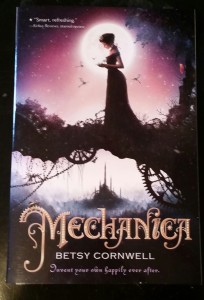
 

Book Review: Behind the Headlines: The Story of American Newspapers by Thomas Fleming


A part of the “Walker’s American History Series for Young People” series, this nonfiction book was published in 1989. I picked it up when I took over the newspaper at my high school in an effort to brush up on my knowledge of newspaper history. Printed in bold text and generous spacing, the book seemed like it would be a fast read. That was back in September.

Now, in November, I finally got around to finishing it. While the facts presented were interesting, they were presented in a fairly dry manner. If I weren’t inherently interested in the topic, I would have abandoned the book months ago. Nonetheless, given this year’s election and the role of the media in it, I wanted to finish before November 8.

What I found most interesting is the fact that newspaper journalism has been biased from the start. Early in their history, newspapers were written with a definite purpose in mind—other than providing information. They have been used to sway opinions and win (or lose) wars. Cronyism even played a role in newspaper’s history, with certain reporters having more direct access to presidents and generals.

The book presents several important examples of journalists and newspaper owners who used newspapers for their own purposes or benefits, newspapers that failed, and ones that flourished. I also found it interesting that newspapers faced trouble with the advent of radio (because of competition for advertising dollars) the same way newspapers today seem to falter in the light of television and Internet.

I enjoyed reading about particular historical figures. For instance, “In the New York Herald Tribune, John Steinbeck described in savage detail Joseph Stalin’s absolute power and his hatred of the United States” (123). And I enjoyed reading about historical examples of investigative journalism by writers who weren’t afraid to question authority:

“In 1950 Edwin O. Guthman… spent five months researching facts that cleared a … professor of charges that he was a Communist. Anthony Lewis…took on the entire Navy Department…” (125).

Yes, newspaper has the power to change people’s lives, but it was disheartening to read just how many episodes in the history of newspaper involve manipulative journalism.

The main disappointment, however, is that the book was published almost 30 years ago, so there’s no mention of the role newspapers have today. Fleming remains optimistic in his last chapter, noting that the “new” phenomenon seems to be national papers, such as The Wall Street Journal, rising in popularity. I wonder how he would feel about the bias we see in newspapers today, with some being purportedly liberal and others conservative.

Anyone who knows me, knows that I am a Back to the Future fan. Last year, I dressed up like Marty McFly, since he (in 1985) travels forward in time, arriving on October 15, 2015. Along with celebrating “Back to the Future” Day in October of last year (and seeing the film in a theatre, cheering when the exact day and time on screen matched the exact day and time in reality), I (like many fans) hoped the Cubs would win the world series.

Dressing as Marty McFly (hiding my pregnant belly) last year on the actual date Marty McFly came to the future.

Dressing as Marty McFly (hiding my pregnant belly) last year on the actual date Marty McFly came to the future.

It had nothing to do with my love of sports; it’s just–wouldn’t it be cool if a movie made in 1989 actually did predict the future? In the trilogy’s second film, the Cubs are said to have won the 2015 World Series:

Back to the Future fans were almost as disappointed as Cubs fans to learn they were close–but no winner. So this year, I join baseball fans in celebrating a Cubs win. And I’m not the only one.

I’m always fascinated by the power of stories. I find it unimaginable that we have stories existing from ancient times, and it’s good to know that even a modern mythology like Back to the Future can unite so many fans even as politics try as always to divide us.

Remember: the future is what you make it, so make it a good one!

val-bttf