
Val Muller

The Electronic Wordsmith

Welcome to the Spot Writers. This month’s prompt is to write a story inspired by what you see out your window.

Today’s post is written by Phil Yeats. Last December, Phil (using his Alan Kemister pen name) published his most recent novel. Tilting at Windmills, the second in the Barrettsport Mysteries series of soft-boiled police detective stories set in an imaginary Nova Scotia coastal community is available on Amazon.

 The Impatient Passenger

 By Phil Yeats

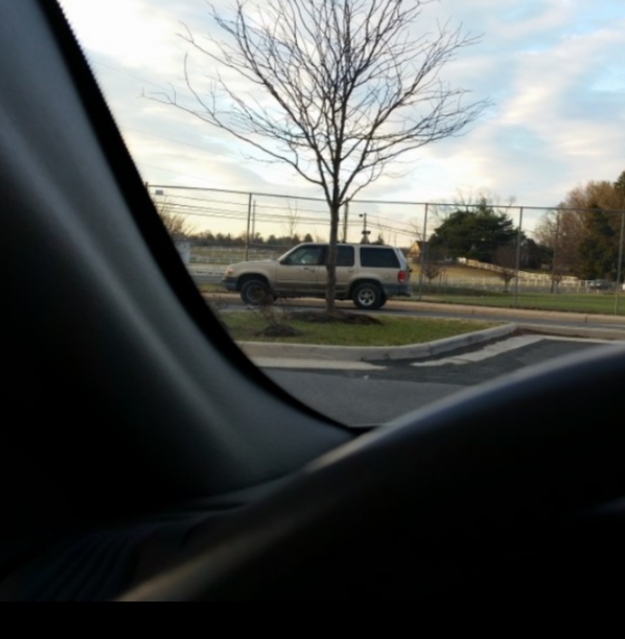
I stared from the front window of my second-floor apartment in an old urban house as I waited for my early morning coffee to brew. A woman standing on the curb attracted my attention. She was young, perhaps twenty-five years old, and decently dressed, like someone heading for the university or a job that didn’t require formal clothes. It wasn’t her age or attire that caught my attention; it was her nervous demeanour.

She shifted from one foot to the other as her head swiveled, glancing left and right. When a gap developed, she stepped onto the road and stared at the oncoming traffic. Seconds later, she leapt onto the curb as a dark grey econobox swung toward her and screeched to a halt. The rear passenger door flew open, she dove inside, and the door slammed shut. More screeching of tires and honks from annoyed drivers as the car recklessly charged into the traffic.

I noted nothing particularly distinctive about the car or its passenger, but her nervousness and the obvious haste of the car’s driver left me imagining the strange events that could generate these observations. Was there something sinister, or just people in a big hurry?

The Spot Writers—Our Members:

Val Muller: https://valmuller.com/blog/

Catherine A. MacKenzie: https://writingwicket.wordpress.com/wicker-chitter/

Phil Yeats: https://alankemisterauthor.wordpress.com

Chiara De Giorgi: https://chiaradegiorgi.blogspot.com/ 

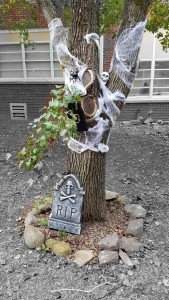
20181031_215342It is no secret that I love Halloween. I am just as happy as my three-year-old to be headed from one pumpkin festival to another.

As a teacher, I am always looking for read-aloud resources for those days when I have no voice (three-year-olds are good at attracting bugs) and to generally engage young writers.

I have been happy to find several free resources related to Halloween, and what better time to share than a Fantastic Friday in October?

David Tennant reads creepy stories, from Edith Wharton to Guy de Maupassant. Enjoy these vampire tales.

Neil Gaiman reads his original story “Click Clack the Rattlebag.” By candlelight. You’re welcome 🙂

Christopher Lee reads “The Raven.” Squee! Or “The Black Cat.” Or “The Tell-Tale Heart.”

And this is just a start. A Google or YouTube search will show many more resources, including works for children such as “Not that Scary.” Happy reading!

Have you found any to add? Share them in the comments!

Welcome to the Spot Writers. This month’s prompt is to write a story inspired by what you see out your window. This week’s post comes to us from Val Muller, author of the Corgi Capers mystery series. Find out more at www.corgicapers.com

Pencil

By Val Muller

When I was born, my mother told me I could be anything. Dad wrote the first draft of a thesis that went on to earn the Nobel Prize in Physics, disappearing to the college and never coming back. Each night, Mom tells tales of what Dad must be doing. She imagines him in a glass case somewhere, under shining lights, being admired by passers-by as the brains behind the thesis. Mom has spent her whole life jotting down phone messages in the Jones’s kitchen. It’s not the Nobel Prize, but it sure helps the Jones family keep up their appointments.

picture prompt broken pencil

“We all have a purpose,” she always says.

Me? I wasn’t sure of my purpose until this August, when I was placed in Rob Jones’s backpack. Turns out I’m going to be a School Pencil. Mom told me that’s important because school is the foundation for everything else in life. Maybe Rob Jones will earn the next Nobel Peace Prize. Not in Physics, though, let me tell you.

Mom sent me off with a smile, knowing my life would already turn out better than Brother’s. We don’t really talk about the incident with Rover, but I’m glad Rob keeps my backpack on a hook out of Rover’s reach.

*

There’s an important physics test this afternoon, and I can’t help wondering if I’ll be chosen. After all, physics seems to run through my veins—my lead, that is. I’m sure I can help Rob ace the exam. After countless hours in the dark, Rob opens the backpack and reaches for the pencil case. His fingers grasp an erasable pen—don’t even get me started on the Paper Mate family—but then think better of it and choose me instead.

Now is my time to shine. The test is on Objects in Motion. This is easy stuff. Dad raised me on this like nursery rhymes before he left. I prepare to write my response when—Rob, what’s happening? His hand is getting sweaty, tarnishing my beautiful yellow shine. Now what’s he doing? Chewing my eraser! Rob, you know this stuff. No need to abuse me. Just write the response already.

Finally, he starts to scrawl something. He needs to brush up on rotational motion a little, but he’ll get partial credit, at least.

Now what? Ouch! He’s chewing on me. My smooth yellow coat is tainted with bite marks. My mind races with flashes of Rover. I see bits of Brother’s splintered body all over the kitchen floor, and I wonder if my fate is the same. The pressure is relieved by a gentle crunch.

An actual divot.

My dignity gone, I no longer care about the test. I just want to get out of there. My mind races. Maybe Rob can toss me on the ground, and maybe I’ll be picked up by that girl in the corner. She has a glitter pencil case and keeps all her pencils sharp one-hundred percent of the time. She never chews on her erasers, that’s for sure.

Rob slams me on the desk to go ask the teacher a question. I will myself to roll off the desk. Rob hears me fall and hurries back to pick me up before continuing on to the teacher. At the teacher’s desk, Rob’s sweaty hands plop the test down and then take out their frustration on me.

“I’m not sure I understand the question,” Rob says.

The teacher isn’t buying it. “This is all from the review packet,” he says. “If you were paying attention last class, and if you had studied, this would be easy stuff.” Indeed, the teacher motions to a stack of tests that students have already finished.

I realize in horror that Rob hasn’t studied. He doesn’t care about physics.

His frustration bends me—literally. He holds me between two hands, and he bends me in an arc.

“I did study,” he says. “This stuff is just too hard.”

The teacher’s expression remains skeptical.

“I think I need more time,” Rob says. “An extension.”

The shake of a head. “I can’t do that, Robert.”

The boy shakes. He’s angry now. The arc he’s creating with me sharpens, and my wood starts to creak and crack. Rob, stop. Stop this madness.

In my panic, I look up at the ceiling, where three pencils are stuck in the asbestos ceiling. Shot like arrows, no doubt. How many years have they been there, their lead impotent?

The tension becomes unbearable. Splinters break through my paint job. I snap in two, my lead exposed to the world, a small shard of wood landing at the door near the teacher’s feet. I’m sharpened lead on one side, eraser on the other, and a splintery mess in the middle.

The teacher just shakes his head. “I take it you’ll be repeating the class next year if you keep up this attitude,” he says. Then he looks down at me. “Looks like you’re going to need a whole lot more pencils.”

The teacher holds out his hand, and Rob slams me into it, both halves of me. I remain in his hand long enough to see him hand Rob a new pencil, a black Ticonderoga one. As if to say I wasn’t good enough for him. As he walks across the room toward the trash can, I realize my fate. Mother will never see me again. Instead, a high class snob will take my place and probably charm Mom into adopting him.

Or worse. With Dad out of the picture, who knows what charms that Ticonderoga will grace Mom with.

The day is long as I await my fate. It comes in the form of a squeaky cart rolling down the hall. A tired sigh as a custodian upends the trash can, tossing me with other detritus into a black plastic bag. Before long, the bag is closed around me, and all become darkness.


The Spot Writers—Our Members:

Val Muller: https://valmuller.com/blog/

Catherine A. MacKenzie: https://writingwicket.wordpress.com/wicker-chitter/

Phil Yeats: https://alankemisterauthor.wordpress.com

Chiara De Giorgi: https://chiaradegiorgi.blogspot.ca/
 

Welcome to The Spot Writers. September’s prompt: mistaken identity—a story where a mistaken identity plays a major role. This week’s story comes to us from Phil Yeats.

The Panhandler by Phil Yeats

The scruffy young panhandler sat on the busy sidewalk suckling a fractious infant. When I dropped a coin in her pot, the baby reached for my fingers. Distracted by the tiny hand and abandoned breast, I lingered for a moment too long.

“Alan?” she said as I tried to back away.

I jerked upright, shocked that she knew my name. “Yes, sorry. Should I know you?”

“Alan? Alan Cummings?”

I shook my head. “First name’s Alan but not Cummings.”

She lost it, setting, no closer to dropping, the baby on the ground, and wailing as she clutched her hands on the sides of her head. She slumped forward, both breasts now hanging free, and leaned on her elbows with the baby underneath her.

He, or maybe it was she, squirmed from under his/her mother, grabbed onto my leg and pulled himself/herself upright. The brazen little hussy, I decided she was a girl, reached up imploring me to pick her up. I decided she was about a year old, more toddler than infant, because she stood without difficulty. I hoisted her into my arms, at least twenty pounds, maybe more, so a year or a year and a half old. She squirmed, gurgling and reaching for my glasses as her mother regained her composure and adjusted her top.

She rummaged in her beat-up old rucksack and passed me the photograph she extracted. I recognized the three young men immediately. They were Gerry Murphy, my best friend through high school, Carl Cummings, another schoolmate, and me. We hung out together in grade twelve, but I hadn’t seen either for years.

I slid down until I was sitting beside her. I studied her more intently as her baby continued to tug at my glasses. She was an awful mess with scrapes and scratches and eyes puffy from crying. She had a bruise on one cheek and a fading shiner, but she had to be Gerry’s youngest sister, a kid of only twelve or thirteen when I left home. I don’t think we met up either of the times I returned home, so I hadn’t seen her for seven years. I didn’t recognize her, but she remembered me. She just got my name mixed up with Carl’s.

“Peggy?” I said. “Are you really Peggy Murphy?”

Her tears started flowing again as she leaned against my chest. “Gerry told me you were at the university, and I so much hoped I might find you, but then I got your name mixed up with Carl’s. Oh God, Connor and I are alone in the world, and I’m so messed up I can’t even remember your name.”

“Please, stop crying before you upset Connor. Is that really his name? I thought from the way he flirted with me that he must be a girl.”

That produced a hint of a smile. “Little Irish charmer, but definitely a boy.”

“Are you really alone? Connor’s father not with you?”

“Alone with no where to go. We stayed last night in a homeless shelter but they don’t want babies and we can’t keep going there.” She leaned over and stared into her pot. “And I’m not making enough to afford a room.”

I sighed, remembering my teenage years and the times Peggy’s parents stepped up when I needed support. It was payback time. “I’ll put you up until you sort yourself out. My place is tiny, but we’ll manage and you won’t have to worry about Connor crying.”

Her smile broadened, and I wondered if she was imagining more than a temporary sanctuary. A potential problem perhaps, but not an immediate one. I helped her to her feet, and together we carted Connor and her stuff to my humble abode.

***

The Spot Writers—Our Members:

Val Muller: https://valmuller.com/blog/

Catherine A. MacKenzie: https://writingwicket.wordpress.com/wicker-chitter/

Phil Yeats: https://alankemisterauthor.wordpress.com

Chiara De Giorgi: https://chiaradegiorgi.blogspot.ca/
 

I like to hoard “Fantastic Friday” ideas. Some I keep scrawled on notebook paper. Some I keep open as a tab in my browser. Sometimes I’m saving them for a particular anniversary or time of year. Other times, I’m saving them for a time when they are needed the most.

Each year, the anniversary of 9/11 hits me harder than I expect. A few years ago, though I didn’t consciously realize 9/11 was the following day, I was haunted by an extended dream in which I was living in a high-rise that was suddenly collapsing and on fire. When I woke, I realized what day it was. My feelings about 9/11 are complicated and not for this post. But it was on 9/11 this year that I sat down to flip through open tabs in my browser to see what uplifting message I could find for today’s post.

That’s when I remembered what I’d found. It’s a documentary called Violins of Hope: Strings of the Holocaustwhich chronicles Israeli violinmaker Amnon Weinstein, who took it upon himself to restore violins that once belonged to victims of the holocaust. It’s about an hour long, and it’s available to view for free at the above link.

The violin has been meaningful to me since I took it up in third grade. There was something about it. Yes, it is made of wood and strings, but in the right hands it seems to come alive. It cries, it sings, it dreams. The wood warms in the hand, and the music brings that warmth to the air. I recently bought a small violin for my daughter, who has been unnaturally drawn to my own full-sized one. So I can only imagine the impact of a violin on the morale of individuals and families during a time much less materialistic, when there were even fewer distractions.

The fact that Weinstein took the time to restore the violins, and the fact that people came together and performed with “voices” that were thought to be long gone transcends words. On a day when the media wanted to play up memories of 9/11 and when social media threats in my school district seemed to take advantage of people’s nerves, it was heartening to see that humanity can take something as horrific and unimaginable as the holocaust and turn it into something that can still warm the heart.

Editor’s Note: When I received this story from Cathy, I inquired about the connection to the anniversary of 9/11. Cathy told me she actually wrote this back in 2015. She was recently impacted by Hurricane Dorian and was unable to complete the poem she had started for this week’s prompt, so she used this story instead. I only mention this since the time of posting is September 12, and the media is filled with recollections of 9/11. The connections here are pure coincidence, however timely. 

Welcome to The Spot Writers. September’s prompt: mistaken identity—a story where a mistaken identity plays a major role.

This week’s story comes from Cathy MacKenzie. Cathy’s novel, WOLVES DON’T KNOCK, a psychological drama, is available from her locally or on Amazon.

MISTER WOLFE (the sequel) coming soon!

***

New York 2019

by Cathy MacKenzie

Although Jane often read horoscopes and took quizzes, she had never been upset over the outcomes, but this one was too ominous to ignore. As a result, she and Ned would have to cancel their annual trip to New York City.

We’ll go somewhere else, she thought. Anywhere but New York. Togetherness mattered, not the destination. No way would she enjoy herself with such a dire premonition hanging over her.

She’d make up an excuse, for Ned wouldn’t understand. He’d laugh, call her a silly cupcake, but in the end, he’d acquiesce. Couldn’t she be tired of the same place every year?

She broached the subject over dinner. “Let’s go somewhere different this year.”

“But it’s tradition,” Ned said. “We love New York.”

“I know, but can’t we skip a year?”

“Why?”

Silent for several seconds, she sighed. “You’ll make fun of me.”

“I won’t.”

“You will.”

“I promise I won’t.”

She produced a paper. “I took a quiz on Facebook that tells a person when and how they’ll die. It told me I’ll die by a sniper’s bullet in New York City in 2019.”

Ned, rolling his eyes, ignored the proffered sheet.

She glared at her husband. “You promised you wouldn’t laugh.”

“I’m not laughing. It’s coincidental but kind of farfetched, don’t you think? A sniper? And this year?”

“We go every year. What’s coincidental about that? I can’t go. I’d be peering over my shoulder every second.” She laughed, trying to lessen the impact of her demand.

Ned sighed. “Okay, we can go somewhere else. Atlantic City?”

***

Jane and Ned settled into the Atlantic City Hotel. After a sumptuous dinner, they strolled the streets, which bustled with tourists. Throngs of people congregated at casinos and bars, but everyone minded their own business. Ned felt he and Jane were inconspicuous.

“What a beautiful evening.” Jane glanced at the sky. “Another hour until the sun sets.”

“A beautiful night for sure.” Ned had barely spoken the words when he noticed a young man approaching. Drunk, he figured, but his long dark coat was uncharacteristic of the mild temperature. His skin prickled, and he gripped his wife’s hand. When the man made eye contact but quickly passed by, Ned relaxed.

Then, almost immediately, shots rang out. Seconds—or was it minutes?—passed before he realized Jane had fallen. People screamed and raced away while others dropped to the ground as his wife had.

Ned collapsed beside her, cradling her head in his arms.  “Jane!” He crushed his wife to his chest. Tears careened down his cheeks, disappearing into her grey hair. Images appeared before him in slow motion: Jane wearing a wedding gown, Jane birthing two children, Jane’s welcoming greetings at the kitchen door.

“9-1-1,” someone shouted.

Later that evening, the police advised Ned that he and Jane had simply been in the wrong place at the wrong time. The deranged individual, a native of New York, who had recently relocated to Atlantic City, had aimed indiscriminately. Jane had been the sole victim.

Weeks later, Ned discovered the Facebook print-out he had neglected to read:

You will die by the hand of a New York sniper in 2019.

“Oh, Jane, you misread everything,” Ned mumbled.

***

The Spot Writers—Our Members:

Val Muller: https://valmuller.com/blog/

Catherine A. MacKenzie: https://writingwicket.wordpress.com/wicker-chitter/

Phil Yeats: https://alankemisterauthor.wordpress.com

Chiara De Giorgi: https://chiaradegiorgi.blogspot.ca/
Welcome to the Spot Writers. This month’s prompt is to write a story in which mistaken identity plays a major role. Today’s tale comes to us from Val Muller, author of the Corgi Capers mystery series. Find out more at www.CorgiCapers.com.

A New York Reunion

Val Muller

With her son moved out–he was on a three-month surveying expedition in Africa, and largely out of contact for the duration–the house was too quiet. How many times could she vacuum and dust Rob’s room? An absent son left no messes to clean. Funny, all those years when cleaning and cooking and laundry seemed never-ending. And now what she wouldn’t give for a son or a husband to care for.

Janet knew she’d have to downsize. It wasn’t really the money: Micheal’s life insurance policy had paid for the house and left her a modest safety net. Her job at the college paid all her bills, so she saved Micheal’s nest egg for retirement. But she was too young to retire. She had too much life left. And the house kept her too tied to her son and late husband. She was an empty-nester now. Now it was time to focus on herself.

Which is why she found herself in the City. The college was out for a brief fall break–yes, even special collections librarians got the time off–and she took the four-day weekend to bus into the city. She stayed at a modest hotel outside of Manhattan (it was still ridiculously expensive, but what the heck?). She decided not to do all the touristy things. She’d seen the sights before, done all the touristy things back in her college days. This time, she visited local shops, looked off the beaten path.

Which is what brought her to KatKafe. She’d stopped in expecting a cup of coffee only to find the KatKafe was actually a book store, with no caffeine or cats to be found. She browsed the shelves. The books were all so new and supple. Nothing like the fragile collections she housed at the library. Here, she could actually handle the books, touch their pages, indulge for enjoyment and let down her guard.

This morning, during a walk through Central Park, she remembered the tapestry she’d hung on her dormitory wall. Everyone had a tapestry back then, it seemed. Hers was from freshman year, a highly-stylized illustration of a dozen or so angels meeting on the head of a pin. They were surrounded by celestial miasma. And didn’t that perfectly capture her personality in college? It was all about possibilities and pushing limits.

And there were the handfuls of friends in various circles, ones she still saw on social media but not personally in years. Decades. Gosh, she’d gotten old. There were her junior-year apartment-mates: Jennifer, Jess, and Jenn (the 4 J’s, they were called). Then there were her library cohort buddies: Matt and Ashley and Riley. And a handful of friends from the hip-hop club where she bravely but pitifully practiced her dancing skills.

There was Henry, of course. There was always Henry. He was the one that got away. After two years of on-again, off-again, they simply drifted apart. She always suspected they were too passionate about each other. The intensity of her feelings scared her, anyhow. Made her stupid and irrational. But isn’t that what love does? With Micheal it had been different. Words had come easily to her. Her heart didn’t flutter stupidly when he entered the room, but intellectual conversations flowed prodigiously. Micheal was more like a comfy hoodie. Henry was like bungee jumping. And you can’t bungee jump every second of your life, can you?

Janet was flipping through a book about the cosmos in the KatKafe when she saw him again. His hair was gray now, but its wild cowlicks were unmistakable. When he looked up from his book–he was also browsing in the section on natural sciences–the sparkle in his eye pierced her heart. Isn’t that just like fate, to throw him back at her in a second chance after all these years…

“Henry?” she screamed. But she didn’t scream it. She didn’t even say it. Her mind willed it, but her mouth would not comply. Her heart fluttered ridiculously, just as it had always done. Why did Henry make her so stupid? Just. Say. Hi. You are a grown woman. What is wrong with you? She forced herself to think of things scarier than talking to Henry. Childbirth. Her son leaving home. Losing her husband. This is nothing, you silly cow. Say. Hi. To. Him.

She cleared her throat and he looked up.

Oh, come on, she plead. But her brain-body sabotaged all efforts. Say. Something.

He smiled. That same lopsided smile that melted her heart. “I see we have similar tastes.” He pointed with his eyes to her book.

“You know I’ve always fancied space,” she managed.

“Same,” he said.

Her mind raced, but every word in the English language meant nothing.

Say. Something.

“I’m here alone,” she said. The words surprised her. So she was going for blunt honesty? Desperation, even? Maybe. Maybe she was tired of being alone. “I mean, my son is grown and moved out. And my husband’s been gone for…” He was cocking his head. Was this a good thing? Should she stop talking? She shook her head. “I’m sorry. I just thought, after all these years, why beat around the bush anymore, right? You’re here, I’m here. I thought this was an actual cafe, and I really need a coffee. Would you–care to join me?” She realized she ought to smile, and she was shocked to find herself already beaming, without her knowledge.

He smiled back and grabbed the book out of her hand, bringing it to the cash register. “My treat,” he said. “I always thought the way to a woman’s heart was through books, not drinks.”

She raised an eyebrow and nodded. Henry had certainly grown more assertive, too. She eyed his fingers as he paid for the books. Not a wedding ring to be found. Last she’d heard, he’d been married, but he wasn’t big on social media, and she was too ashamed to stalk him. Maybe the stars were finally aligning.

“There’s a great shop right down the block. We can get a cup, and I know a little park bench we can snag.” He handed her the newly-purchased book.

“Thanks, Henry,” she said.

He looked confused. “Good guess,” he said. “That would be something if it were right. It’s James,” he said, taking her hand.

Her hand went limp for just an instant before she firmed it up and laced her fingers with James’. He was neither a warm hoodie nor a bungee jump. He was somewhere in the middle. Like a new flavor of coffee and a book she’d never heard of. And maybe that was just what she needed.


The Spot Writers—Our Members:

Val Muller: https://valmuller.com/blog/

Catherine A. MacKenzie: https://writingwicket.wordpress.com/wicker-chitter/

Phil Yeats: https://alankemisterauthor.wordpress.com

Chiara De Giorgi: https://chiaradegiorgi.blogspot.ca/
editing_logoA friend loaned me this book last year, but in my sleep-deprived state, the metaphors in the first chapter were lost on me as impractical, and I put it off to the side in hopes of something more blunt. Fast-forward some months later, and I was able to read the entire book (It’s just over 100 pages) on a nice late summer Labor Day. Yes, even with two kids involved!

I always enjoy reading other writers’ “how to” books, or books in which they tackle the subject of writing. Most of them agree that there is no definite right way, or single way, to accomplish a novel. In fact, most writers agree that each novel is unique for each writer, and each writer’s process is different from the rest.

Dillard uses many metaphors in this book, following her preference for literary writing. They resonate and make her points for her. In a quote that I pulled to read to my AP Literature students when we talk about reading to appreciate and analyze literature, she writes, “The reader’s ear must adjust down from the loud life to the subtle, imaginary sounds of the written word.” In this section, she writes of the differences between movies and novels, and how those who like movies are not generally readers, questioning why so many authors try to write books that would appeal to non-readers in the first place. In other words, make use of the written word as its own medium. She certainly did this in the way she wrote the novel–without chronological organization and with generous use of metaphor.

She certainly follows her own advice, revealing details about her writing life at planned moments to make points stronger. One of the main takeaways was that she really detests the writing life. It’s a calling, for sure, but she seems to do what she can do put off writing, at least in her anecdotes. This is interesting to me. I suppose, working full time and parenting, when I make time for writing, I truly appreciate it. But I have heard from so many people that when something becomes your full-time job, you end up detesting it. Dillard’s book surprised me in that she focused on so many of the physical details of her writing life, such as heating up water for coffee or looking out the window of her writing retreat. (For me, I write whenever and whereever I can, and I couldn’t honestly tell you all those details. It’s interesting to read about the struggles of a full-time writer).

The other takeaway that stood out to me is the idea that a writer will never be able to fully capture the concept that started the need to write the novel. She did not explicitly mention the poem, but the advice reminds me of “Kubla Khan,” in which Coleridge expresses frustration at not being able to capture the entirely of his vision. As Dillard notes, the medium–paper and words–will necessarily fail us, and the medium itself starts to impose its own meaning, changing the work as we try to capture something ephemeral and transcendent.

I did not leave the book with the secrets of writing. I did come away feeling that some of my writing struggles are common to other writers. I was reminded about the fact that rough drafts can be really bad, and that some days are spent simply taking out sentences that were put in the day before. Writing is a process and a slow one for most.

The book is a fast read with some interesting metaphors. If you’re a writer, it’s worth a quick read–if nothing else, it will help you procrastinate for another two hours or so 😉

Welcome to The Spot Writers. August’s prompt is to use these five words in a story or poem: besides, fishes, inn, owing, born.

This week’s story comes from Chiara De Giorgi. Chiara dreams, reads, edits texts, translates, and occasionally writes in two languages. She also has a lot of fun.

The Botanical Mystery Writer

by Chiara De Giorgi

“If you need me, I’ll be at the inn!”

I stepped outside and strode to the car. As soon as I sat behind the wheel, I regretted my words. The whole point of me staying at the inn for a few days was to get away, to have more space, to be quiet and finally be able to concentrate and write. The twelve chapters I was owing to my editor were screaming to be written, but there was always something more urgent, more important, more… I don’t know.

It was so frustrating! I had been so happy, when my agent had called me! Guess what? I sold your botanical mystery series! It’ll be a success, I tell you! It is as if you were born to be a botanical mystery writer! Yeah, well: apparently I was also born to be the wild card for my family, especially after that fateful phone call.

The advance from the publisher was good enough for me to quit my job as an underpaid waitress at the lousy diner just outside town, and my brother and sisters were quick to take advantage of the situation, Since you’re not working, please take Mother to the doctor’s tomorrow. Since you’re not working, please be a good auntie and pick up the twins after ballet class. Since you’re not working, please go to the grocery store and buy food for everyone. And so on. I’ve been so busy with everybody else’s needs, I haven’t had the time to sit down and write, yet. And my first deadline is coming up, in just a week. That’s why I booked a quiet room at the inn in the woods. I shouldn’t have told them.

Stupid, stupid, stupid, I muttered while driving up the winding road. They had never taken me seriously, neither me nor my ambition to become a writer. This world needs people who work with their hands, not people who play with their words. Why don’t you do something useful, something worthy? Do you really think you’ll be able to live off your books? And what’s a botanical mystery, anyway?

I gripped the steering wheel and grunted. Oh, I so wanted to show them! Maybe they’d been boycotting me on purpose.

Suddenly I pushed the brake pedal. I had never noticed that sign before: a B&B right up the hill. Not the inn everybody knew about. The sign said “B&B He Fishes – The Perfect Retreat – 4 miles”. If I met fishermen, they could assist me with the plot twist I was considering, which involved the attempted murder of a fisherman. The B&B was only four miles on the left, while the inn was twelve miles up north. It would save me precious time, besides being somewhere nobody would be able to find me.

I quickly typed a message and sent it to all my siblings: “If you need me, I WON’T be at the inn”. Then switched off the phone and turned left.

***

The Spot Writers—Our Members:

Val Muller: https://valmuller.com/blog/

Catherine A. MacKenzie: https://writingwicket.wordpress.com/wicker-chitter/

Phil Yeats: https://alankemisterauthor.wordpress.com

Chiara De Giorgi: https://chiaradegiorgi.blogspot.com/

Welcome to The Spot Writers. August’s prompt is to use these five words in a story or poem: besides, fishes, inn, owing, born.

This week’s story comes from Cathy MacKenzie. Cathy’s novel, WOLVES DON’T KNOCK, a psychological drama, is available from her locally or on AmazonMISTER WOLFE (the sequel) coming soon!

“Go Fish”

by Cathy MacKenzie

Amber looked up toward the large blue-shingled house, which was so unfamiliar to her. What little they’d moved into the house two days previous was in disarray. The bulk of their furniture and other possessions weren’t due to be delivered for another week. Until then, the family would sleep at the Riverside Inn and spend days at the house.

According to her mother, there was plenty to do at the new house. “Dad has to mow the lawn, and I have to clean,” she’d said. “You kids can organize your rooms.” She had smiled. “And play, too. Summer will soon be over.”

Right, Amber thought. Organize our rooms? What is there to organize?

She was thankful she didn’t have to deal with school the same time as the move. But Labour Day would soon be upon them, marking the end of summer vacation. Luckily, her parents had bought a house in the same neighbourhood, so she and her brother, Julien, would still be attending the same schools.

Her mother couldn’t understand why it had to take so long for their furniture to be packed up and delivered. “Spencer, why don’t we rent a truck and move ourselves? This is ridiculous,” she had spouted. “We’re less than ten blocks away, for Pete’s sake.”

Apparently, the end of July was the busiest time for movers in their area, and Amber’s father wouldn’t admit he had procrastinated calling the moving company. She knew he had messed up when she overheard him arguing on the telephone with the company. She was glad he’d apologized or they might never have gotten a moving date.

Amber liked their new house, which was much larger than their previous one. The grounds were more spacious, too. Numerous colourful flowers grew alongside the house, mostly all foreign to her, although she did recognize the daisies.

And, of course, she was familiar with rose bushes that bordered one side of the fish pond.

But what good was a fish pond without fish?

“I can’t believe there’s no fish,” she said, glancing at her brother.

“Yeah, according to Dad, the previous owner said they died.”

“I don’t know why we can’t get more.”

Julien sighed. “Mom can’t be bothered. She figures Dad won’t help out and then it’ll all fall on her. In the spring she said we can get some. She hates the thought of them in the cold all winter. You know her.”

“But goldfish are supposed to survive over the winter. Though I don’t know how.”

“You’re supposed to make sure there’s a hole in the ice so the fish can breathe while they hibernate.”

“If they hibernate, why do they need a hole in the ice?”

Julian glared at her. “I don’t know. Just what I’ve read.”

“Dad says you read too much.”

“Yeah, well Mom says you daydream too much.”

She ignored him and stared into the pond. She shook the unopened container of fish food, which she had grabbed off the shelf in the garage.

“I’m going to sprinkle some food on the water. Maybe if the other people had fed them, they’d still be alive.”

“No sense feeding dead fish,” Julien said.

Ignoring her brother, she unscrewed the lid and sprinkled flakes on the water.

“It’s probably old. That’s why they left it,” Julien said. “Outdated. Not good for anything. And you know what? If the owners said they hadn’t fed the fish for two years, it’s probably more like five. Everyone lies.”

The flakes floated together for a few seconds and slowly separated.

“The poor dead fishes,” Amber said, swiping at her eyes with her left hand. She’d been teary lately, which was unusual for her, probably owing to the stress of the move. She was only twelve, but her hormones would be raging sooner than later. And more tears, she figured.

She shrieked. “Look! What’s that?”

“What’s what?”

“There.” She pointed. “Isn’t that a fish?”

While she watched, another bright orange fish swam alongside.

Another appeared.

And a fourth.

The last two were a paler orange. Almost translucent.

“I don’t believe it,” Julien said. “They can’t have survived for this long.”

“Look, they’re jumping at the food. We have to go tell Mom.”

“No, we can’t tell her. She’s got enough on her mind. Besides, if you tell her, she’ll freak about them all winter long.”

“What, then? We don’t tell anyone they’re here?”

“We’ll just come down and feed them every day. Then, over the winter, we’ll make sure there’s a hole in the ice. We can surprise Mom in the spring, once the snow is gone.”

“Mom wasn’t born yesterday. Don’t you think she’ll find out?”

“How will she find out? Besides, once she knows these fish survived, she’ll be more receptive to getting more.”

“What about Dad? Should we tell him?”

“No, Dad’ll only tell Mom. They don’t have secrets, remember.”

“Yeah, right.” She’d heard her parents talk enough about how marriages shouldn’t have secrets, no matter how small. She giggled. Her father hadn’t shared the moving van story. “Okay, it’s our secret? No one else’s?”

“Yep, it’s our secret.”

“Oh, I love secrets,” Amber said, already anticipating telling her mother. She might even tell her the moving van secret.

***

The Spot Writers—Our Members:

Val Muller: https://valmuller.com/blog/

Catherine A. MacKenzie: https://writingwicket.wordpress.com/wicker-chitter/

Phil Yeats: https://alankemisterauthor.wordpress.com

Chiara De Giorgi: https://chiaradegiorgi.blogspot.ca/